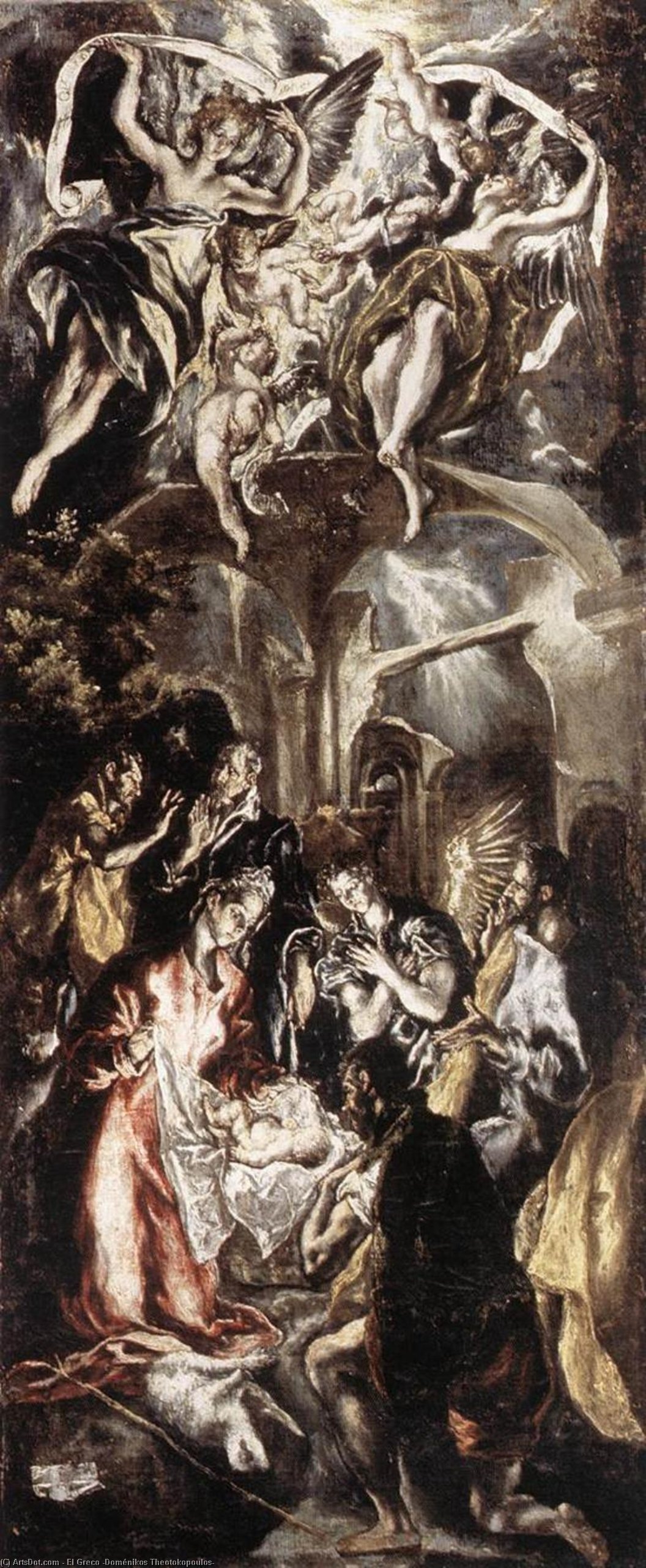
The Soul of Byzantium Revisited: El Greco’s “Adoration of the Shepherds”
Doménikos Theotokopoulos, universally known as El Greco—“the Greek”—stands apart from his contemporaries not merely as a painter but as an artist who fundamentally reshaped visual language. Born in Crete in 1541, amidst the waning influence of Byzantium and burgeoning Renaissance ideals, El Greco embarked on a journey that would propel him to artistic prominence across Italy and Spain—ultimately finding its most profound expression in Toledo, where he established his studio and cemented his legacy.
El Greco’s genius wasn't simply about mastering technique; it resided in synthesizing disparate traditions into something utterly original. His formative years spent studying Byzantine iconography instilled within him a meticulous attention to detail and an unwavering devotion to conveying spiritual truth—a dedication that would inform every subsequent canvas. Yet, he refused to be confined by dogma. He embraced the dynamism of Italian Renaissance art while simultaneously forging his own distinctive path.
- Composition & Narrative: The painting depicts a serene tableau centered around Mary and Joseph kneeling before the infant Jesus, accompanied by shepherds who offer homage. This carefully orchestrated arrangement reflects biblical narratives and embodies Christian piety—a cornerstone of El Greco’s artistic vision.
- Stylistic Innovation: El Greco's style is characterized by elongated figures, dramatic drapery folds, and a luminous palette that prioritizes emotional intensity over naturalism. He deliberately distorted proportions to heighten expressive power, anticipating the stylistic breakthroughs of Expressionism decades later.
- Technique & Materials: Executed in oil on canvas, “Adoration of the Shepherds” showcases El Greco’s mastery of chiaroscuro—the interplay between light and shadow—creating a palpable sense of depth and conveying profound spiritual emotion. The artist utilized tempera pigments alongside oil to achieve remarkable vibrancy and luminosity.
Historical Context: Toledo & Renaissance Spirituality
Toledo, Spain’s former capital under Moorish rule and subsequently reclaimed by Christianity, served as El Greco's artistic crucible. The city’s fervent religious atmosphere—fueled by the fervor of the Spanish Inquisition—provided fertile ground for artists like El Greco to explore themes of faith, repentance, and divine grace. His work reflects this cultural milieu, aligning with broader trends in Renaissance spirituality.
The painting's placement within Toledo Cathedral underscores its significance as a symbol of Christian piety and artistic achievement. It exemplifies the revival of Byzantine influences within European art during the sixteenth century—a period marked by intellectual curiosity and a renewed appreciation for classical ideals alongside religious fervor.
Symbolism & Emotional Resonance
"Adoration of the Shepherds" transcends mere depiction; it communicates profound spiritual concepts. The shepherds represent humility and simplicity, embodying the virtues valued in Christian piety. Mary’s serene gaze conveys compassion and maternal devotion—a timeless portrayal of motherhood and divine grace.
El Greco's deliberate distortions serve not merely aesthetic purposes but also convey emotional depth. The luminous colors and dramatic chiaroscuro heighten the painting’s expressive power, eliciting feelings of reverence and contemplation. It is a testament to El Greco’s ability to capture the essence of faith—a quality that continues to resonate with viewers centuries after its creation.
Where to Experience El Greco's Legacy
Explore breathtaking reproductions of “Adoration of the Shepherds” at ArtsDot.com – where you can immerse yourself in the artistry of a master and bring a piece of Toledo’s spiritual heritage into your home. For deeper insights into El Greco’s life and oeuvre, visit Museo de El Greco in Toledo.