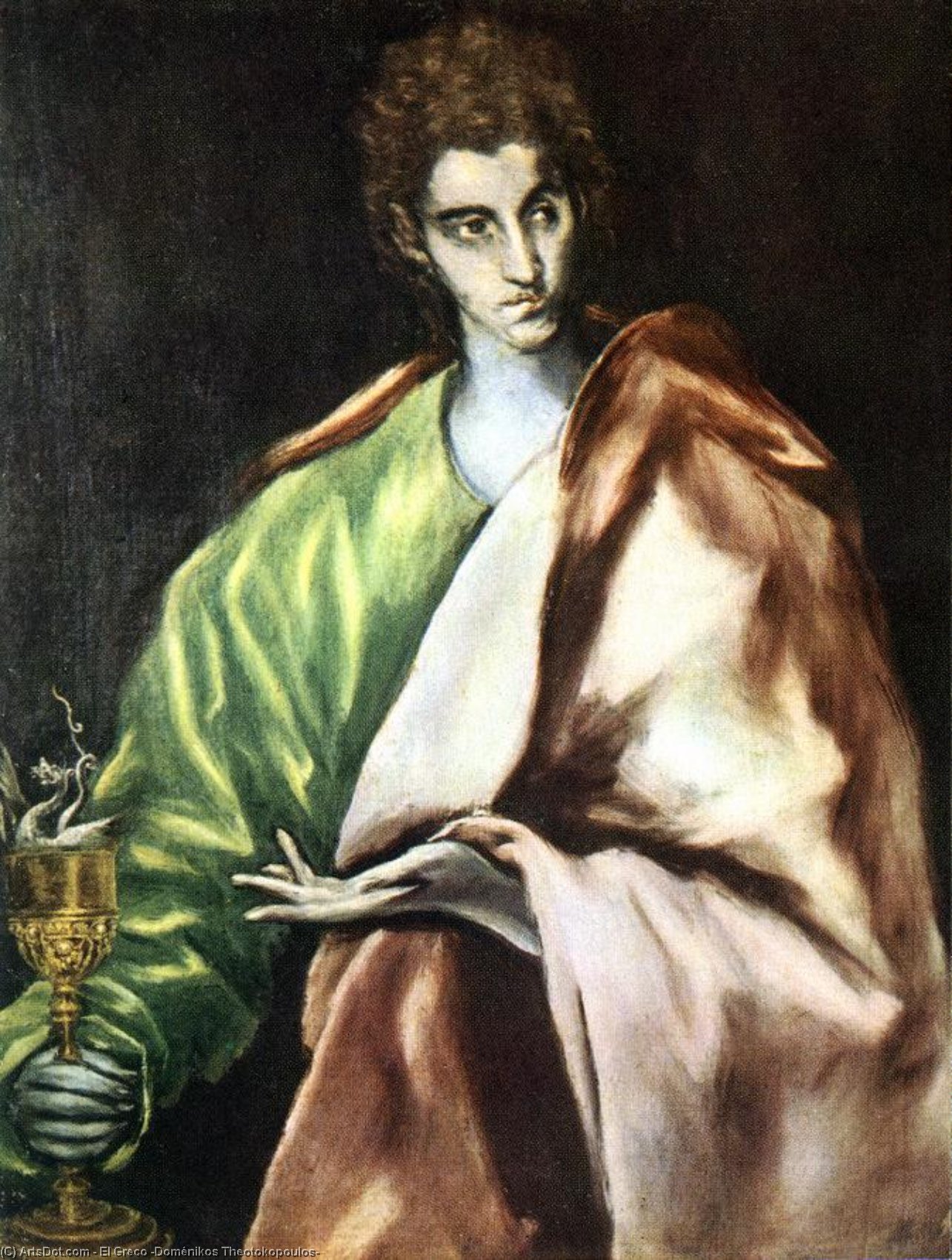
A Portrait of Faith Illuminated: Exploring El Greco’s Apostle St John the Evangelist
Doménikos Theotokópoulos, universally known as El Greco – “the Greek” – stands apart from his contemporaries as a painter whose artistic vision transcended conventional boundaries. Born in Crete around 1541, under Venetian dominion, his journey through Venice and Rome profoundly shaped his oeuvre, culminating in the spiritual crucible of Toledo where he achieved enduring renown. Far from merely absorbing influences from these cities, El Greco synthesized them into an unparalleled style—a stylistic singularity that foreshadowed the expressive fervor of Expressionism and the fragmented forms of Cubism centuries hence. His formative years spent immersed in Byzantine iconography instilled within him a meticulous attention to detail and a deep understanding of religious representation, grounding his artistic explorations. Yet, he refused to be confined by tradition; instead, he embraced experimentation, forging a path that would solidify his legacy as one of the most distinctive artists of the Renaissance.
- Artist’s Background: El Greco's early life in Crete instilled within him a profound appreciation for Byzantine artistic conventions. He honed his skills under Venetian masters like Tintoretto and Titian, absorbing their dramatic flair and compositional dynamism.
- Style & Influences: His distinctive style—characterized by elongated figures, intense emotion, and vibrant color palettes—represents a masterful fusion of Mannerism and Byzantine traditions. This blend anticipates stylistic developments that would emerge decades later in movements like Expressionism and Cubism.
The Painting’s Composition & Technique: Dramatic Tension Embodied
El Greco's Apostle St John the Evangelist exemplifies his masterful command of technique. Painted circa 1605, this monumental canvas showcases a dark background meticulously crafted to heighten the impact of dramatic lighting—a hallmark of El Greco’s artistic approach. The artist employs bold colors—primarily greens and golds—to convey spiritual depth and emotional intensity. Furthermore, he utilizes elongated forms and stylized drapery, techniques characteristic of Mannerism, to imbue the figure with a palpable sense of movement and psychological complexity. As noted on Wikipedia, El Greco's works continue to be celebrated for their unique blend of style and emotional resonance. The meticulous attention to detail—evident in the rendering of textures and folds—underscores his dedication to artistic excellence.
- Lighting & Background: The dark backdrop serves as a counterpoint to the radiant illumination focused on St John’s face, creating a visual drama that underscores the saint's solemn contemplation.
- Color Palette: El Greco’s masterful use of emerald green and opulent gold reflects the spiritual significance of the subject matter and contributes to the painting’s overall emotive power.
Symbolism & Narrative Significance: A Testament to Faith
The Apostle St John the Evangelist is laden with symbolic elements that enrich its narrative dimension. The cup held by St John represents his role as a martyr and evangelist—a vessel of divine grace and spiritual communion. Similarly, the gold cross adorning his neck symbolizes Christian faith and redemption. As depicted in other works by El Greco, such as the Trinity at Museo del Prado, these symbols are strategically positioned to evoke contemplation and convey profound theological ideas. The inclusion of two birds – one on the left side and another towards the bottom right corner – adds a subtle decorative element while potentially hinting at themes of ascension and divine providence.
- Iconographic Elements: The cup and cross serve as potent emblems of St John’s martyrdom and his proclamation of Christ's gospel, prompting viewers to consider spiritual truths.
- Decorative Details: The birds contribute to the painting’s visual richness and may symbolize aspirations toward heavenly realms.
Concluding Reflections: An Enduring Legacy
El Greco’s Apostle St John the Evangelist remains a captivating masterpiece—a testament to his singular artistic vision and unwavering devotion to faith. Its dramatic composition, masterful technique, and evocative symbolism continue to inspire admiration and provoke contemplation. As exemplified by its prominent place in Museo del Prado's collection, this artwork embodies El Greco’s enduring legacy as one of the most influential artists of the Baroque era—a painter who dared to challenge conventions and forge a path toward artistic innovation that resonates powerfully across centuries.