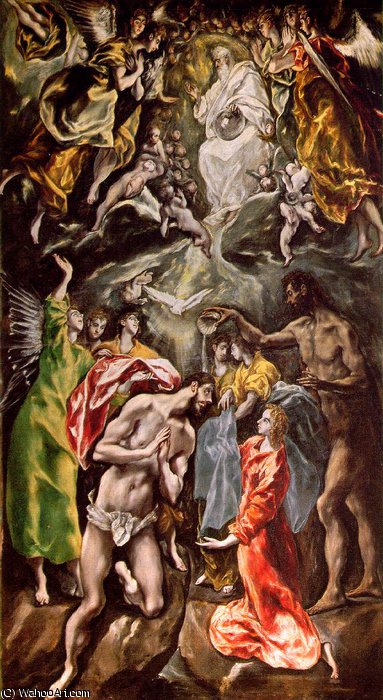
Explore El Greco’s ‘Baptism of Christ’ (1614). A dramatic Baroque masterpiece featuring elongated figures & vibrant colors. Discover this iconic painting's history & artistic significance.
Explore El Greco's dramatic art! Discover Mannerist masterpieces, religious scenes & elongated figures. A pioneer of Expressionism & Cubism – view his iconic paintings!
A Divine Encounter: Exploring El Greco’s “Baptism of Christ”
El Greco's “Baptism of Christ,” completed in 1614, is a monumental work that encapsulates the artist’s unique spiritual vision and mastery of Mannerist techniques. Measuring an impressive 330 x 211 cm, this painting—housed at the Hospital Tavera in Toledo, Spain—is not merely a depiction of a biblical event but a profound exploration of faith, divinity, and human connection.
Subject & Composition: A Moment of Transformation
The artwork vividly portrays the pivotal moment when John the Baptist baptizes Jesus Christ in the Jordan River. El Greco populates the scene with at least thirteen figures, creating a dynamic and complex composition. Jesus and John are centrally positioned, drawing the viewer’s eye to the heart of the sacred act. A fluttering bird above symbolizes the descent of the Holy Spirit, adding a sense of ethereal movement. The arrangement isn't static; rather, it conveys a harmonious balance achieved through El Greco’s deliberate placement of figures and masterful use of space.
Artistic Style: Byzantine Echoes & Mannerist Innovation
El Greco’s style is instantly recognizable—a captivating blend of Byzantine tradition and Western artistic innovation. His signature elongated forms, vibrant color palette, and dramatic use of light and shadow are all prominently displayed in this work. The figures possess an otherworldly quality, their bodies stretched and contorted in graceful poses that emphasize spiritual fervor rather than anatomical accuracy. This stylistic choice reflects El Greco’s desire to transcend the earthly realm and convey a sense of divine transcendence.
Technique & Materials: Layers of Spiritual Depth
Executed in oil on canvas, “Baptism of Christ” showcases El Greco's exceptional technical skill. He employed layers of paint—often using an *impasto* technique (thick application of paint)—to create rich textures and luminosity. The dramatic *chiaroscuro* – the stark contrast between light and shadow – heightens the emotional impact, drawing attention to key figures and emphasizing the spiritual significance of the event.
Historical Context: A Late Masterpiece
Created during El Greco’s later period in Toledo, this painting reflects his fully developed artistic vision. Having absorbed influences from Venice and Rome earlier in his career, he had by this point forged a uniquely personal style that resonated with the Counter-Reformation's emphasis on religious intensity. The Hospital Tavera itself is a testament to the era’s patronage of the arts, housing numerous significant works by El Greco and other masters.
Symbolism & Emotional Impact: A Vision of Faith
Beyond its literal depiction, “Baptism of Christ” is rich in symbolism. John the Baptist's staff represents his role as a prophet, while the flowing water signifies purification and rebirth. The painting evokes a sense of awe, reverence, and spiritual awakening. El Greco doesn’t simply show us *what* happened; he invites us to *feel* the weight of this sacred moment. The emotional intensity is palpable, drawing viewers into a deeply contemplative experience.
A Timeless Masterpiece for Today's Spaces
“Baptism of Christ” remains one of El Greco’s most compelling works, offering a powerful statement on faith and spirituality. Its dramatic composition, vibrant colors, and emotional depth make it an ideal focal point for any space—from grand traditional interiors to modern, minimalist settings. A high-quality reproduction allows art lovers and collectors alike to bring the beauty and spiritual power of this masterpiece into their homes, ensuring its legacy continues to inspire generations to come.