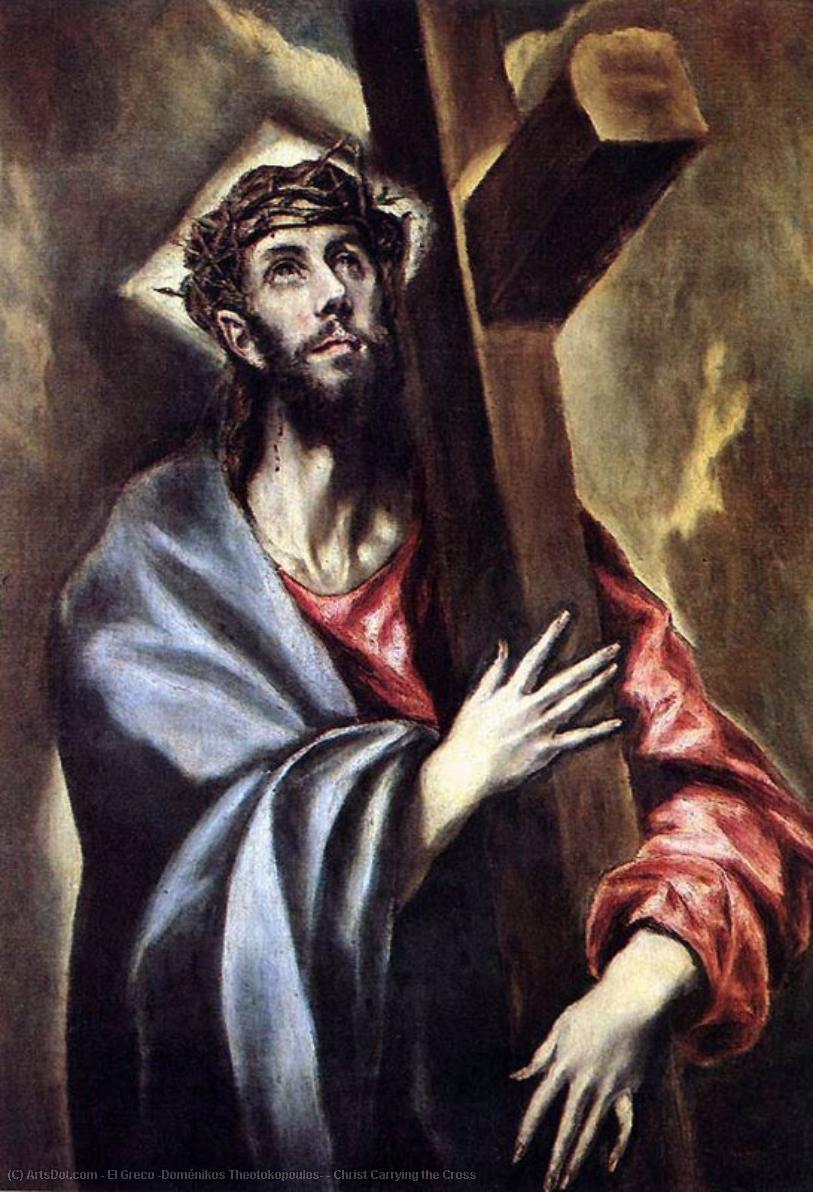
A Vision of Suffering and Spiritual Ascent: El Greco’s ‘Christ Carrying the Cross’
Doménikos Theotokópoulos, universally known as El Greco – “the Greek” – remains one of the most enigmatic figures in European art history. Born in Crete around 1541, his artistic journey was marked by constant movement and experimentation, ultimately culminating in a singular style that transcends categorization and anticipates movements like Expressionism decades later. More than just an artist; El Greco was a man profoundly shaped by faith and circumstance—a Cretan Orthodox priest who embraced Catholicism after relocating to Toledo, Spain—influences which irrevocably molded his artistic vision. His early training within the Byzantine tradition instilled in him meticulous attention to detail and a deep understanding of religious iconography, yet he refused to be bound by convention, forging ahead with an audacious approach that would forever alter the landscape of Spanish painting.
- Subject Matter: The painting depicts Jesus Christ carrying his cross – a central motif in Christian iconography representing sacrifice, redemption, and divine compassion.
- Style: El Greco’s distinctive style is characterized by elongated figures, dramatic poses, and ethereal lighting—a stylistic hallmark that distinguishes him from his contemporaries. This approach departed significantly from the prevailing Renaissance ideals of proportion and realism.
Technique and Materials
El Greco employed oil paint on canvas, utilizing a technique known as sfumato – a subtle blending of colors to create soft transitions and atmospheric depth. This masterful manipulation of light contributes significantly to the painting’s emotional impact, conveying a sense of solemn contemplation and spiritual transcendence. The artist meticulously layered pigments, achieving remarkable textural richness and capturing the contours of Christ's body with astonishing accuracy despite his stylized form. Careful observation reveals subtle nuances in color and brushwork that underscore El Greco’s dedication to artistic excellence.
Historical Context: Toledo and Spiritual Renewal
Painted around 1578, ‘Christ Carrying the Cross’ emerged during a period of fervent religious fervor in Spain—the Spanish Golden Age—following the Reconquista and fueled by papal decrees aimed at combating heresy. Toledo, El Greco's adopted home city, served as a bastion of Catholicism and attracted artists seeking patronage from the Habsburg court. The painting reflects this spiritual climate, embodying the ideals of piety and devotion prevalent during the era. Its placement within the Prado Museum underscores its significance as a cornerstone of Spanish artistic heritage.
Symbolism: Light and Darkness – Hope Amidst Suffering
The composition is deliberately structured to convey profound symbolic meaning. The upward gaze of Christ symbolizes spiritual aspiration—a yearning for divine grace—while the cross itself represents sacrifice and atonement for humanity’s sins. El Greco’s masterful use of chiaroscuro—the dramatic contrast between light and dark—amplifies these themes, highlighting Christ's vulnerability against a backdrop of solemn darkness. The muted colors contribute to an atmosphere of melancholy contemplation, inviting viewers to contemplate the profound mysteries of faith and redemption.
Emotional Impact: A Portrait of Devotion
‘Christ Carrying the Cross’ transcends mere representation; it communicates an intense emotional experience—a palpable sense of sorrow mingled with unwavering faith. El Greco's expressive brushwork captures the physicality of Christ’s suffering, yet simultaneously elevates him to a realm of spiritual majesty. The painting continues to resonate powerfully with audiences today, serving as a testament to the enduring power of art to evoke emotion and inspire contemplation on themes of sacrifice, compassion, and divine love. Its reproductions offer an opportunity to appreciate El Greco's genius and immerse oneself in the artistic spirit of the Spanish Renaissance.