Explore El Greco's dramatic art! Discover Mannerist masterpieces, religious scenes & elongated figures. A pioneer of Expressionism & Cubism – view his iconic paintings!
Explore The Metropolitan Museum of Art: 5,000 years of art from around the world! Discover masterpieces, ancient artifacts & immersive exhibitions – a global art destination awaits.
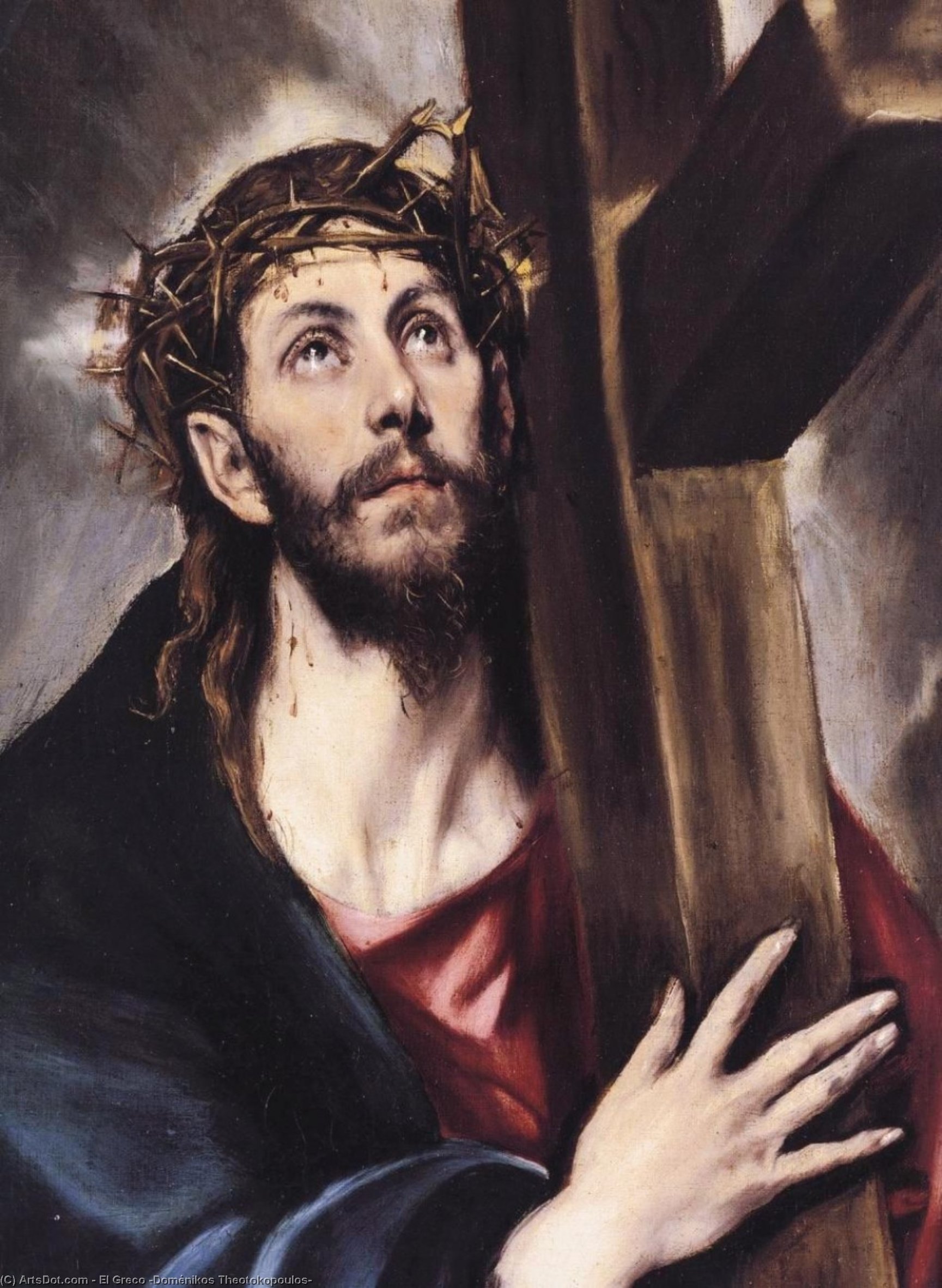
A Vision of Suffering and Spiritual Transcendence: El Greco’s ‘Christ Carrying the Cross’
Doménikos Theotokópoulos, universally known as El Greco – “the Greek” – stands apart from his contemporaries not merely as a painter but as an artist who wrestled with faith and forged a style utterly his own. Born in Crete in 1541, under Venetian rule, his artistic journey took him through Venice and Rome before establishing himself definitively in Toledo, Spain—a city steeped in religious fervor and serving as the crucible for his distinctive aesthetic. El Greco’s influence transcends stylistic boundaries; he anticipated the expressive dynamism of Expressionism and foreshadowed the fragmented forms characteristic of Cubism centuries ahead of their time. His formative years within the Byzantine tradition instilled a meticulous attention to detail and an unwavering grasp of iconography, yet he refused to be confined by convention. He proudly signed his canvases in Greek – “Krḗs” – asserting his Cretan heritage while simultaneously embracing new artistic horizons. The genesis of El Greco’s singular style resides in this paradoxical tension between tradition and innovation.
The Byzantine Echoes: Composition and Technique
Early training under Andrei Tzvetakos, a Venetian icon painter, instilled in El Greco the discipline of Byzantine art—a reverence for precise rendering and an understanding of spiritual symbolism. However, he swiftly rejected the static formality of his predecessors, favoring instead dynamic poses and elongated figures that convey profound emotion. His technique involved layering thin glazes of oil paint over preparatory underdrawings, creating a luminous surface texture that captures the ethereal quality of religious experience. This method—particularly evident in ‘Christ Carrying the Cross’—allowed him to achieve an unprecedented level of expressive intensity, prioritizing emotional impact over strict anatomical accuracy. The artist deliberately distorted proportions and flattened perspective, rejecting Renaissance ideals of realism in favor of conveying spiritual truth.
A Dramatic Narrative: Symbolism and Context
Painted circa 1580 during El Greco’s period in Toledo—a city grappling with the Reformation—‘Christ Carrying the Cross’ embodies a profound meditation on suffering and redemption. The figure of Christ dominates the composition, his gaze upward towards heaven as he bears the weight of the cross – a universally recognized symbol of sacrifice and divine compassion. The positioning of Jesus is deliberately unsettling; he appears to be burdened not only physically but spiritually, reflecting the existential anxieties of the era. Surrounding him are figures representing Mary Magdalene and Nicodemus, their expressions conveying sorrow and reverence. These additions amplify the narrative’s emotional resonance, inviting contemplation on themes of faith, repentance, and divine grace. The stark contrast between light and dark—a hallmark of El Greco's chiaroscuro technique—further enhances the dramatic effect, emphasizing Christ’s vulnerability against the backdrop of celestial majesty.
Beyond Representation: Emotional Intensity and Artistic Legacy
El Greco’s masterpiece transcends mere depiction; it strives to evoke a visceral response in the viewer. The elongated limbs and stylized drapery contribute to an otherworldly atmosphere, conveying a sense of spiritual transcendence. Critics have noted El Greco's masterful manipulation of color—particularly the use of vibrant reds and blues—to heighten emotional impact. His work continues to inspire artists and captivate audiences today, demonstrating the enduring power of art to communicate profound truths about human experience. Reproductions of ‘Christ Carrying the Cross’ offer a remarkable opportunity to appreciate El Greco’s visionary genius and immerse oneself in the spiritual landscape of 16th-century Spain—a testament to an artist who dared to redefine artistic conventions and forge a path toward expressive innovation.