Explore El Greco's dramatic art! Discover Mannerist masterpieces, religious scenes & elongated figures. A pioneer of Expressionism & Cubism – view his iconic paintings!
Madonna and Child with St. Martina and St. Agnes: A Synthesis of Byzantine Soul and Renaissance Grace
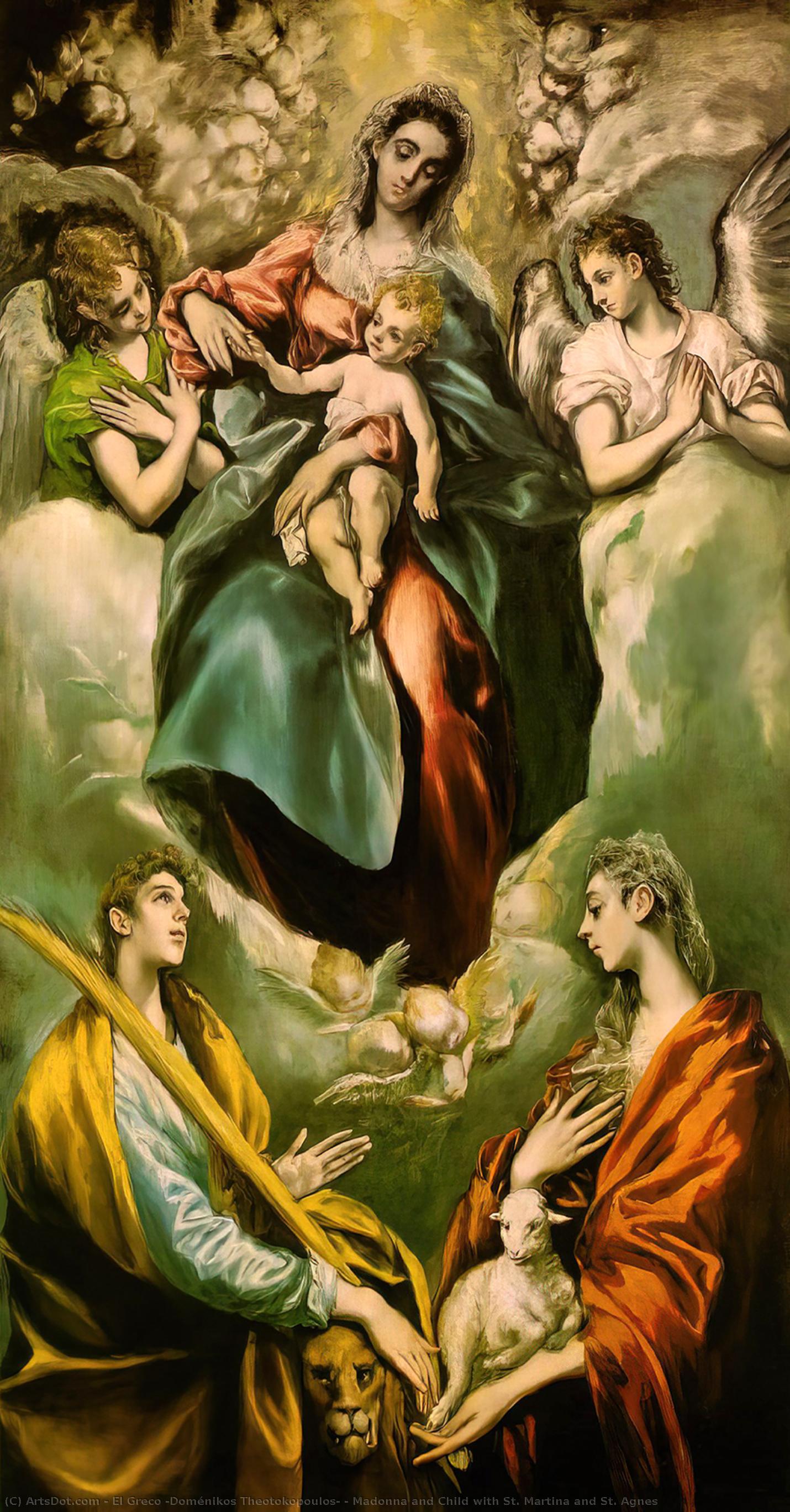
The painting “Madonna and Child with St. Martina and St. Agnes” by El Greco (Doménikos Theotokopoulos) stands as a singular achievement in art history—a breathtaking fusion of Byzantine spirituality and Renaissance artistic innovation. Executed around 1597-99, this monumental oil on canvas transcends mere representation; it embodies an emotional depth that continues to resonate with viewers centuries later. Commissioned for the Chapel of Saint Joseph in Toledo, Spain, it exemplifies El Greco’s masterful command of color, composition, and psychological nuance—elements that firmly establish him as a trailblazing artist who bridged the gap between two dominant artistic traditions.
Compositional Harmony: Byzantine Influence Meets Renaissance Precision
El Greco's genius lies primarily in his ability to synthesize disparate influences into a cohesive visual experience. The painting’s central figures – Mary cradling Jesus – are positioned within an ethereal cloudscape, mirroring the serene grandeur characteristic of Byzantine iconography. This deliberate choice underscores the importance of divine grace and contemplation—themes deeply rooted in Orthodox Christian belief. However, unlike much Byzantine art, which often favored flattened perspectives and stylized drapery, El Greco employs a more dynamic compositional arrangement reminiscent of Renaissance painting. The elongated figures, particularly Mary’s torso and arms, contribute to this sense of movement and heighten the dramatic impact of the scene. Furthermore, the subtle use of chiaroscuro—the interplay between light and shadow—creates an atmosphere of profound solemnity and enhances the emotional intensity of the artwork.
Technique and Color Palette: Mastering Mannerism’s Expressive Power
El Greco's distinctive technique—often termed Mannerist—is marked by a deliberate rejection of idealized beauty in favor of conveying psychological states. He achieves this through meticulous brushwork, layering pigments with remarkable precision to build up textured surfaces that capture the subtleties of human emotion. The artist’s palette is dominated by muted hues—pale blues, ochres, and reds—creating an overall tonal harmony that reinforces the painting's contemplative mood. Yet, flashes of vibrant color—particularly in the angelic robes and St. Agnes’s garment—punctuate the composition, injecting visual energy into the serene backdrop. These carefully considered choices demonstrate El Greco’s profound understanding of how color can communicate feeling and contribute to the overall narrative of the artwork.
Symbolism: Faith, Martyrdom, and Divine Protection
The painting is laden with symbolic significance reflecting the religious fervor of its time—the Counter-Reformation in Spain. St. Martina and St. Agnes are depicted as martyrs for their unwavering faith, symbolizing purity and spiritual fortitude. The lamb held by St. Agnes serves as a potent emblem of innocence and divine protection—a motif frequently employed in Christian art to convey moral virtue. The angel figures flanking Mary and Jesus represent God’s benevolent guardianship over humanity, reinforcing the painting's overarching message of hope and redemption. Moreover, the inclusion of five angelic heads beneath Mary’s feet symbolizes the Holy Spirit—the divine force that sustains life and illuminates the soul.
Emotional Resonance: A Portrait of Spiritual Reverence
Ultimately, “Madonna and Child with St. Martina and St. Agnes” transcends its formal elements to evoke a powerful emotional response in the viewer. The painting's gaze—Mary’s downward glance at Jesus—communicates tenderness and compassion—a testament to the maternal love that defines Christian faith. The ethereal atmosphere created by El Greco’s masterful use of light and color fosters a sense of serenity and contemplation—inviting viewers to immerse themselves in the profound beauty of divine grace. This enduring legacy confirms El Greco's position as one of the most influential artists of his era, whose work continues to inspire admiration and provoke reflection across generations.