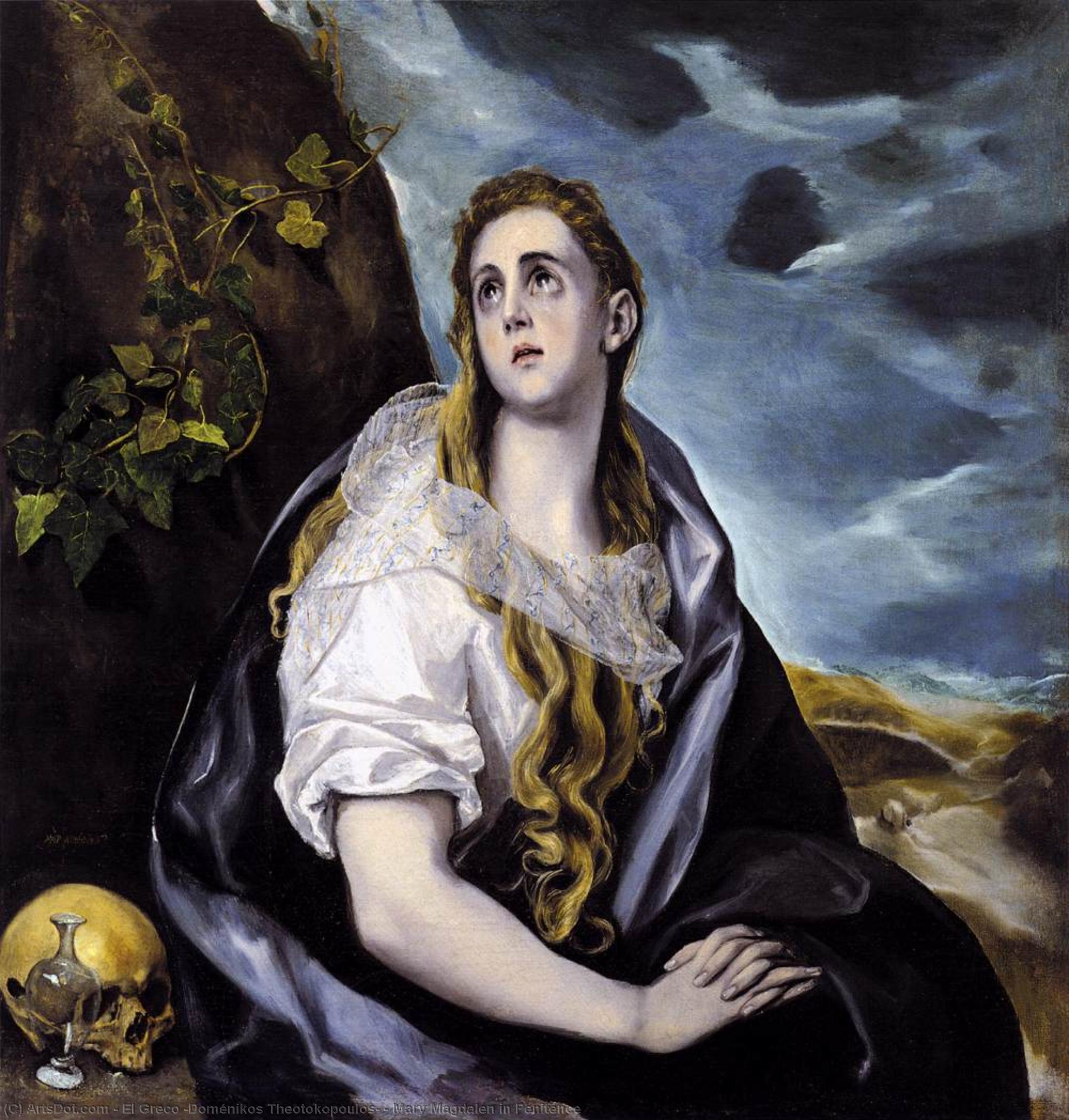
Mary Magdalen in Penitence: A Masterpiece of Emotion and Spirituality
El Greco, a renowned Spanish artist, created the captivating painting Mary Magdalen in Penitence around 1577. This oil on canvas masterpiece showcases the artist's unique style, which combines elements of Byzantine and Renaissance art with an expressive use of color and form. The work is currently housed at the Museum of Fine Arts in Budapest, Hungary, and its dimensions are 105 x 83 cm.
About the Artist: Doménikos Theotokópoulos – El Greco
El Greco (also known as Doménikos Theotokópoulos) was born in Crete in 1541 and passed away in 1614. His journey began on his native island, steeped in Byzantine artistic traditions where he honed his skills as an icon painter. He later moved to Venice, absorbing the vibrant techniques of Venetian masters like Titian and Tintoretto. His travels continued to Rome before ultimately settling in Spain, a period marked by intense religious fervor and artistic innovation. El Greco’s distinctive style emerged from this confluence of influences, leaving an indelible mark on art history. His works are celebrated for their dramatic intensity, elongated figures, and spiritual depth.
The Painting: A Moment of Contemplation
Mary Magdalen in Penitence is a powerful depiction of the biblical figure Mary Magdalene, a pivotal character in Christian tradition. The painting captures her in a moment of profound contemplation and penitence, reflecting on her past life and embracing spiritual renewal. El Greco masterfully uses oil paint to create rich textures and vibrant colors that amplify the emotional intensity of the scene. The composition features Mary Magdalene seated amidst a desolate landscape, emphasizing her solitude and introspection. A skull rests near her feet, a potent symbol of mortality and the fleeting nature of earthly existence. Two vases are placed in the background, adding depth to the scene.
Style and Technique: Mannerism and Mysticism
El Greco’s artistic style is instantly recognizable for its distinctive characteristics. Mary Magdalen in Penitence exemplifies his signature Mannerist approach, characterized by elongated figures that defy natural proportions, dramatic lighting effects that heighten the emotional impact, and a unique perspective that creates a sense of depth and spirituality. The use of color is particularly striking; El Greco employs contrasting hues to emphasize the figure's isolation and inner turmoil. His technique blends Byzantine influences with Renaissance innovations, resulting in a style that transcends conventional artistic boundaries. The painting’s expressive brushwork and dynamic composition contribute to its overall emotional power, inviting viewers into Mary Magdalene’s introspective world.
Symbolism and Emotional Impact
Beyond the visual beauty of Mary Magdalen in Penitence lies a wealth of symbolic meaning. The skull serves as a memento mori, reminding us of our mortality and prompting reflection on the spiritual path. The ivy, intertwined with the rocks, symbolizes eternal life and resurrection, offering a glimmer of hope amidst the somber setting. Mary Magdalene’s posture—her bowed head and clasped hands—conveys profound sorrow and repentance. El Greco's masterful use of light and shadow further enhances the emotional impact, drawing viewers into the scene and evoking feelings of empathy and spiritual contemplation. The painting is not merely a portrait; it is an exploration of faith, redemption, and the enduring power of human emotion.