Penitent Magdalen: A Masterpiece of Repentance and Spiritual Transformation
The
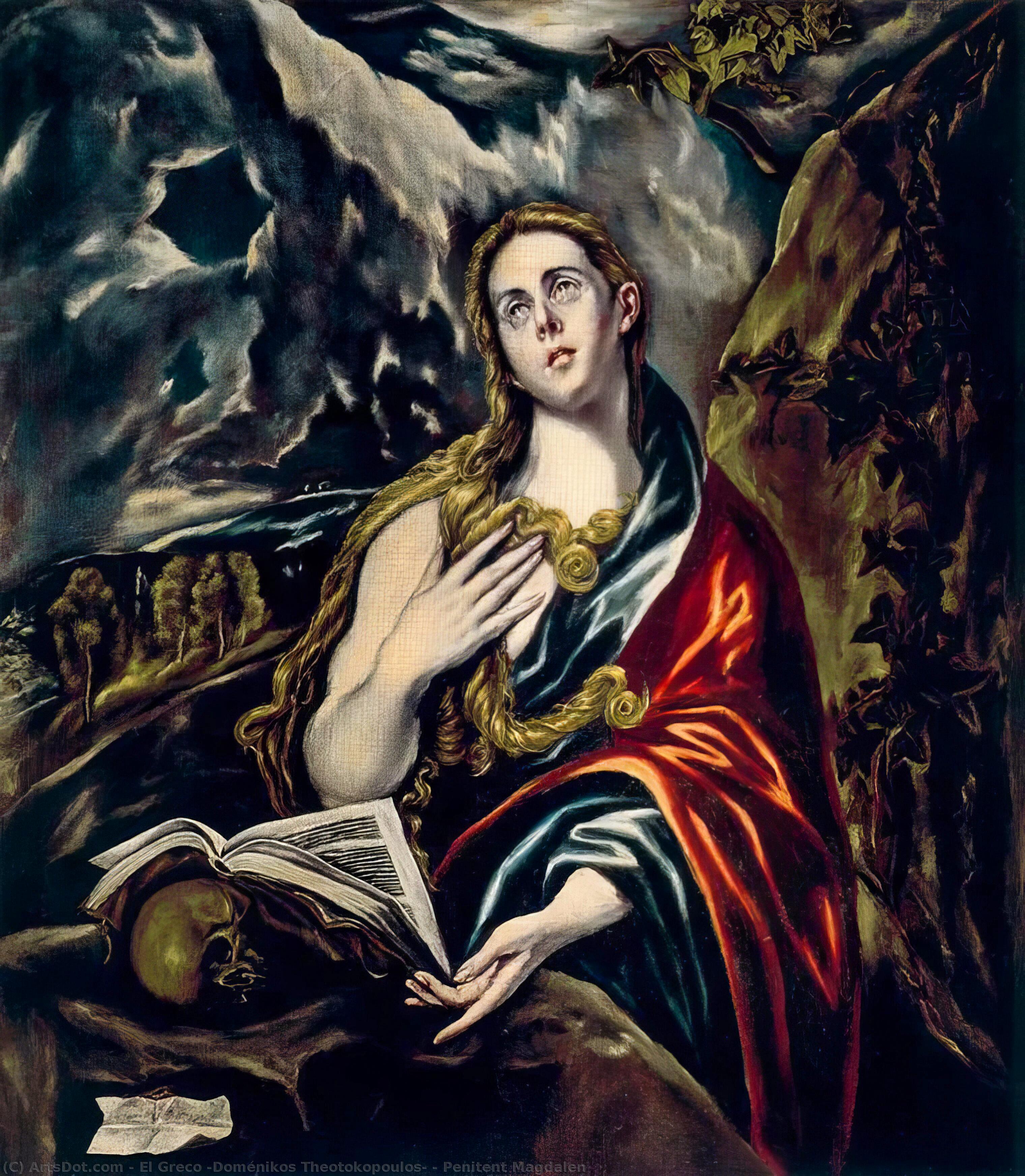
Penitent Magdalen, painted by El Greco (Doménikos Theotokopoulos) in 1600, is a profoundly moving depiction of repentance and spiritual awakening. This oil on canvas painting, measuring 118 x 105 cm, resides within the esteemed
Museum Galleria Estense in Modena, Italy. It stands as a testament to El Greco’s unique artistic vision and his deep understanding of religious themes.
El Greco's Distinctive Artistic Style
El Greco’s style is instantly recognizable – a captivating blend of Greek heritage, Venetian influences from his early career, and the Mannerist movement prevalent in Europe at the time. This painting exemplifies these characteristics through its expressive brushwork, dramatic use of light and shadow (tenebrism), and elongated figures that create an otherworldly atmosphere. The composition isn't about realistic representation; it’s about conveying intense emotion and a sense of spiritual mystery. The swirling forms and vibrant colors contribute to the overall feeling of heightened drama and religious fervor.
Symbolism and Narrative
This artwork portrays Mary Magdalene, a pivotal figure in Christian tradition known for her devotion and repentance after a life as a sinner. Several symbolic elements enrich the narrative: Her long, flowing hair signifies her transformation from a woman of loose morals to a devoted follower of Christ. The ointment jar she holds references her anointing of Jesus' feet with expensive perfume, demonstrating her profound love and service. The presence of a skull at her side serves as a potent *memento mori*, reminding viewers of mortality and the fleeting nature of earthly existence. Crucially, ivy entwined nearby symbolizes immortality and resurrection – hope for eternal life through faith. The shaft of light breaking through the dark sky above Mary Magdalene represents divine grace and spiritual catharsis, signifying her purification and promise of heavenly reward.
Inspiration and Artistic Dialogue
El Greco drew inspiration from Titian's earlier depictions of Mary Magdalene, but he significantly departed from Titian’s style. While Titian’s version often carried subtle erotic undertones, El Greco deliberately focused on the moment of conversion – a powerful depiction of purification and spiritual upliftment. This shift in emphasis underscores El Greco’s commitment to conveying profound religious meaning through his art, moving beyond mere physical representation towards an exploration of inner transformation. The painting is not simply a portrait; it's a visual meditation on faith, repentance, and the possibility of redemption.
A Legacy of Spiritual Art
The Penitent Magdalen is a cornerstone of El Greco’s oeuvre and exemplifies his unique ability to blend artistic styles and explore profound spiritual themes. Explore other works by this master at
https://ArtsDot.com, where you can acquire a meticulously hand-painted oil painting reproduction that captures the essence and beauty of this iconic artwork. For further exploration of El Greco's life and legacy, visit:
https://en.wikipedia.org/wiki/El_Greco. Discover more El Greco masterpieces available at ArtsDot.com:
https://ArtsDot.com/@/El-Greco-(Domenikos-Theotokopoulos)