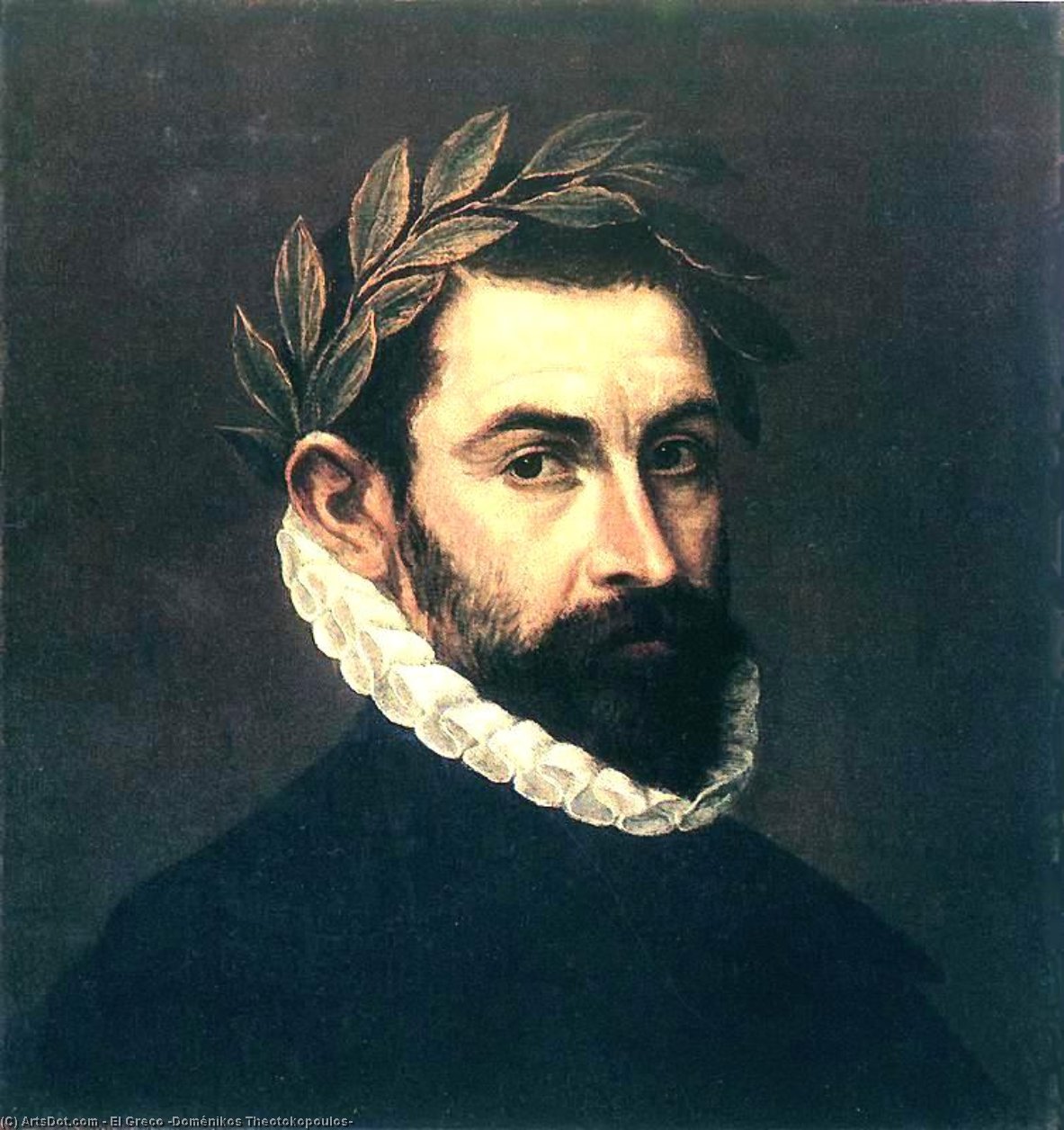
A Portrait Steeped in Spirituality: Exploring El Greco’s ‘Poet Ercilla y Zuniga’
Doménikos Theotokópoulos, universally known as El Greco – “the Greek” – remains an artist whose legacy transcends time and borders. His singular vision fused Byzantine tradition with Western Renaissance influences, resulting in a style that continues to fascinate scholars and inspire artists today. Among his vast oeuvre, ‘Poet Ercilla y Zuniga,’ painted in 1591, embodies this distinctive approach perfectly—a captivating depiction of Alonso de Ercilla y Zúñiga, the celebrated Spanish poet whose epic poem 'La Araucana' chronicles the conquest of Chile.
- Subject Matter: Beyond Mere Representation
- El Greco’s portrayal isn’t simply a likeness; it’s an attempt to capture Ercilla’s intellectual and artistic essence. The poet is presented with solemn dignity, gazing directly at the viewer—a gesture that invites contemplation and underscores the importance of intellectuality within El Greco's worldview.
Stylistic Innovation: Realism Infused with Mysticism
El Greco’s technique distinguishes him from his contemporaries. Employing oil on canvas, he achieved remarkable luminosity and vibrancy—a deliberate departure from the muted palettes favored by many artists of the period. The artist skillfully utilized chiaroscuro – dramatic contrasts between light and dark – to sculpt Ercilla's form, emphasizing musculature and conveying a palpable sense of inner turmoil. Yet, this realism is tempered by an ethereal quality; El Greco’s elongated figures and distorted perspectives hint at a spiritual realm beyond the visible world. The ruffled collar and beard serve as visual emblems of nobility and wisdom, reinforcing the artist’s intention to elevate his subject beyond mere portraiture.
Symbolism: Laurel Wreath and Contemplative Expression
The wreath encircling Ercilla's head is laden with symbolic significance. It represents poetic laurels—a testament to Ercilla’s literary achievements and a visual allusion to classical ideals of beauty and honor. More profoundly, however, the poet’s gaze conveys an intense concentration and introspection. He appears lost in thought, suggesting that El Greco sought to depict not just what he saw but also what he felt—the inner life animating his subject. This deliberate choice aligns with El Greco's broader artistic preoccupation with conveying spiritual truths through visual imagery.
Historical Context: Renaissance Spain and Artistic Dialogue
‘Poet Ercilla y Zuniga’ emerged during a period of considerable cultural dynamism in Spain—the High Renaissance. The revival of classical learning fueled artistic experimentation, encouraging artists to push boundaries and explore new expressive possibilities. El Greco's work stands as a pivotal example of this dialogue between Byzantine spirituality and Western humanist ideals. His influence extended far beyond Toledo, shaping the aesthetic sensibilities of subsequent generations.
- Conservation Status: Currently housed in The State Hermitage Museum in Russia.
Ultimately, ‘Poet Ercilla y Zuniga’ transcends its formal elements to communicate a powerful emotional resonance. It invites viewers to consider the complexities of human intellect and spirituality—a testament to El Greco's enduring artistic genius and his ability to transform a portrait into an emblem of profound contemplation.