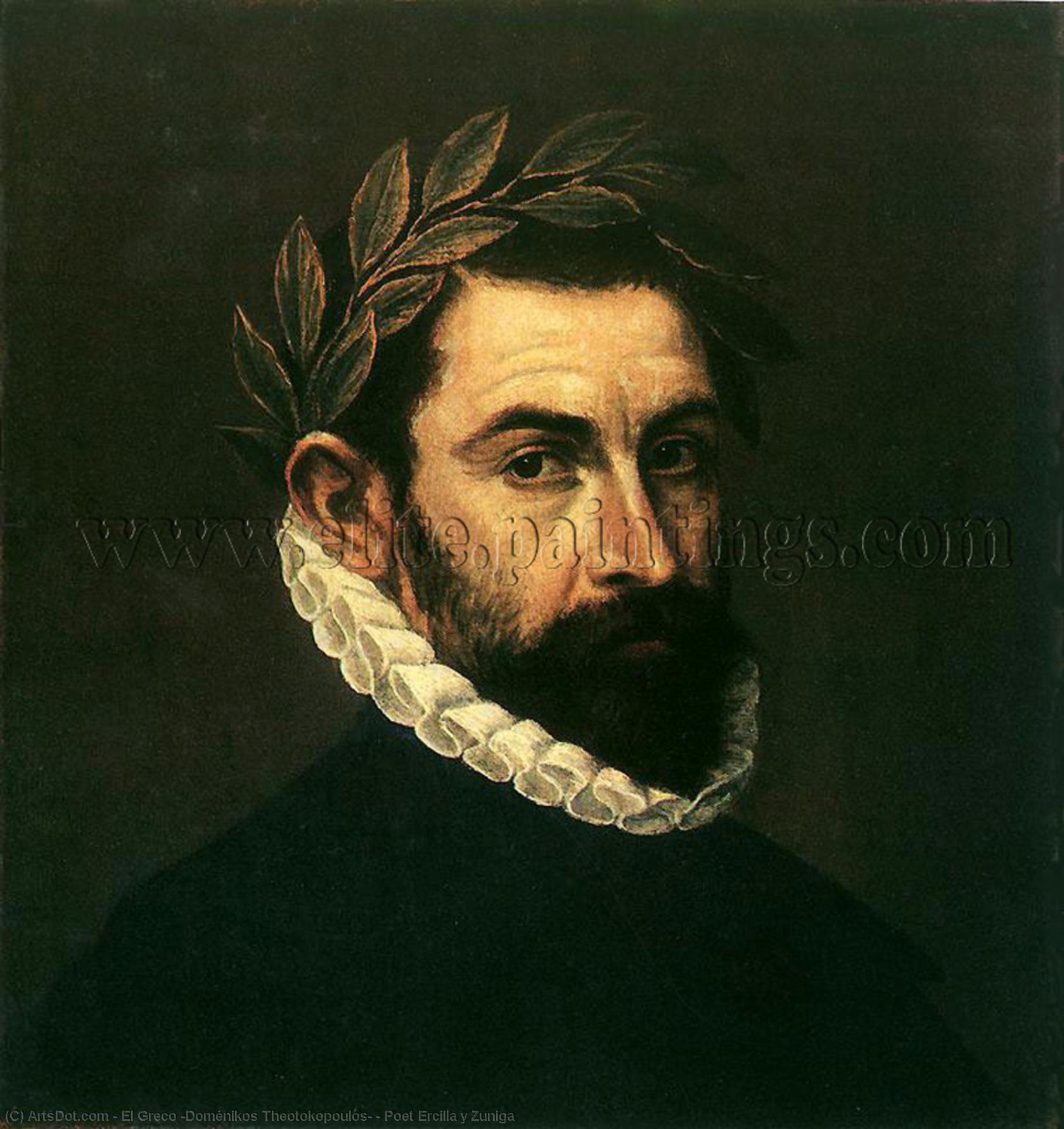
A Vision in Black and White: El Greco’s Portrait of Poet Ercilla y Zuniga
Doménikos Theotokópoulos, universally known as El Greco, possessed an extraordinary ability to imbue his canvases with a palpable sense of drama and spiritual intensity. His 1600 portrait of Poet Ercilla y Zuniga is no exception – it’s a deeply resonant work that transcends the simple depiction of a subject, offering instead a glimpse into the soul of a man and the cultural currents of 17th-century Spain. The painting resides within the hallowed halls of the Museo Monasterio de San Lorenzo (El Escorial), a testament to its historical significance and El Greco’s enduring legacy.
Ercilla y Zuniga, a prominent figure in Spanish literature celebrated for his epic poem *La Galatea*, is presented here not as a triumphant hero, but as a man of quiet dignity and profound contemplation. He wears the attire of a scholar – a dark suit accented by a crisp white collar, a symbol of intellectual standing and perhaps even religious devotion prevalent at the time. A wreath encircles his head, an elaborate adornment that speaks volumes about his achievements and recognition within the literary world. His gaze is direct, unwavering, meeting the viewer with a seriousness that invites introspection.
The Language of El Greco: Style and Technique
El Greco’s distinctive style is immediately recognizable in this portrait. He masterfully blends Byzantine influences – evident in the flattened perspective and stylized forms – with the emerging traditions of Western art, creating a visual language entirely his own. The elongated figures, a hallmark of his work, contribute to an atmosphere of heightened emotion and spiritual weight. Notice how he manipulates space; the background recedes dramatically, drawing attention solely to Ercilla’s presence.
The artist's command of oil paint is breathtaking. He employs bold colors – primarily blacks, whites, and subtle earth tones – to create a striking contrast that emphasizes form and texture. The meticulous detail in the rendering of his clothing, the delicate folds of the wreath, and the subtle nuances of his face demonstrate El Greco’s exceptional technical skill. The use of light and shadow is particularly effective, sculpting Ercilla's features and conveying a sense of depth and volume despite the stylized approach.
Symbolism and Context: A Window into 17th-Century Spain
Beyond its aesthetic qualities, the portrait offers valuable insights into the cultural context of 17th-century Spain. The setting – the historical residence of the King at El Escorial – speaks to the importance of patronage and the close relationship between art and power. The choice of subject, a celebrated poet, reflects the value placed on intellectual pursuits during this period.
The wreath itself carries symbolic weight; it represents not just artistic achievement but also honor, wisdom, and perhaps even divine favor. The somber attire further suggests a contemplative nature, aligning Ercilla with the ideals of scholarship and moral virtue. Furthermore, El Escorial’s architecture – a blend of Gothic and Renaissance styles – mirrors the complex cultural synthesis that characterized Spain at the time.
A Legacy of Emotion: The Enduring Power of El Greco
El Greco's *Poet Ercilla y Zuniga* is more than just a portrait; it’s a powerful meditation on human dignity, intellectual achievement, and the spiritual landscape of an era. His ability to capture not only physical likeness but also inner character remains remarkably potent centuries later. The painting’s dramatic intensity and evocative symbolism continue to resonate with viewers, inviting them to contemplate the complexities of the human experience.
At ArtsDot.com, we are proud to offer meticulously crafted hand-painted reproductions of this iconic masterpiece. Each reproduction captures the essence of El Greco's style and technique, allowing you to bring this extraordinary work into your home or office. Explore our collection today and discover the timeless beauty of *Poet Ercilla y Zuniga*. Learn more here.
For further exploration, we encourage you to visit the Museo de El Greco in Toledo, Spain, or delve into the artist’s life and work on Wikipedia: El Greco. You may also find inspiration in our other works by El Greco, such as *The Ecstasy of St. Francis of Assisi*.