Portrait of a Man 1: An Exploration of Mannerist Elegance
The artwork “Portrait of a Man” stands as a testament to El Greco’s mastery of the Mannerist style, emerging from the crucible of Venetian artistic influence around 1586-90. This captivating oil painting on cardboard transcends mere representation; it embodies an introspective gaze and subtle psychological depth that continues to resonate with viewers today. Its placement within the National Gallery of Art in Washington D.C., alongside other masterpieces of its era, underscores its significance as a pivotal piece of European art history.
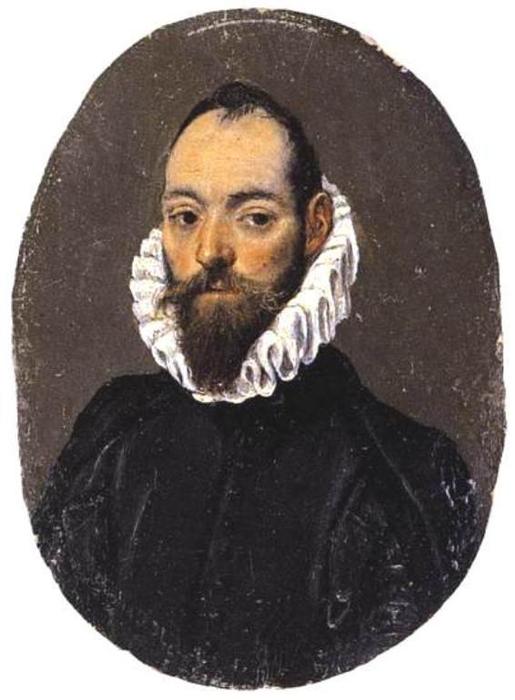
- Subject Matter: The portrait depicts a dignified gentleman—likely Andrea Palladio, the celebrated architect—presented in a half-length format that prioritizes direct engagement with the viewer’s gaze. Palladio's posture exudes composure and thoughtfulness, reflecting the humanist ideals prevalent during the Renaissance.
- Style & Technique: El Greco’s signature Mannerist style is immediately apparent through elongated proportions – particularly noticeable in the hands – and a dramatic use of chiaroscuro (light and shadow). These techniques elevate the painting beyond simple realism, creating an atmosphere of solemnity and conveying profound emotion. The artist skillfully blends pigments to achieve velvety textures and subtle gradations of color, demonstrating meticulous attention to detail.
- Color Palette: Dominated by muted tones of black, grey, and brown—accentuated by delicate highlights on Palladio’s forehead, nose, and chin—the palette eschews vibrancy for a contemplative mood. The restrained colors serve to heighten the impact of Palladio's facial expression and contribute to the painting’s overall sense of solemnity.
- Composition: The composition adheres to classical conventions of portraiture, centering Palladio’s head within an oval frame—a device that directs the viewer’s eye directly to his face. Minimal negative space reinforces this focus, emphasizing the figure's presence and conveying a feeling of quiet contemplation.
- Symbolic Elements: The elaborate ruff around Palladio’s neck symbolizes status and authority – a common motif in portraits commissioned by wealthy patrons during the period. Furthermore, the man’s gaze is imbued with an intensity that suggests introspection and conveys a profound awareness of his surroundings.
The painting's influence extends beyond its aesthetic qualities; it reflects the broader intellectual currents of the time—the humanist revival championed by thinkers like Erasmus and Pico della Mirandola—which sought to recapture the grandeur of classical antiquity while simultaneously exploring the complexities of human psychology. El Greco’s masterful manipulation of light and shadow, combined with his nuanced portrayal of Palladio's character, cements this artwork's place as a cornerstone of Mannerist art and a timeless exemplar of artistic expression. Its enduring appeal lies in its ability to evoke contemplation and inspire admiration for the beauty of understated elegance—a legacy that continues to captivate audiences centuries after its creation.
Historical Context: Venetian Influence & Artistic Innovation
El Greco’s formative years spent in Venice exposed him to the artistic innovations championed by Titian, Tintoretto, and Veronese – masters who embraced dramatic lighting and expressive brushwork. This exposure profoundly shaped El Greco's stylistic sensibilities, informing his approach to portraying human figures with heightened emotional intensity. The Venetian tradition encouraged artists to prioritize psychological realism over mere visual accuracy—a principle that aligns seamlessly with El Greco’s artistic vision.
Technical Considerations: Mastering Chiaroscuro & Texture
El Greco's technique exemplifies the meticulous craftsmanship characteristic of Mannerist painting. He achieved remarkable textural effects through layering and blending pigments, creating surfaces that appear velvety to the touch—a deliberate departure from the smoother finishes favored by earlier Renaissance artists. The artist’s masterful control over chiaroscuro – the interplay between light and shadow – dramatically enhances Palladio's portrait’s expressive power, sculpting his face with subtle gradations of tone and emphasizing key features.
Emotional Resonance: Introspection & Dignified Presence
Ultimately, “Portrait of a Man” transcends its formal conventions to convey a profound sense of introspection—a hallmark of Mannerist art that anticipates the emotional explorations of Expressionism. Palladio’s gaze embodies dignity and thoughtfulness, inviting viewers to contemplate the complexities of human experience. The painting's subdued palette and masterful composition contribute to an atmosphere of solemnity—a testament to El Greco’s ability to capture the essence of his subject and communicate enduring artistic ideals.