A Soul in Stone: El Greco’s “St. Dominic Praying”
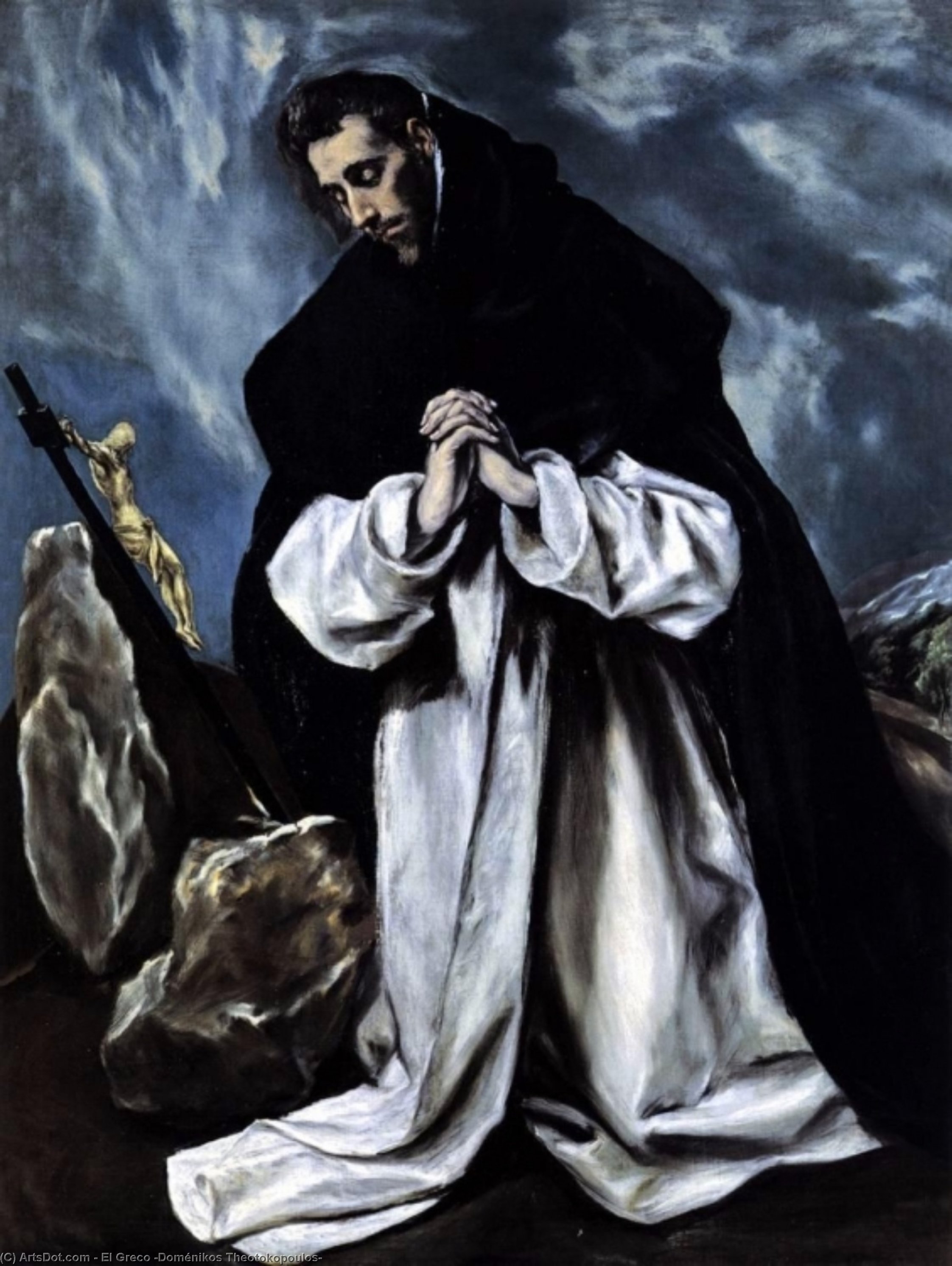
Doménikos Theotokópoulos, universally known as El Greco, possessed an artistic vision that continues to resonate with profound intensity centuries after his death. His 1588 painting, "St. Dominic Praying," housed within the Museo Municipal de Bellas Artes in Spain, is not merely a depiction of a religious figure; it’s a visceral exploration of faith, solitude, and the yearning for divine connection. The canvas, measuring 118 x 86 cm, immediately draws the viewer into a landscape both rugged and austere, mirroring the saint's own spiritual journey. El Greco masterfully employs oil on canvas to create an atmosphere thick with shadow and light, a technique that elevates the painting beyond simple portraiture and firmly establishes it as a work of dramatic power.
The Figure of Faith: Style and Technique
El Greco’s signature style is immediately apparent in “St. Dominic Praying.” He deliberately departs from the conventions of Renaissance realism, favoring elongated figures, distorted perspectives, and vibrant, often clashing colors. This isn't a stylistic choice born of carelessness; rather, it’s a deliberate attempt to convey emotional truth. The saint’s form is attenuated, almost ethereal, suggesting a being existing on the threshold between earthly and spiritual realms. Notice how his robes, rendered in deep blues and blacks, seem to absorb the surrounding darkness, while his face, illuminated with an inner light, becomes a focal point of intense devotion. The artist's use of *sfumato*, a subtle blurring of edges, further contributes to this sense of otherworldly presence. The brushstrokes themselves are visible, adding a layer of texture and immediacy that invites the viewer into the painting’s intimate space.
Symbolism in the Landscape: Nature and Asceticism
The setting surrounding St. Dominic is crucial to understanding the painting's deeper meaning. The rocky, mountainous terrain isn’t a picturesque backdrop; it represents the arduous path of spiritual asceticism – the deliberate renunciation of worldly pleasures in pursuit of God. The ruggedness of the landscape mirrors the saint’s own dedication and the challenges inherent in his chosen life. Furthermore, the presence of two animals—one on either side of the figure—adds another layer of symbolic richness. These creatures, often interpreted as doves or other birds of prey, may represent St. Dominic's connection to nature and his role as a protector of all living things, reflecting the Dominican Order’s commitment to social justice and compassion.
A Testament to Knowledge: The Book and Spiritual Focus
Even the seemingly simple detail of the book resting near St. Dominic's feet holds significance. It symbolizes his dedication to knowledge, scripture, and the intellectual pursuit of faith – a cornerstone of the Dominican Order’s mission. The placement of the book in the lower-left corner subtly anchors the composition while simultaneously emphasizing the saint’s commitment to both inner contemplation and outward action. The contrast between the darkness surrounding him and the light illuminating his face underscores this duality, suggesting that true understanding comes not just from study but also from a profound spiritual experience.
“St. Dominic Praying” is more than simply a portrait; it’s an invitation to contemplate the complexities of faith, the beauty of solitude, and the enduring power of human devotion. ArtsDot offers meticulously crafted reproductions that faithfully capture El Greco's masterful technique and emotional intensity, allowing you to bring this iconic work into your home or office – a testament to a life forged in faith and fire.