Introduction to the Painting
El Greco (Doménikos Theotokopoulos)'s painting
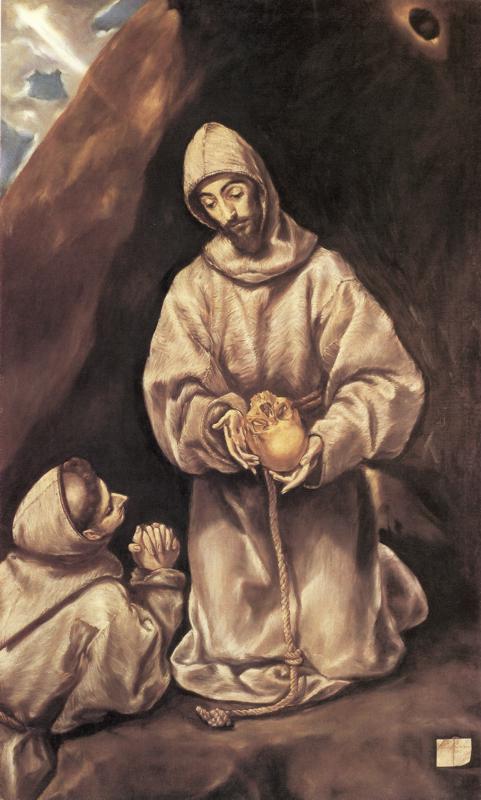
St. Francis and Brother Leo Meditating on Death is a masterpiece of Mannerism, also known as the Late Renaissance. This style emerged in Europe during the 16th century and developed from the Italian Renaissance, spreading to other parts of Europe, including Spain where El Greco was active. The painting depicts St. Francis and Brother Leo deep in meditation on death, a common theme in Mannerist art.
El Greco's Style
El Greco is known for his unique style that combines post-Byzantine art with the Mannerist and Renaissance styles he encountered during his travels to Venice and Rome. His use of distorted proportions, elongated figures, and dramatic lighting set him apart from other artists of his time. In
St. Francis and Brother Leo Meditating on Death, El Greco uses these techniques to create a sense of spiritual intensity and otherworldliness.
The Painting's Significance
St. Francis and Brother Leo Meditating on Death is significant because it reflects the Mannerist interest in exploring complex emotions and spiritual themes. The painting also showcases El Greco's mastery of oil painting techniques, with its rich colors and bold brushstrokes.
Where to See the Painting
The original
St. Francis and Brother Leo Meditating on Death is housed in the
Museum San Rocco in Venice, Italy. However, if you're unable to visit the museum, you can still appreciate El Greco's mastery by purchasing a hand-made oil painting reproduction from
ArtsDot. Our skilled artists use high-quality materials and techniques to create stunning reproductions that capture the beauty and detail of the original.
Conclusion
St. Francis and Brother Leo Meditating on Death by El Greco is a masterpiece of Mannerist art that explores complex emotions and spiritual themes. By purchasing a hand-made oil painting reproduction from
ArtsDot, you can appreciate the beauty and detail of this stunning work of art in your own home.
- Note: All information provided is accurate and true to the best of our knowledge, but we cannot guarantee it is without errors or omissions.