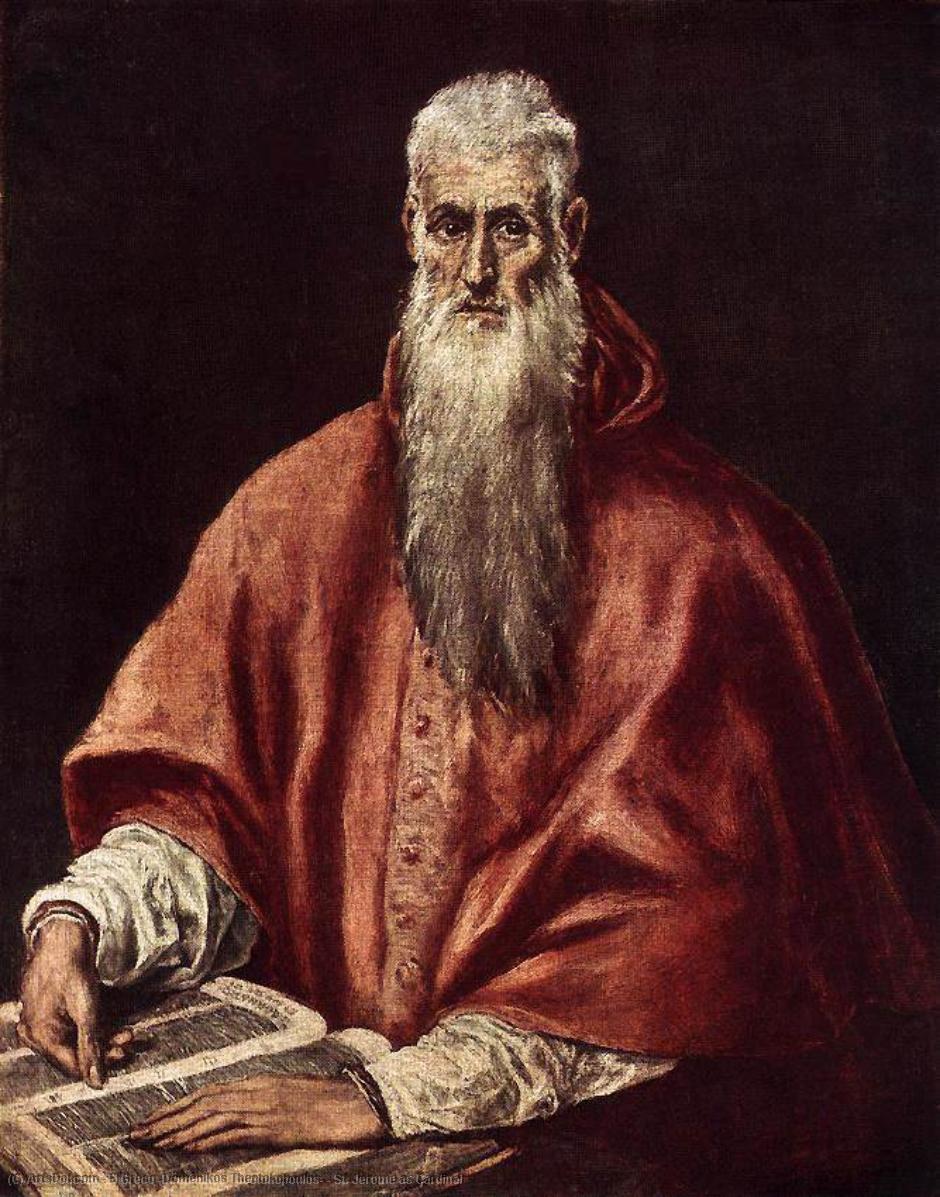
St. Jerome as Cardinal – A Masterpiece of Mannerist Drama
Doménikos Theotokópoulos, universally known as El Greco (meaning “the Greek”), stands as one of the most singular figures in the history of Western art. His dramatic and intensely emotional works bridged the gap between the Renaissance and the Baroque periods, while simultaneously forging a distinctly personal style—a style that continues to fascinate audiences centuries later.
“St. Jerome as Cardinal,” created around 1595, is an oil on canvas painting housed in the National Gallery of London. Measuring 59 x 48 cm, this artwork exemplifies El Greco’s signature Mannerist aesthetic—characterized by elongated forms, heightened emotion, and a masterful manipulation of light and shadow.
The Painting's Significance: Anachronistic Intrigue
El Greco’s genius lies in his audacious blending of Byzantine tradition with Western artistic innovations. The depiction of Saint Jerome as Cardinal presents an immediate paradox—a figure revered for his piety and ascetic devotion adorned with the insignia of papal authority, an office nonexistent during his lifetime. This deliberate incongruity serves not merely as stylistic flourish but as a conduit for exploring themes of faith, humility, and divine grace.
Artistic Style: Mannerist Precision
The painting’s dark background dramatically emphasizes Jerome’s luminous figure—a testament to El Greco's meticulous attention to detail. The artist employs a technique that prioritizes textural contrast; the soft white undergarment juxtaposed against the heavy, luxurious robe creates a palpable sense of depth and materiality. Furthermore, the elongated proportions of Jerome’s body—particularly his torso and limbs—are characteristic of Mannerist style, conveying an inner turmoil and spiritual intensity.
Historical Context: Toledo's Artistic Crucible
El Greco flourished in Toledo, Spain, a city steeped in religious fervor and artistic patronage during the Spanish Renaissance. Trained initially in Crete, he honed his skills in Venice and Rome—environments that profoundly influenced his stylistic development. His commissions from prominent patrons reflected the cultural landscape of his time, cementing his reputation as one of the era’s foremost artists.
Other Works by El Greco: Exploring Byzantine Echoes
- Saint Andrew – Demonstrates the widespread dissemination of El Greco’s style during his lifetime
- The Holy Family with St. Mary Magdalen – Showcases El Greco’s ability to synthesize Byzantine influences with Renaissance techniques
- Female Portrait – Highlights El Greco's skill in capturing the subtleties of human expression and emotion
“St. Jerome as Cardinal” remains a captivating emblem of El Greco’s artistic vision—a masterpiece that continues to inspire admiration and scholarly debate worldwide.
For more information on El Greco and his oeuvre, visit https://ArtsDot.com. To delve deeper into the life and art of El Greco, consult https://en.wikipedia.org/wiki/El_Greco.
Experience the beauty of handmade oil painting reproductions at ArtsDot.com.