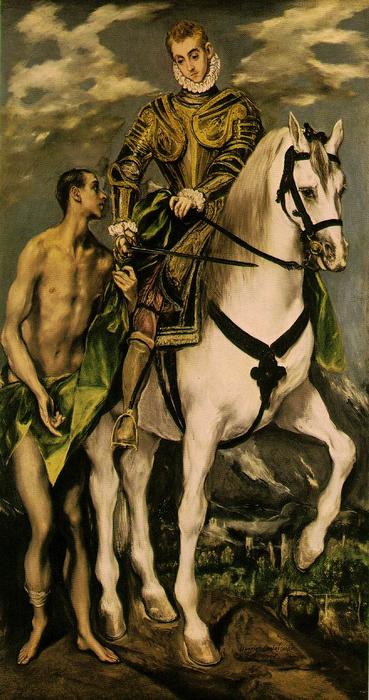
El Greco: A Vision of Compassion
Doménikos Theotokópoulos, universally known as El Greco (meaning “the Greek”), stands as one of the most singular figures in the history of Western art. His distinctive style—a fusion of Byzantine spirituality with Venetian realism and Spanish Renaissance grandeur—created a visual language unlike any other, captivating audiences for centuries. Among his monumental achievements is
St. Martin and the Beggar, a painting that embodies the profound emotional resonance achievable through masterful artistic execution.
Historical Context: Renaissance Echoes in Crete
Painted between 1597 and 1600 during El Greco’s residency in Toledo, Spain—a city steeped in religious fervor—
St. Martin and the Beggar reflects El Greco’s singular artistic trajectory. Influenced by Byzantine iconography—particularly the luminous frescoes of Hagia Sophia—and invigorated by Venetian color palettes—evident in works like
St. Mary Magdalene—he nevertheless forged a path distinctly his own. The painting commemorates a biblical tale recounting Saint Martin’s selfless act of generosity toward a destitute beggar during the winter solstice. This narrative resonated deeply within Renaissance humanist thought, emphasizing moral virtue and compassion.
Composition and Color: Dramatic Tension
El Greco's signature compositional technique—characterized by elongated figures and dynamic drapery—is powerfully deployed in
St. Martin and the Beggar. The artist meticulously arranges the figures within a shallow space, creating a palpable sense of tension between Saint Martin—represented in regal attire—and the beggar, depicted with humble simplicity. The color scheme is equally deliberate: El Greco employs rich reds and blues to illuminate Saint Martin’s cloak, juxtaposed against earthy tones that convey the vulnerability of the impoverished man. This contrast amplifies the painting's emotional impact, conveying a profound connection between the two characters—a testament to El Greco’s ability to communicate spiritual truths through visual artistry.
Symbolism: Virtue and Sacrifice
Beyond its formal elements,
St. Martin and the Beggar is replete with symbolic references that enrich its narrative depth. The beggar embodies Christ—a recurring motif in El Greco’s oeuvre—representing humility and divine compassion. Conversely, Saint Martin's act of distributing his cloak symbolizes selfless generosity and embodies the Christian virtues of charity and piety. Furthermore, the horse—a symbol of nobility and imperial authority—underscores the disparity between the two figures, highlighting the transformative power of compassion to elevate humanity beyond material distinctions.
Conclusion: A Masterpiece of Emotional Expression
El Greco’s
St. Martin and the Beggar remains an unparalleled achievement of Renaissance art—a luminous testament to El Greco’s visionary style and his unwavering commitment to conveying profound spiritual truths. Its enduring beauty lies in its ability to evoke empathy and contemplation, inviting viewers to reflect on universal themes of compassion, humility, and moral virtue. To experience this iconic artwork in exquisite detail, explore high-quality handmade oil painting reproductions at
ArtsDot—where you can find a stunning representation of El Greco’s legacy. The original masterpiece resides within the
Museum Conde de la Infantas Collection in Granada, Spain—further enriching its artistic significance. For more information about the museum and its collection, visit
ArtsDot.