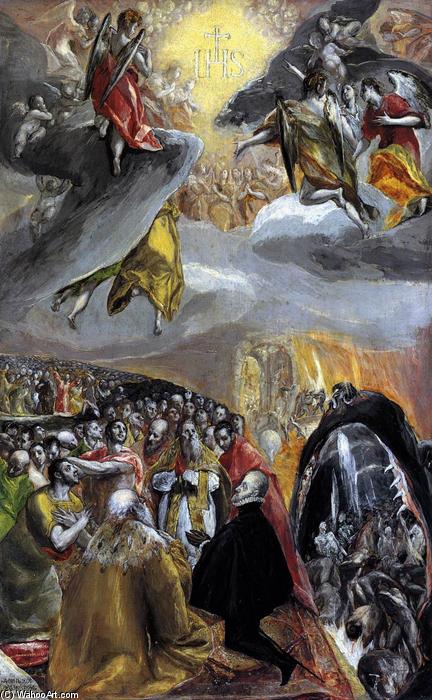
The Adoration of the Name of Jesus by El Greco
Doménikos Theotokópoulos, universally known as El Greco – “The Greek” – stands apart from his contemporaries as a painter whose life and artistic output defied easy categorization. Born in Crete in 1541, under Venetian rule, his journey through Venice and Rome ultimately solidified his legacy within the spiritual landscape of Spain: Toledo.
El Greco wasn’t merely responding to stylistic trends; he synthesized influences from Byzantium and Mannerism into a visual language that anticipated the expressive fervor of Expressionism and the fractured forms of Cubism centuries ahead. His formative years immersed in Byzantine iconography instilled within him an unwavering dedication to meticulous detail and a profound understanding of religious symbolism—a foundation that propelled him beyond convention.
His signature, “Krḗs,” – Cretan – served as a defiant proclamation of his origins, even as he embraced new artistic horizons. The genesis of El Greco’s distinctive style resides in the interplay between tradition and innovation. He absorbed the grandeur of Venetian art—particularly Titian’s luminous color palettes—while simultaneously channeling the emotional intensity championed by Mannerism.
The commission for “Triumph of the Name of Jesus” arrived at a pivotal moment: Philip II, desperate to secure the patronage of Titian and Veronese for El Escorial, entrusted him with decorating the monastery’s nave. This undertaking presented El Greco with an unparalleled challenge—to capture divine majesty through human form.
Considered one of the greatest artists of all time, El Greco's oeuvre is characterized by elongated figures, dramatic lighting, and a palpable sense of spiritual yearning. His masterful technique combined meticulous observation with imaginative distortion, resulting in images that transcend mere representation to convey profound emotion. The influence of Michelangelo’s monumental sculptures can be discerned in his early works—a testament to the enduring power of classical ideals.
- Style: Mannerism – Marked by stylized forms and exaggerated proportions, prioritizing expressive gesture over naturalistic accuracy.
- Technique: El Greco employed oil paint on canvas with a distinctive glazing technique—layering translucent washes to achieve luminous effects and heighten textural depth.
- Historical Context: Toledo flourished during the Habsburg reign, fostering artistic experimentation amidst religious fervor. The commission for “Triumph of the Name of Jesus” reflects the broader cultural climate of Spain in the 16th century.
“The Adoration of the Name of Jesus,” completed in 1578, embodies El Greco’s artistic vision—a fusion of Byzantine spirituality and Mannerist dynamism. The painting's composition draws inspiration from depictions of the Virgin Mary adorning Christ’s manger, reflecting the central dogma of Christian faith.
The depiction of angels ascending towards Jesus underscores themes of divine grace and humility. Furthermore, the inclusion of earthly figures—kneeling supplicants and standing observers—highlights the universality of devotion and reinforces the painting's message of reverence for the sacred.
El Greco’s masterful use of color—particularly vibrant reds and blues—creates a dramatic visual experience that captivates the viewer. The elongated figures convey an ethereal quality, embodying spiritual transcendence. “The Adoration of the Name of Jesus” remains a timeless masterpiece—a testament to El Greco's unparalleled artistic genius.