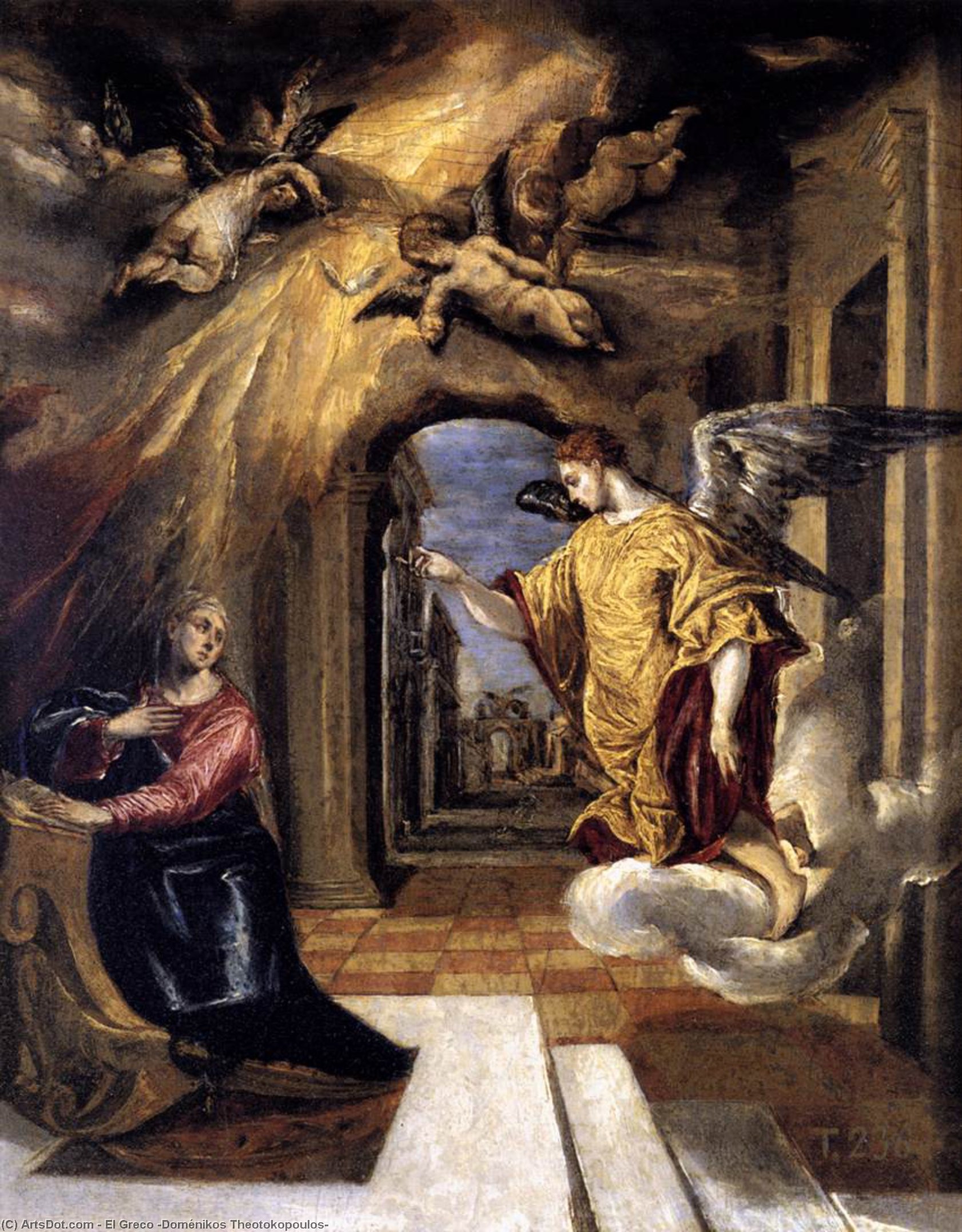
Admire El Greco's serene masterpiece, 'The Annunciation,' housed at Museo del Prado! Explore Venetian influences & Byzantine traditions in this iconic 1570 tempera on panel depicting Mary’s divine revelation.
The Annunciation by El Greco: A Serene Revelation
Doménikos Theotokópoulos, universally known as El Greco – “the Greek” – stands apart in the annals of European art history. Born in Crete in 1541, his artistic journey traversed Venice and Rome before anchoring him firmly in Toledo, Spain, where he would forge a style that resonates with both Byzantine solemnity and Renaissance dynamism. More than just an artist of his time; El Greco anticipated movements centuries ahead – Expressionism’s emotional fervor and Cubism's fractured perspectives find echoes within his groundbreaking oeuvre. His formative years steeped in the traditions of Byzantium instilled a meticulous attention to detail and a profound understanding of religious iconography, shaping him into a master craftsman who would transcend stylistic boundaries.
- Subject Matter: The Annunciation depicts the pivotal biblical narrative – Gabriel’s angelic proclamation to Mary that she is destined to conceive Jesus Christ. This scene embodies faith, humility, and divine grace.
- Style & Technique: El Greco's distinctive style—characterized by elongated figures, dramatic lighting, and flattened perspectives—represents a radical departure from prevailing Venetian artistic conventions. He employed tempera on panel, meticulously layering pigments to achieve luminous effects and conveying an ethereal quality.
Venetian Influences & Byzantine Roots
El Greco’s artistic evolution reveals a fascinating interplay between Eastern and Western traditions. While his early training in Byzantium honed his observational skills and instilled a reverence for sacred imagery, he embraced the innovations of Venetian Renaissance art—particularly its use of atmospheric perspective—demonstrating an intellectual curiosity that propelled him beyond stylistic dogma. This fusion is palpable in ‘The Annunciation,’ where the subtle recession of the pavement creates depth without sacrificing the painting’s spiritual core. The influence of Venetian artists like Titian and Tintoretto can be discerned in the composition's grandeur and the masterful rendering of light and shadow.
Symbolism & Emotional Resonance
Beyond its formal elements, ‘The Annunciation’ overflows with symbolic significance. Gabriel, depicted as a radiant figure ascending towards Mary, embodies divine messengerhood and spiritual illumination. The lily—a symbol of purity and virginity—held by Gabriel underscores Mary's sanctity. Similarly, the scroll bearing the announcement of Jesus’ birth speaks to the transformative power of faith and divine providence. El Greco skillfully captures not merely an event but also its profound emotional impact – a moment of serene contemplation punctuated by palpable reverence.
Legacy & Reproduction Excellence
‘The Annunciation’ remains one of El Greco's most celebrated works, frequently cited as exemplifying his Venetian style and serving as inspiration for artists across generations. Its enduring appeal lies in its ability to convey timeless themes of faith, humility, and divine grace with breathtaking artistry. For those seeking to experience the beauty and grandeur of this masterpiece firsthand, ArtsDot offers exceptional reproductions crafted by skilled artisans using archival pigments—preserving El Greco’s vision with unparalleled fidelity. Visit https://ArtsDot.com to discover and purchase a stunning handmade oil painting reproduction that brings El Greco's serene revelation into your home.