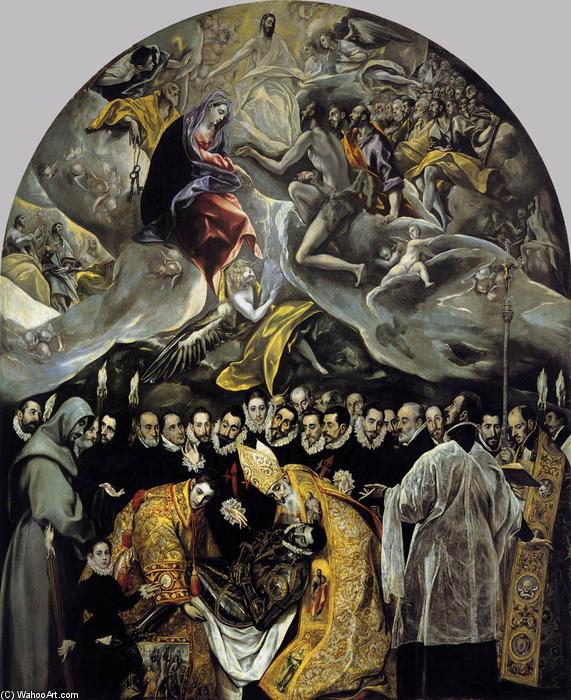
A Masterpiece of Spanish Renaissance Drama
Doménikos Theotokópoulos, known as El Greco, delivers a breathtaking spectacle of faith and earthly reverence in this monumental 1586 painting. More than just a historical depiction, it’s a profound exploration of the divine intervention in human affairs, rendered with an emotional intensity that continues to captivate viewers centuries later.
The Scene: A Miracle Unfolds
This iconic work commemorates the legendary miracle surrounding the burial of Don Gonzalo Ruiz, Count of Orgaz. According to local lore, as the coffin was lowered into the earth, Saint Augustine and Saint Stephen descended from heaven to perform the last rites. El Greco masterfully divides the composition into two distinct realms: the earthly sphere populated by grieving nobles and clergy, and the celestial domain inhabited by saints and angels. The dynamic interaction between these worlds is central to the painting’s power.
Stylistic Innovation & Technique
A prime example of Spanish Renaissance Mannerism transitioning towards Baroque sensibilities, this artwork showcases El Greco's signature style – elongated figures, dramatic use of color, and expressive brushwork. He eschews strict realism in favor of emotional impact, employing a distinctive *tenebrist* technique where stark contrasts between light and shadow heighten the drama. The loose, painterly application of oil on canvas contributes to a sense of movement and spiritual fervor. Notice how figures seem to float and twist, imbued with an otherworldly grace.
Historical & Religious Significance
Commissioned for the church of Santo Tomé in Toledo, Spain, this painting served as both a devotional image and a celebration of local nobility. The inclusion of identifiable portraits among the mourners – prominent citizens of Toledo at the time – grounds the miraculous event within a specific historical context. It’s a testament to El Greco's ability to blend religious narrative with contemporary portraiture, creating a work deeply resonant for its original audience.
Decoding the Symbolism
Every element within this composition carries symbolic weight. The upward trajectory of the saints and angels signifies ascension to heaven and divine grace. The dove represents the Holy Spirit, while the cross embodies Christian faith. The varied expressions on the faces of the onlookers – awe, grief, reverence – reflect the complex emotional response to witnessing a miracle. Even the clothing denotes status and spiritual significance; rich fabrics and vibrant colors distinguish those closest to the divine.
Emotional Resonance & Lasting Appeal
Beyond its technical brilliance and historical importance, this painting evokes a powerful emotional response. The swirling clouds, dramatic lighting, and expressive figures create an atmosphere of both solemnity and ecstatic joy. It’s a work that invites contemplation on themes of faith, mortality, and the enduring power of divine intervention. A reproduction of this masterpiece will undoubtedly become a focal point in any space, inspiring conversation and adding a touch of timeless elegance.