A Vision of Divine Transformation
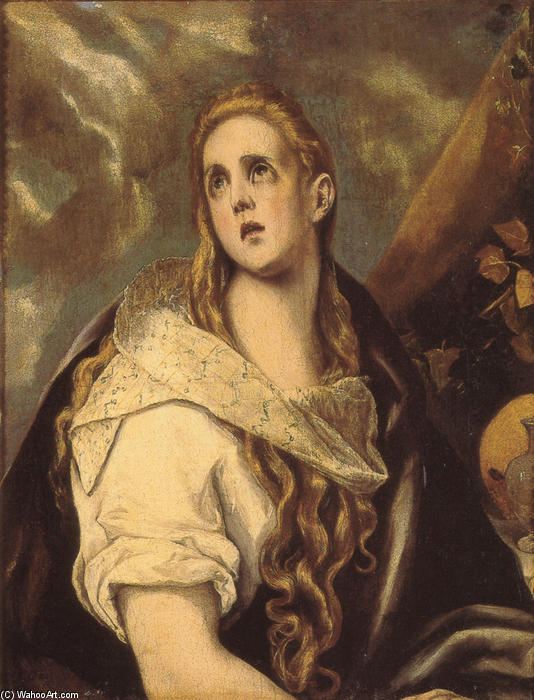
In the quiet, flickering light of the Spanish Renaissance, few images capture the raw, trembling essence of the human soul quite like El Greco’s The Penitent Magdalene. To gaze upon this masterpiece is to witness a profound spiritual metamorphosis captured in oil and pigment. The subject, Mary Magdalene, is not presented through the lens of worldly vanity, but rather through the transformative power of repentance. Her long, flowing hair—a striking, fiery red that serves as a visual anchor for the composition—cascades around her, symbolizing both her former life and her current state of unshielded vulnerability. As she gazates upward, her eyes are not merely looking at the sky, but are searching for the divine, inviting the viewer to share in her moment of ecstatic contemplation and profound surrender.
The painting transcends a simple religious portrait, offering instead a window into the turbulent inner life of a saint. El Greco masterfully utilizes chiaroscuro, the dramatic interplay of light and shadow, to sculpt the figure from the darkness. This technique does more than create depth; it mirrors the psychological struggle between sin and salvation. The luminous patches of skin against the deep, atmospheric shadows create a sense of movement, as if the very air around the Magdalene is vibrating with the weight of her prayers. For the discerning collector or interior designer, this piece offers an unparalleled emotional gravity, making it a commanding focal point that brings both intellectual depth and a sense of sacred stillness to any curated space.
The Alchemy of Style and Symbolism
El Greco’s unique artistic language is on full display in this work, showcasing the brilliant synthesis of his Byzantine roots and Venetian training. The elongated forms, a hallmark of his mature style, lend the Magdalene an otherworldly grace, stretching her physical presence toward the heavens. This elongation serves to de-emphasize the earthly weight of the body, emphasizing instead the upward trajectory of the spirit. His brushwork is equally expressive; the thick, energetic application of paint—often referred to as impasto—creates a textured surface that feels alive, echoing the emotional fervor and the "flickering" light that characterizes his most celebrated works.
Every element within the frame is steeped in symbolic meaning, designed to guide the viewer through a narrative of redemption. Near the base of the composition, subtle details such as the presence of an apple or a simple vase serve as mementos of earthly existence and the temptations of the flesh, now left behind in favor of spiritual pursuit. The background, a swirling, cloudy sky, suggests a realm where the boundaries between the physical world and the divine are beginning to dissolve. This atmospheric depth provides a sense of infinite scale, reminding us that the Magdalene's personal journey is part of a much larger, cosmic drama of faith.
An Eternal Legacy for the Modern Collector
For those seeking to adorn their homes or galleries with art that speaks to the enduring human condition, a high-quality reproduction of The Penitent Magdalene offers more than mere decoration. It is an invitation to reflection. The painting’s ability to harmonize intense drama with a sense of profound peace makes it a versatile masterpiece, capable of anchoring a room with its historical significance and aesthetic power. Whether placed in a contemporary setting to provide a striking contrast or within a classical interior to complement traditional elegance, this work remains a timeless testament to the beauty found in the pursuit of truth and the resilience of the human spirit.