A Minimalist Echo of Revolution: Exploring El Lissitzky’s “Beat All the Scattered”
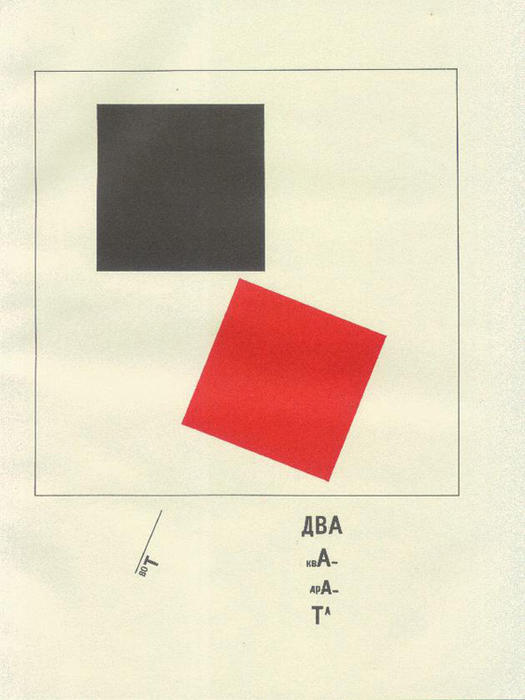
El Lissitzky's "Beat All the Scattered" stands as a deceptively simple yet profoundly resonant testament to the spirit of Russian avant-garde art during its formative years. Painted in 1920, this striking composition—a bold red square superimposed upon a pristine white background bordered by black—immediately captivates with its austere elegance and geometric precision. However, beneath this surface lies a complex tapestry woven from intellectual currents and artistic ambition, reflecting Lissitzky’s unwavering commitment to harnessing visual language as a tool for social transformation.
The artwork's genesis resides firmly within the burgeoning Suprematism movement spearheaded by Kazimir Malevich, Lissitzky’s influential mentor. Suprematism championed pure abstraction—the reduction of painting to its most fundamental elements: geometric forms and colors—rejecting representational imagery altogether. Lissitzky embraced this radical aesthetic philosophy, believing it could liberate art from bourgeois conventions and communicate directly with the subconscious mind, fostering a new vision of humanity and progress. This conceptual underpinning is palpable in every carefully considered aspect of “Beat All the Scattered.”
Technically masterful, Lissitzky employed a meticulous layering process—likely utilizing casein paint—to achieve an astonishingly smooth surface finish. The black border serves not merely as a visual frame but also as a deliberate device to delineate and stabilize the central square, emphasizing its dominance within the composition. Furthermore, the two smaller squares positioned at oblique angles contribute to a dynamic interplay of spatial relationships, creating a sense of depth that defies the apparent flatness of the canvas. This subtle manipulation of perspective underscores Lissitzky’s desire to transcend traditional artistic conventions and explore new possibilities for visual expression.
Beyond its formal qualities, “Beat All the Scattered” carries significant symbolic weight. The red square represents vitality, energy, and revolutionary fervor—a direct allusion to the Bolshevik triumph in October 1917. Simultaneously, it embodies the concept of “Zenith,” symbolizing aspiration towards a utopian future where reason and harmony prevail. Lissitzky’s intention was to convey not just an image but an idea—a powerful assertion of faith in the transformative potential of art to reshape human consciousness and propel society toward enlightenment.
The artwork's enduring appeal extends beyond its artistic merits; it embodies the broader ethos of the avant-garde era, capturing a moment of intellectual ferment and creative daring. Reproductions of “Beat All the Scattered” offer collectors and interior designers alike an opportunity to engage with this seminal work of art history—a timeless reminder that beauty can reside in simplicity and that visual language possesses the capacity to communicate profound truths about our world and ourselves.
- Artist: El Lissitzky
- Year: 1920
- Medium: Casein Paint
- Style: Suprematism