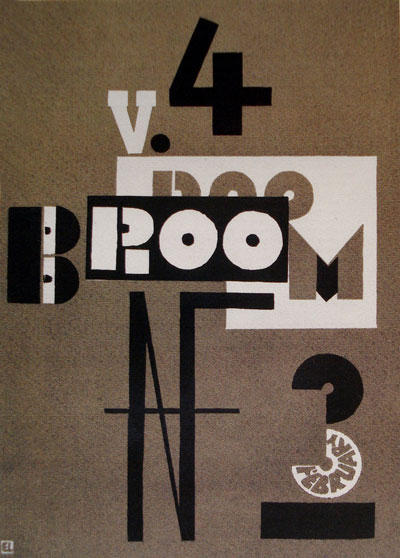
El Lissitzky’s “Cover of Broom”: A Constructivist Masterpiece
El Lissitzky's "Cover of Broom," created in 1923, is more than just an image; it’s a crystallized expression of the revolutionary spirit that defined early 20th-century constructivism. This striking lithograph, a cornerstone of Lissitzky’s oeuvre, embodies his belief in art as a tool for social transformation – a bold declaration rendered in stark black and white geometry. The artwork immediately commands attention with its dynamic composition, a carefully orchestrated arrangement of overlapping rectangular blocks, circles, and intersecting lines that seem to vibrate with energy. The prominent display of ‘Broom’ in stylized lettering isn't merely a title; it’s an integral element of the design, seamlessly integrated within the overall structure, alongside the numerical values '4', '3,' adding layers of abstraction and hinting at a functional, almost machine-like aesthetic central to constructivist ideals.
A Synthesis of Form and Function
- Style: Purely abstract, firmly rooted in the principles of Constructivism. Lissitzky’s work rejects traditional representational art, prioritizing geometric forms and their inherent relationships to create a visually powerful statement.
- Technique: Executed as a lithograph, the process involved meticulously crafted stone or metal plates, allowing for precise control over ink distribution and creating subtle tonal variations within the monochromatic palette. The photograph captures this textural richness, revealing the legacy of the printing method.
- Materials: Lithographic techniques utilizing stone or metal plates were employed to achieve the artwork’s distinctive visual qualities.
Historical Context and Symbolism
Created in 1923, “Cover of Broom” emerged during a period of immense social and political upheaval in Russia following the Bolshevik Revolution. Lissitzky was deeply involved in promoting constructivism – an artistic movement advocating for art’s role in building a new socialist society. The artwork's geometric forms and bold typography reflect this desire to create functional, aesthetically pleasing designs that would serve practical purposes. The ‘Broom’ itself can be interpreted as a symbol of sweeping away the old order, a visual metaphor for progress and renewal. The inclusion of numerical values – '4', '3' – further reinforces this idea of systematic construction and rational design.
Emotional Impact and Artistic Legacy
"Cover of Broom" resonates with a sense of forward momentum and energetic dynamism, reflecting Lissitzky’s belief in the transformative power of art. The artwork’s stark simplicity and bold geometry evoke feelings of order, precision, and optimism – qualities central to the constructivist movement. Lissitzky's influence extends far beyond Russia; his pioneering work paved the way for later movements like De Stijl and Bauhaus, solidifying his place as a pivotal figure in modern art history. This piece remains a testament to Lissitzky’s visionary approach and his enduring legacy as an artist who sought to reshape both visual culture and society itself.