A Bold Statement of Constructivist Vision: Exploring El Lissitzky’s ‘Cover to ‘For the Voice’
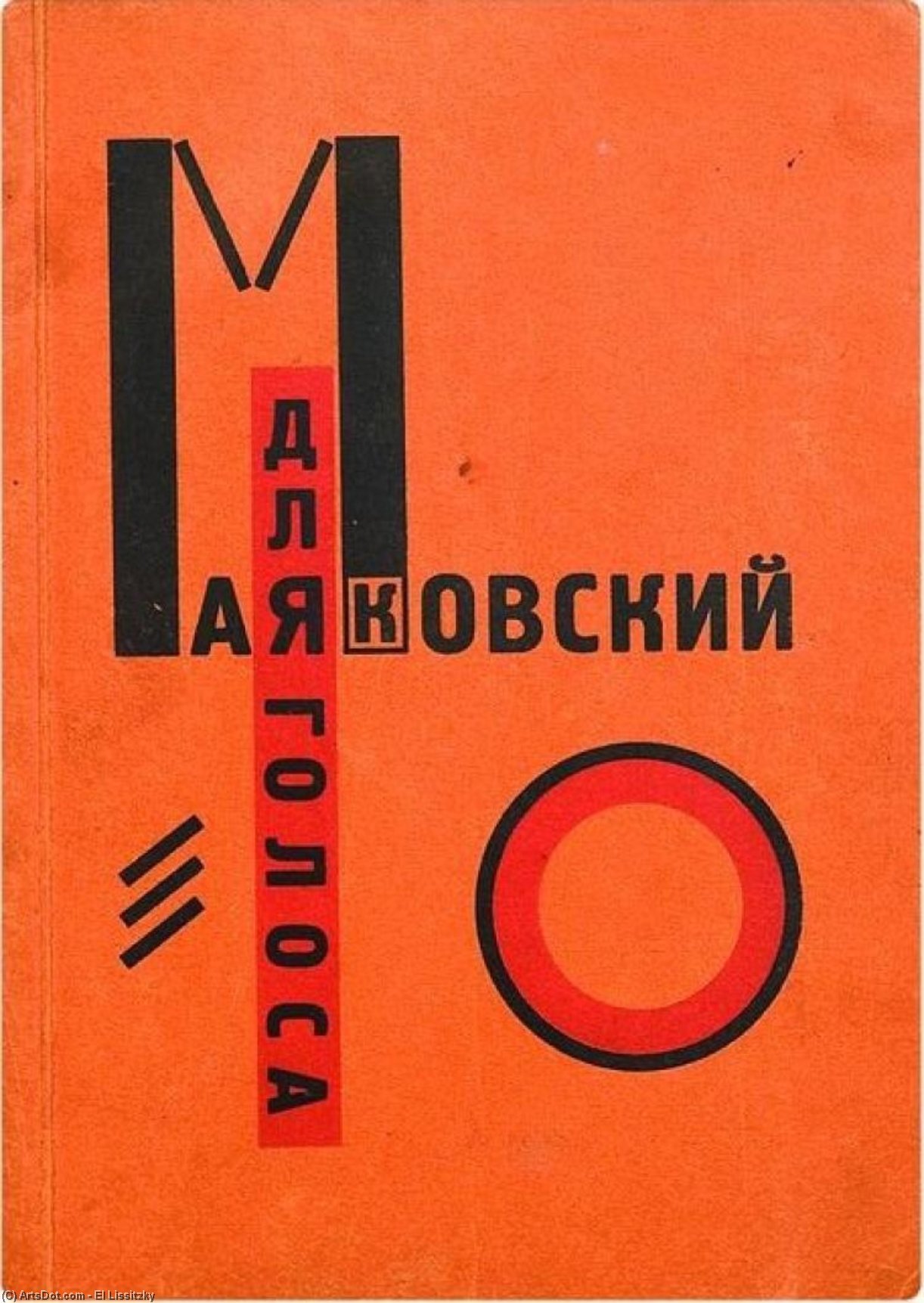
El Lissitzky's "Cover to 'For the voice' by Vladimir Mayakovsky" stands as a testament to the fervor and innovation that characterized Constructivism, arguably Russia’s most influential artistic movement following the October Revolution. Created in 1920, this painting isn’t merely an image; it’s a carefully considered manifesto of geometric abstraction designed to communicate ideological principles with unparalleled clarity and impact. Examining its visual language reveals layers of meaning rooted in both formal experimentation and political conviction.
- Subject Matter & Context: The artwork depicts a stylized representation of Vladimir Mayakovsky's poem “For the Voice,” reflecting the Soviet Union’s commitment to disseminating revolutionary ideas through accessible artistic mediums. Lissitzky’s aim was to distill the essence of the poem—its call for unity and action—into a visual form that transcended linguistic barriers.
- Style & Technique: Lissitzky firmly established himself as a pioneer of suprematism alongside Kazimir Malevich, prioritizing pure geometric forms – circles and squares – over representational imagery. This painting exemplifies Constructivism’s reductive approach, stripping away superfluous detail to focus solely on fundamental shapes. The bold orange background serves as a canvas for the strategically positioned red circles, creating a dynamic interplay of color that commands attention.
Color Palette & Composition: The dominant hue is an intense orange—a deliberate choice symbolizing optimism and energy—contrasting sharply with the crimson red circles. These circles aren’t randomly scattered; their placement adheres to precise geometric rules, reinforcing the movement's belief in rational order and mathematical precision. Black lines intersect across the canvas, providing structural support and adding visual depth without distracting from the core shapes.
- Symbolism & Ideological Significance: The circles themselves are imbued with profound symbolic weight within Constructivist thought. They represent unity, wholeness, and the cosmos—concepts central to Marxist ideology. Lissitzky’s intention was to visually embody these ideals, conveying a message of collective aspiration and transformative change.
- Emotional Impact: Despite its austere aesthetic, “Cover to ‘For the Voice’” possesses an undeniable emotional resonance. The bold colors and geometric forms generate a feeling of dynamism and purposeful movement—a reflection of the revolutionary spirit that fueled Constructivism’s artistic endeavors. It's a piece designed not just to be seen but to be felt.
Conclusion: Lissitzky’s “Cover to ‘For the voice’” remains an enduring emblem of Constructivist ambition and artistic innovation. Its meticulous execution, coupled with its powerful symbolic content, continues to inspire artists and designers alike. Reproductions offer a captivating glimpse into this pivotal moment in art history—a celebration of geometric abstraction as a tool for communicating revolutionary ideals.