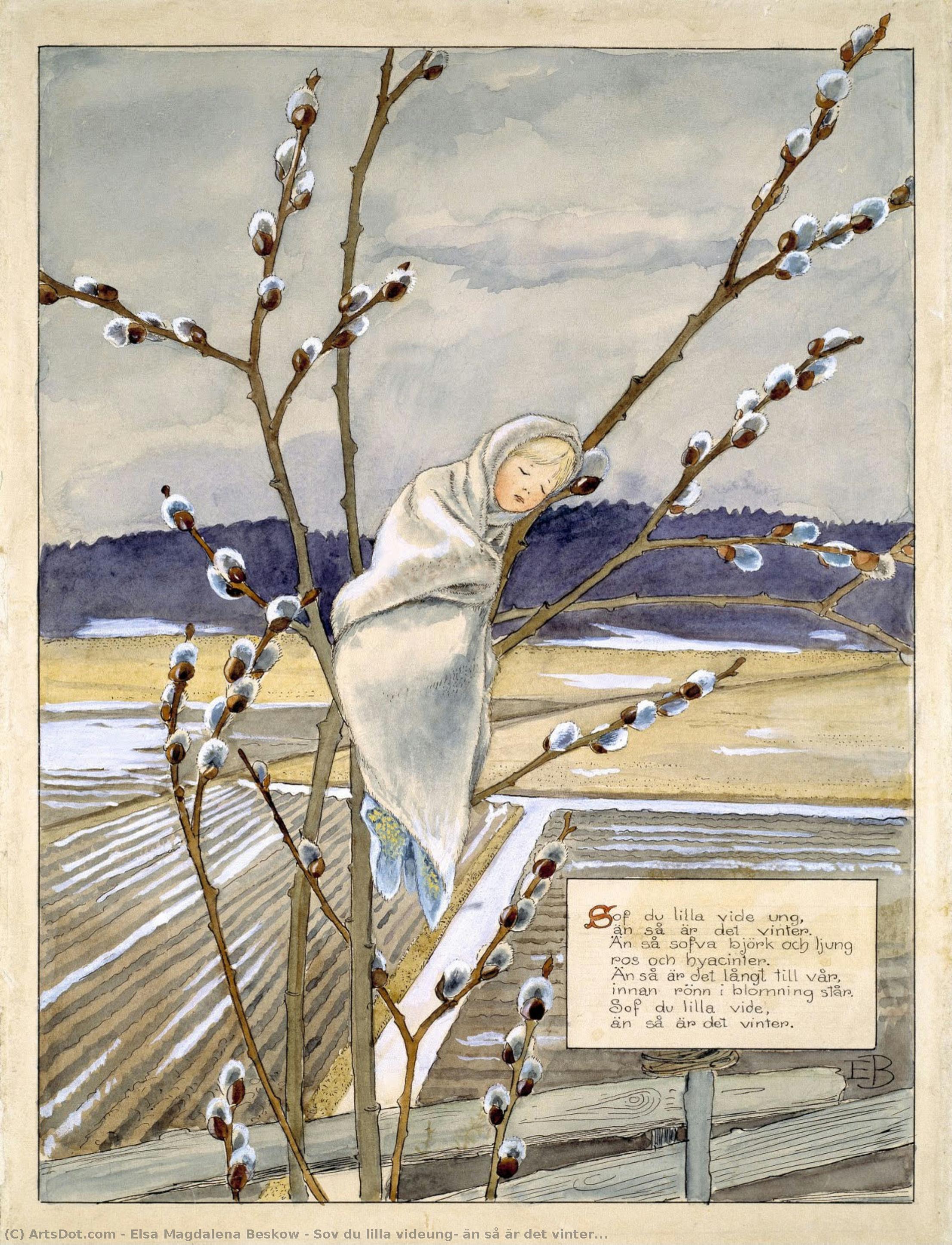
A Winter's Slumber in the Swedish Forest
To gaze upon this depiction of Sov du lilla videung, än så är det vinter is to be enveloped in a profound hush—the kind of silence that only deep winter can weave into the very fabric of nature. This painting transports us to a moment suspended between seasons, where the crisp bite of cold air meets the gentle warmth of repose. At its heart lies a figure, seemingly asleep upon a sturdy tree branch, her head cradled within a soft covering. The scene is meticulously rendered against a backdrop dusted with snow, immediately establishing the quiet majesty of the Nordic winter.
The Poetic Vision of Elsa Beskow
This work is deeply rooted in the rich tradition of Swedish picture books and the National Romantic movement that flourished around the turn of the twentieth century. Created around 1900 by Elsa Magdalena Beskow, the painting embodies her unique ability to translate the wild, untamed spirit of nature into something both ethereal and deeply personal. For generations of Swedes, Beskow’s art captured a collective childhood memory, presenting the forest not as a mere landscape, but as an active participant in life's quiet dramas. Her portrayal of nature is always filtered through the lens of innocent wonder—the perspective of a child discovering magic within the towering vegetation.
Symbolism and Tranquility
The symbolism woven throughout this composition speaks eloquently of rest, resilience, and the cyclical nature of life. The sleeping figure suggests a necessary retreat from the world's clamor, a deep communion with the natural rhythm that dictates periods of dormancy. Look closely at the details: the scattered pine cones speak to the enduring cycle of growth and decay; the presence of birds—some perched, some taking flight—adds subtle movement against the stillness. These elements combine to create an overwhelming sense of tranquility, inviting the viewer to slow their own hurried pace and simply breathe in the cold, clean air.
Artistic Technique and Emotional Resonance
While the specific technique employed lends itself to a soft, almost storybook quality, the overall effect is one of masterful composition. The artist uses light—or perhaps the *memory* of light on a snowy day—to guide the eye across the scene, emphasizing the contrast between the bright white snow and the deep, sheltering tones of the forest branches. For collectors and designers alike, this piece offers more than mere decoration; it is an emotional anchor. Reproducing such a work allows one to bring the gentle, restorative spirit of the Swedish wilderness into a modern interior space, transforming a room into a sanctuary.