The Soul of a Sacred Space: Emanuel de Witte’s ‘Interior of the Oude Kerk’
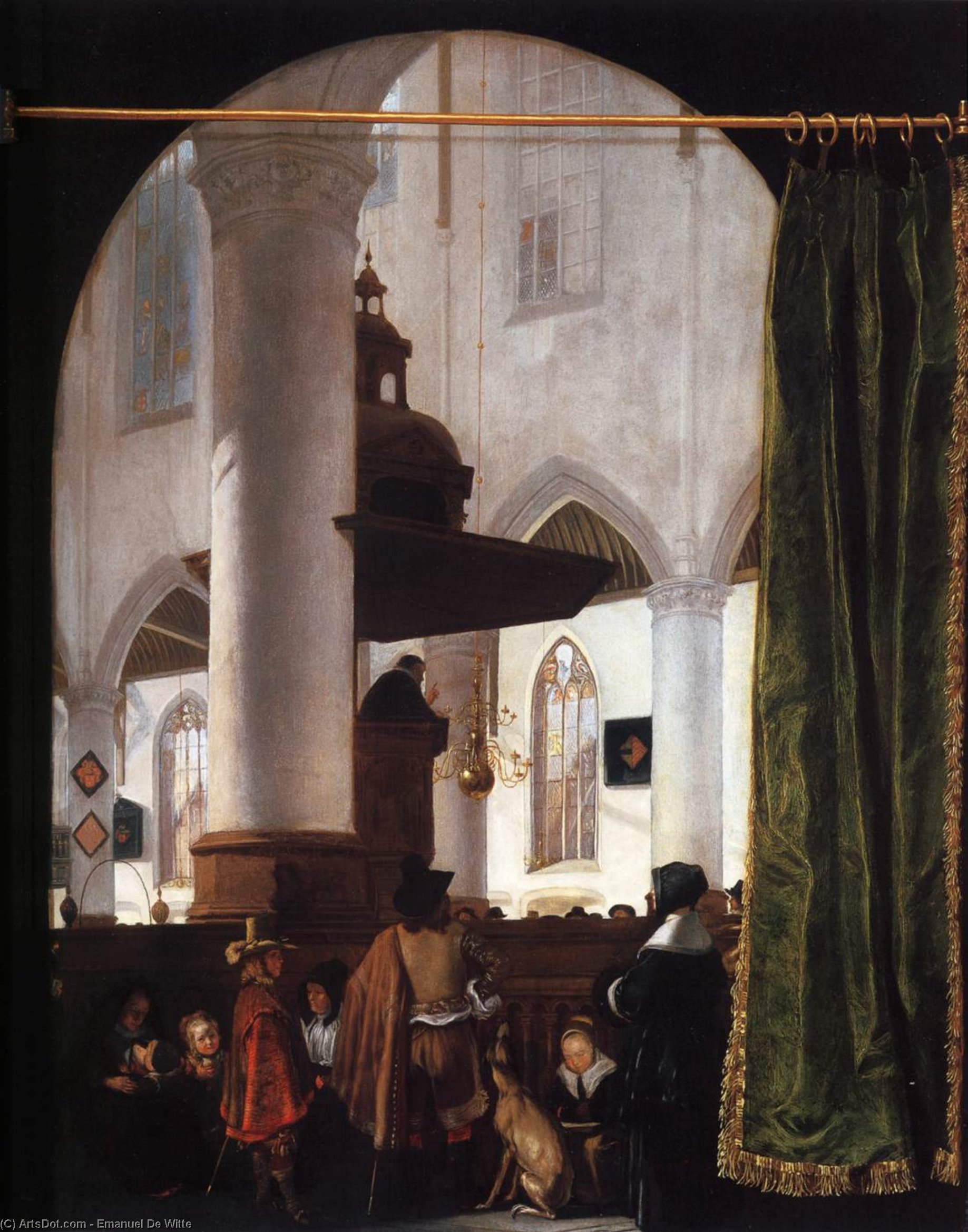
Emanuel de Witte's “A Sermon in the Oude Kerk, Delft” isn’t merely a painting; it’s an invitation. An invitation to step through its painted doorway and experience the quiet reverence, the diffused light, and the palpable sense of history within one of Holland’s most iconic churches. Completed around 1650, this remarkable work transcends simple architectural documentation, instead capturing the very *feeling* of being present in a sacred space – a feat rarely achieved by his contemporary, Pieter Saenredam, whose meticulous renderings focused primarily on precise lines and structures. De Witte sought to evoke atmosphere, to translate the spiritual essence of the Oude Kerk into a visual experience that resonates deeply with the viewer.
The painting immediately draws the eye through its masterful use of light. It’s not a bright, overtly dramatic illumination; rather, it's a soft, almost ethereal glow filtering through the stained glass windows and illuminating dust motes dancing in the air. This subtle lighting creates an illusion of depth, pulling the viewer into the heart of the church. Notice how De Witte doesn’t simply depict the architecture – he renders the *impression* of light upon it, imbuing the scene with a sense of tranquility and contemplation. The perspective is subtly skewed, lending a dreamlike quality to the space, as if we are momentarily transported into another realm.
A Window into Delft’s Golden Age
Delft itself holds immense historical significance. The Oude Kerk, dating back to the 14th century, has been a focal point of Dutch life for centuries, witnessing pivotal moments in the nation's history – from the arrival of William of Orange to the rise of the Dutch East India Company. De Witte’s painting serves as a poignant reminder of this rich heritage. The inclusion of details like the genealogical panels and the organ—symbols of both civic pride and religious devotion—ground the scene firmly within Delft’s identity. The presence of a dog, calmly observing the sermon, adds an unexpected layer of humanism, suggesting that even in a place of solemnity, everyday life continues to unfold.
Furthermore, the painting reflects the burgeoning artistic and intellectual climate of 17th-century Delft. The city was a hub for trade, craftsmanship, and innovation – particularly in the production of Delft Blue pottery, a style that would become synonymous with Dutch artistry. De Witte’s meticulous attention to detail and his ability to capture the nuances of light and shadow were hallmarks of this era's artistic flourishing. The painting is not just a religious scene; it’s a microcosm of Delft itself – vibrant, complex, and deeply rooted in tradition.
Symbolism and Emotional Resonance
Beyond its historical context, “A Sermon in the Oude Kerk” is rich in symbolism. The grave in the foreground serves as a potent reminder of mortality—a grounding element within the otherwise ethereal space. The figures present are not idealized representations; they are ordinary people engaged in a common ritual. This accessibility invites viewers to connect with the scene on a personal level, fostering a sense of shared humanity and spiritual connection. The painting’s overall mood is one of quiet contemplation and reverence—a feeling that lingers long after you've turned away from the canvas.
De Witte masterfully uses color to enhance this emotional impact. The muted tones of brown, gray, and gold create a sense of warmth and intimacy, while the splashes of blue in the stained glass windows add a touch of vibrancy and spiritual energy. The painting’s composition—with its diagonal lines and carefully arranged elements—guides the viewer's eye through the space, creating a dynamic yet harmonious visual experience.
A Legacy of Atmospheric Mastery
Emanuel de Witte’s “Interior of the Oude Kerk” stands as a testament to his unique artistic vision. Unlike Pieter Saenredam, who meticulously documented architectural details, De Witte prioritized capturing the *feeling* of space—the light, the atmosphere, and the spiritual essence of sacred interiors. This painting is not simply a representation of a church; it’s an immersive experience that transports the viewer to another time and place. Reproductions of this work continue to captivate audiences today, offering a glimpse into the soul of Delft and the enduring power of art to evoke emotion and inspire contemplation.