A Glimpse Within: Emanuel de Witte’s Masterpiece
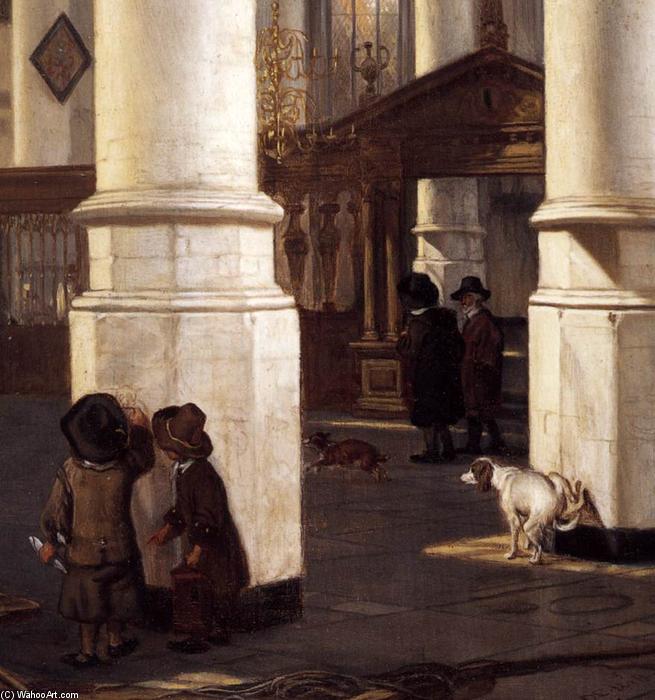
Emanuel de Witte's “Interior of the Oude Kerk, Delft (detail)” isn’t merely a depiction of a church; it’s an immersive experience. Painted in 1650, this remarkable work transcends simple architectural representation, offering instead a profound meditation on space, light, and the quiet dignity of everyday faith. De Witte, a lesser-known yet profoundly insightful figure within the Dutch Golden Age, eschewed the meticulous documentation favored by contemporaries like Pieter Saenredam. Instead, he sought to capture the *feeling* of being within these sacred spaces – the subtle play of shadows, the diffused light filtering through stained glass, and the palpable sense of contemplation that permeated the air.
The scene unfolds within the Oude Kerk, Delft’s historic parish church. We are presented with a carefully constructed illusion of depth, achieved through masterful perspective and an astute understanding of how light interacts with surfaces. The archways, rendered with remarkable precision, draw our eye into the heart of the composition, while the placement of figures – several individuals engaged in conversation or quiet reflection – anchors the scene within a believable reality. Notice the deliberate use of muted tones; De Witte avoids dramatic contrasts, favoring instead a harmonious palette that evokes a sense of serenity and timelessness.
The Artist’s Vision: De Witte's Unique Approach
Unlike many of his contemporaries who focused on the precise rendering of architectural details, De Witte prioritized atmosphere. He wasn’t interested in creating blueprints; he was striving to evoke a specific *mood*. This is evident in his treatment of light – it isn’t simply illuminating the scene; it's actively shaping it, casting long shadows and highlighting textures with subtle grace. This approach aligns with the broader artistic currents of the period, reflecting a shift towards valuing subjective experience over purely objective representation.
Born in Alkmaar in 1617, De Witte’s early training provided him with a solid foundation in geometry and perspective – skills he skillfully employed to create this illusionistic space. However, his artistic journey was marked by personal challenges, including financial difficulties and strained relationships. These complexities seem to subtly infuse the paintings with an underlying sense of melancholy or introspection, adding another layer of depth to their emotional resonance. His later years were spent in Amsterdam, where he continued to refine his distinctive style, often working as a painter for wealthy patrons.
Symbolism and Context: Delft’s Sacred Space
The Oude Kerk itself holds immense historical significance. As one of the oldest buildings in Delft, it represents not just a place of worship but also the very heart of the city's identity. During the 17th century, Dutch churches were often stripped of their opulent decorations following the Protestant Reformation, transforming them into spaces for civic gatherings and everyday life. This shift created a compelling subject matter for artists like De Witte, who could capture the evolving relationship between faith and community.
The presence of figures within the church – a dog near the right side, a suitcase on the left – adds layers of narrative to the scene. These seemingly mundane details invite speculation about the lives and experiences of those present, suggesting that this interior is not merely a static representation but a vibrant tableau of human interaction. The inclusion of the suitcase hints at travel and perhaps even a temporary departure from routine, while the dog suggests companionship and loyalty.
A Window to the Past: Reproduction and Appreciation
ArtsDot’s hand-painted reproductions offer an unparalleled opportunity to experience the beauty and depth of De Witte's “Interior of the Oude Kerk, Delft (detail).” Each reproduction meticulously recreates the artist’s masterful use of light, color, and perspective, capturing the essence of this iconic work. Whether adorning a grand salon or a more intimate space, this painting invites viewers to pause, reflect, and connect with the rich cultural heritage of Delft and the profound beauty of the Dutch Golden Age.