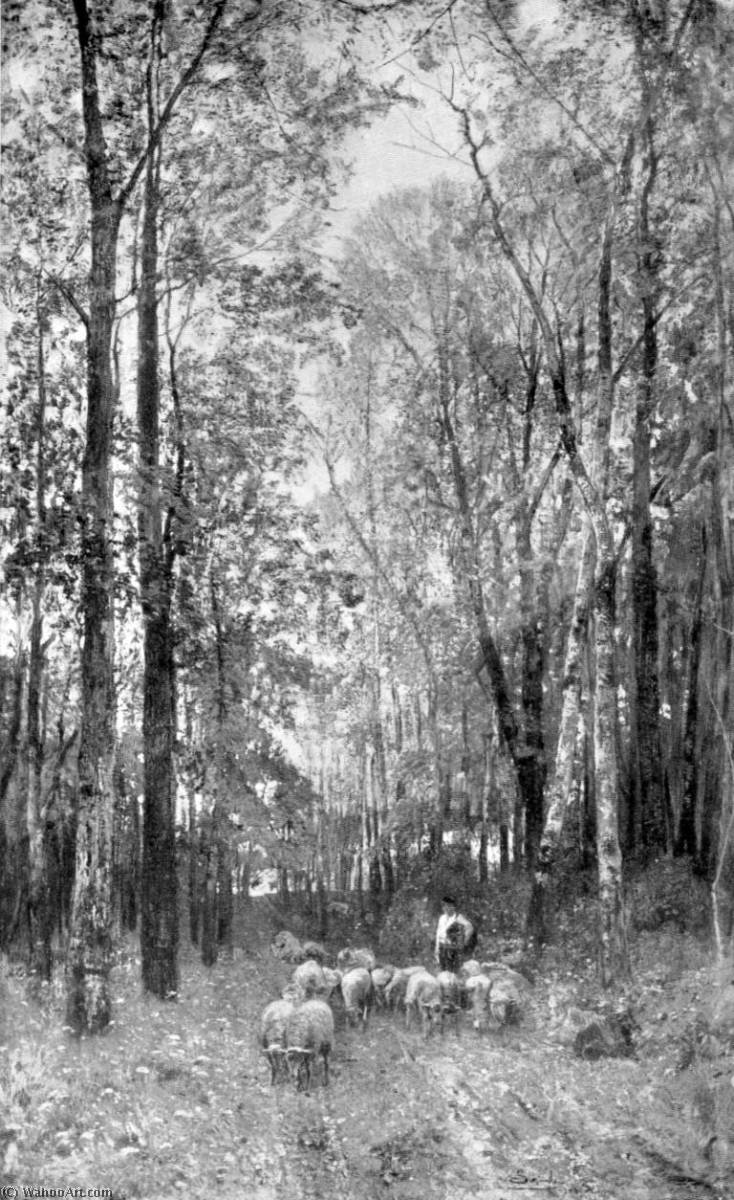
Explore Emil Jakob Schindler's serene Forest Path with Sheeps landscape painting from 1875 – a masterful charcoal drawing capturing the tranquility of Austrian woodlands and reflecting Dutch Masters’ influence.
Emil Jakob Schindler (1842-1892): Austrian landscape painter famed for poetic realism & scenes of Vienna Woods, Dalmatia. Father of Alma Mahler; Dutch Master influence.
Discover Austrian art at the Belvedere Palace! Marvel at Klimt's "The Kiss," Habsburg treasures & stunning Baroque architecture in Vienna’s iconic museum.
Forest Path with Sheeps (Waldweg mit Schafen): A Window Into Austrian Romantic Landscape Painting
The painting “Forest Path with Sheeps,” attributed to Emil Jakob Schindler, stands as a quintessential example of Austrian Romantic landscape art from 1875. More than just a depiction of scenery, it’s an exploration of emotion and memory—a testament to Schindler's masterful command of technique and his profound engagement with the artistic currents of his time. Examining its visual elements reveals layers of meaning that continue to resonate with viewers today.
Composition and Technique: Capturing Atmosphere Through Detail
Schindler’s approach was rooted in the Dutch Masters, specifically Meindert Hobbema and Jacob Izaaksoon van Ruisdael, whose atmospheric realism profoundly influenced his artistic vision. He meticulously rendered a forest path winding through dense foliage, populated by sheep grazing peacefully. The vertical orientation of the canvas emphasizes the towering trees—a deliberate choice to convey grandeur and majesty. Lines dominate the composition; thick charcoal strokes delineate tree trunks and branches, creating a palpable sense of solidity and permanence. However, Schindler skillfully juxtaposes these strong lines with softer shading techniques to capture the diffused light characteristic of overcast days – a hallmark of Romantic landscape painting. The artist’s painstaking attention to detail—the texture of bark, the woolly coats of the sheep—demonstrates his commitment to conveying an illusion of reality.
Historical Context: Schindler and the Romantic Spirit
Schindler's work emerged during a period marked by intellectual ferment and artistic experimentation. The Romantic movement championed emotion, imagination, and individualism, reacting against the Enlightenment’s emphasis on reason and scientific observation. Artists sought inspiration in folklore, mythology, and sublime landscapes—places where humanity confronted the overwhelming power of nature. Schindler’s depiction aligns perfectly with this ethos; it's not merely a record of a place but an attempt to evoke feelings of tranquility and contemplation – mirroring the broader Romantic preoccupation with spiritual experience. The painting reflects the anxieties of its time regarding industrialization and urbanization, presenting a nostalgic vision of rural life untouched by progress.
Symbolism: Harmony Between Man and Nature
Beyond its aesthetic qualities, “Forest Path with Sheeps” carries symbolic weight. The shepherd guiding his flock represents humanity’s relationship with the natural world—a harmonious coexistence underpinned by respect for its rhythms and beauty. The sheep themselves symbolize innocence and pastoral virtue, embodying values cherished during the Romantic era. The winding path symbolizes life's journey, suggesting a contemplative pace and an awareness of the passage of time. Schindler skillfully uses light and shadow to heighten these symbolic resonances, creating a visual metaphor for inner peace and spiritual contemplation.
Emotional Impact: A Timeless Expression of Beauty
The painting’s enduring appeal lies in its ability to transport viewers back to a bygone era—a moment when art served as a conduit for emotional expression and spiritual reflection. The grayscale palette contributes to the artwork's solemn mood, fostering a sense of stillness and contemplation. Schindler’s masterful rendering captures not just what the eye sees but what the soul feels – conveying a profound appreciation for the sublime grandeur of nature and its capacity to inspire awe and wonder. It remains a powerful reminder that art can transcend time, communicating universal themes of beauty, tranquility, and connection with the natural world.