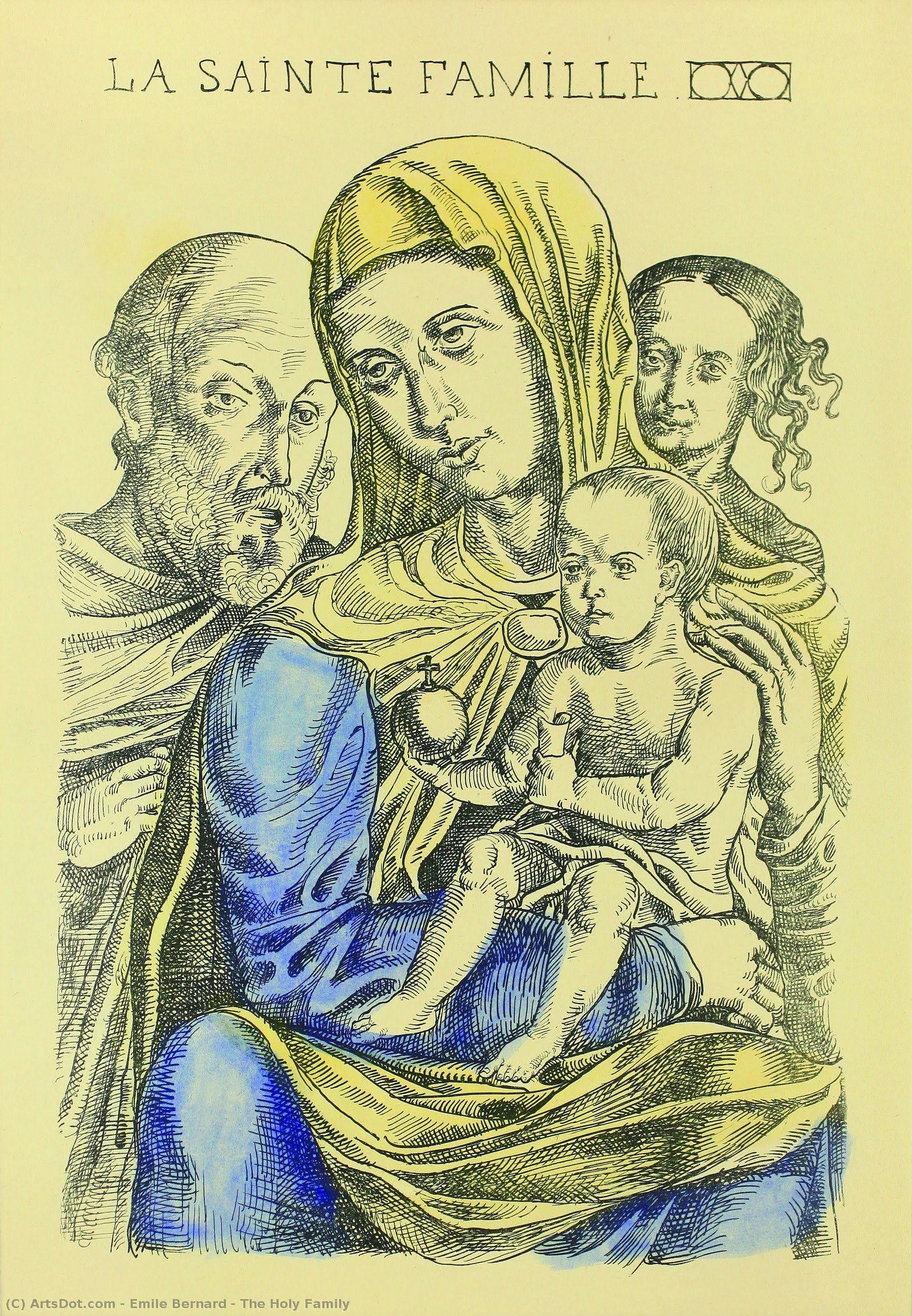
Emile Bernard’s evocative lithograph captures the serene beauty of ‘La Sainte Famille,’ a poignant depiction of Mary cradling Jesus amidst family members—a cornerstone of Impressionist art from 1896. Explore this masterpiece and bring its timeless elegance into your home.
Discover Émile Bernard (1868-1941): Post-Impressionist pioneer of Cloisonnism & Synthetism. Friend to Van Gogh & Gauguin, known for Breton landscapes and bold style.
Discover the Musée de Pont-Aven in Brittany, France – home to masterpieces from Paul Gauguin & the Pont-Aven School! Explore Impressionist & Post-Impressionist art and the region's unique artistic heritage.
A Window Into Breton Soul: Émile Bernard’s “La Sainte Famille”
Émile Bernard's "La Sainte Famille," painted in 1896, transcends mere depiction; it embodies the spirit of Brittany and represents a crucial step in Bernard’s artistic evolution. This lithograph reproduction captures not just an image but also the essence of a painter grappling with profound influences—a journey documented on foot through the rugged landscapes and vibrant traditions of his homeland. The painting itself is deceptively simple, yet brimming with carefully considered detail that speaks volumes about Bernard's stylistic ambitions.
The Breton Landscape as Inspiration
Bernard’s formative pilgrimage to Brittany in 1886 proved transformative. He wasn’t merely observing scenery; he was absorbing it—the stark beauty of granite cliffs, the misty valleys dotted with wildflowers, and the palpable connection between humanity and nature. This experience fundamentally altered his artistic sensibilities, moving him away from the polished surfaces of Impressionism towards a more expressive approach rooted in observation and emotion. The Breton landscape served as a catalyst for Bernard’s exploration of color and texture—elements that would become hallmarks of his distinctive style.
Pointillist Techniques: Fragmented Light
Bernard's artistic trajectory culminated in the embrace of Pointillisme, pioneered by Georges Seurat and Paul Signac. Unlike Impressionists who blended colors optically to create an illusion of luminosity, Bernard employed tiny dots of pigment—individually applied—to build up tonal variations. This technique, meticulously executed in “La Sainte Famille,” prioritizes visual perception over direct representation. The resulting surface is textured and shimmering, mirroring the diffused light characteristic of Breton skies. It’s a deliberate rejection of traditional academic painting conventions, signaling Bernard's commitment to pushing artistic boundaries.
Symbolic Resonance: Family Values Amidst Uncertainty
Beyond its stylistic innovations, “La Sainte Famille” carries significant symbolic weight. The depiction of Mary cradling Jesus embodies universal themes of maternal devotion and familial sanctity—values deeply ingrained in Breton culture. However, the painting’s subdued palette and contemplative atmosphere also reflect the anxieties of the era, mirroring the broader artistic preoccupation with psychological depth during Symbolism. Bernard doesn't offer a triumphant narrative; instead, he presents a quiet tableau capturing a moment of serene intimacy amidst an uncertain world.
A Timeless Reflection: Reproduction Quality
Reproducing “La Sainte Famille” allows art enthusiasts to experience Bernard’s vision firsthand. ArtsDot.com offers exceptionally detailed lithographs that faithfully recreate the painting's nuanced textures and subtle color harmonies. These reproductions are produced using archival inks on premium canvas, guaranteeing longevity and preserving the artwork's original beauty for generations to come—a testament to Bernard’s enduring legacy as a pioneer of modern art.