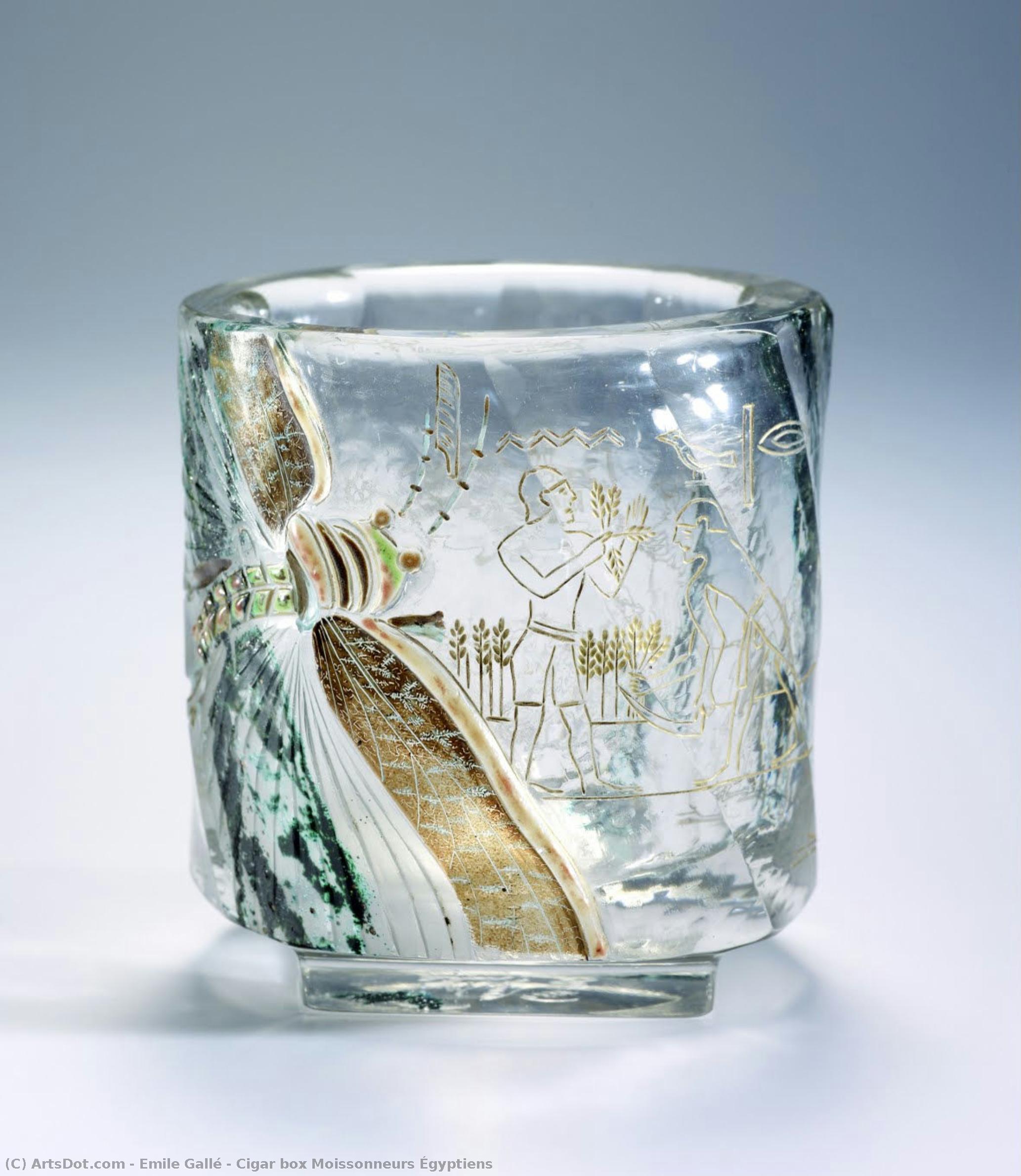
This exquisite Art Nouveau glass vase showcases Emile Gallé’s masterful depiction of Egyptian laborers amidst a soaring locust, embodying the artist's fascination with nature and symbolism. Created in 1889 for the Düsseldorf World Exhibition, it exemplifies Gallé’s distinctive style and enduring legacy.
Explore the Art Nouveau world of Émile Gallé (1846-1904), a French glass artist renowned for innovative techniques like cameo glass & floral designs. Founder of École de Nancy.
With around 300 works by Emile Gallé, Glasmuseum Hentrich owns one of the most comprehensive and important collections of the work of this famous Glass artist. From around 1866 Gallé worked in the family business, a Glass and ceramics store in Nancy with its own decorating workshop, which he took over from his father in 1877. As early as at the World Exhibition in Paris in 1878, Gallé came to relative prominence with his works based on Japanese art. He found his own style around 1884, and it was precisely in that year that he designed this small cigar box bearing a depiction of Egyptian harvesters and a large locust in flight – probably a reference to one of the Biblical plagues and its regular return. It seems Emile Gallé himself greatly prized this work, describing it in his comments on the 1884 Union centrale des arts décoratifs exhibition. According to the engraved inscription, the Düsseldorf specimen was presented by Gallé at the 1889 World Exhibition. (Dedo von Kerssenbrock-Krosigk)