A Moment of Divine Revelation
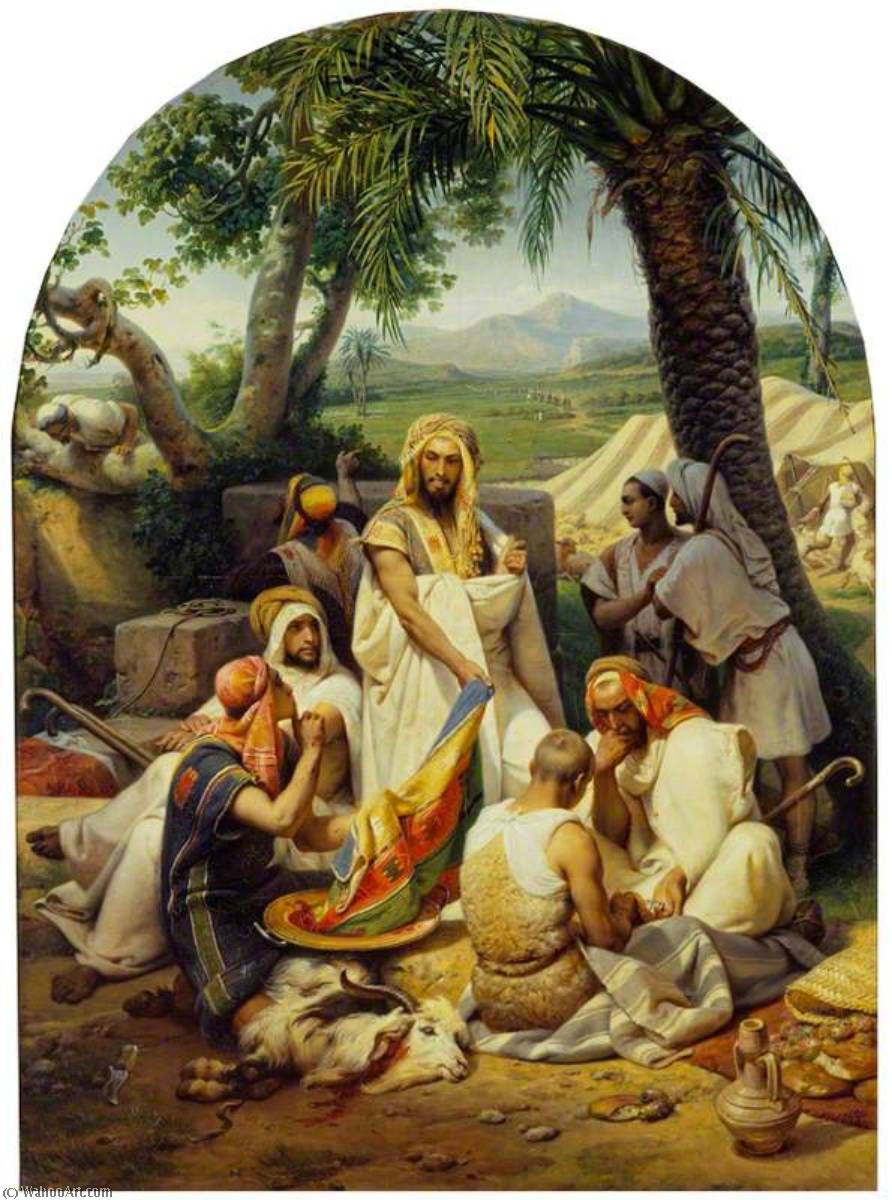
In the quietude of 1853, Émile Jean-Horace Vernet captured a scene of profound spiritual weight in his masterpiece, Joseph's Coat. The painting invites the viewer into a serene, sun-drenched landscape where the air seems thick with the gravity of destiny. At the heart of this composition sits a central figure, draped in luminous white robes, his posture one of deep contemplation. As he gazes downward at his clasped hands, there is an unmistakable sense of introspection, as if he is weighing the heavy mantle of his divine purpose. The surrounding figures, gathered in a gentle semi-circle beneath the shade of a sprawling palm tree, create a communal atmosphere of shared reverence and quiet discussion. This is not merely a depiction of a biblical event; it is a window into a moment of transition, where the earthly and the divine intersect under the soft light of a Middle Eastern afternoon.
Vernet, a painter born into the very heart of the French artistic tradition, brings a remarkable level of realism to this narrative. Eschewing the rigid, idealized forms of high Classicism, he employs a technique that celebrates the textures of life. One can almost feel the coarse weave of the traditional Middle Eastern attire and the smooth, sun-warmed bark of the palm trees. The artist’s mastery of chiaroscuro—the interplay of light and shadow—is particularly striking here; the way the sunlight catches the folds of the central figure's white robes serves to elevate him from the more muted tones of the background, creating a natural focal point that draws the eye inward. His ability to render facial expressions with such subtle emotional depth ensures that every character in this gathering contributes to the painting's overarching sense of tranquility and revelation.
An Artistic Legacy for the Discerning Collector
For the art enthusiast or interior designer, Joseph's Coat offers much more than a historical window; it provides a sophisticated anchor for any curated space. The painting’s palette, characterized by earthy tones, soft greens, and brilliant whites, possesses a timeless elegance that complements both classical and contemporary decor. Its subject matter—rooted in the enduring power of storytelling and moral reflection—lends an air of intellectual depth and cultural richness to a room. Whether placed in a grand library or a quiet study, this work serves as a conversation piece that invites lingering observation.
Owning a high-quality reproduction of such a significant 19th-century work allows one to bring the emotional resonance of Vernet’s realism into the modern home. The meticulous attention to detail in the clothing and the natural landscape ensures that the painting retains its narrative power and visual splendor. It is an investment in atmosphere, offering a sense of peace and historical continuity that can transform a living space into a sanctuary of thought and beauty.