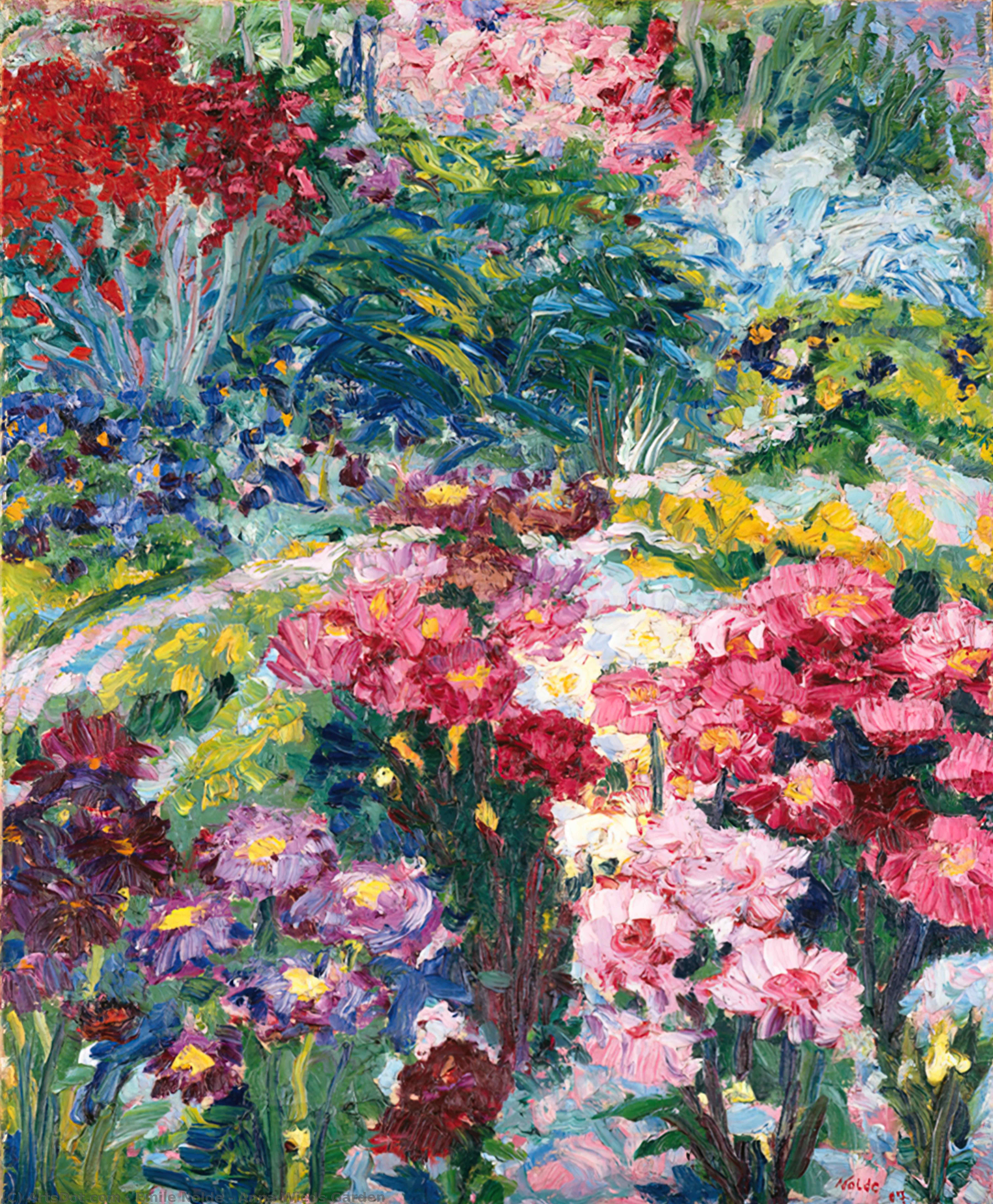
Emile Nolde, a prominent German-Danish painter and printmaker, is renowned for his vibrant and expressive works of art. One of his notable pieces,
Anna Wieds Garden, exemplifies the essence of Expressionism, a modernist movement that emerged in the early 20th century. This captivating oil painting is a testament to Nolde's unique style, which blends elements of Expressionism with a deep appreciation for nature.
The Expressionist Style
Expressionism, as described by art critic and historian Wilhelm Worringer in 1911, emphasizes the artist's inner emotions and experiences over realistic depictions. This movement is characterized by bold colors, distorted forms, and exaggerated expressions. Nolde's
Anna Wieds Garden embodies these principles, creating a visually striking and emotionally charged garden scene.
Detailed Description of the Garden Scene
The painting features a colorful garden with various flowers in different hues. The main focus is on the pink flowers, which are scattered throughout the picture. Yellow flowers also add to the vibrant palette, while trees and bushes provide depth and dimension to the image. A bird flying above the garden enhances the natural atmosphere of the painting. The overall composition is visually appealing and captures the beauty of a lush garden setting.
Key Elements
-
Color Palette: Vibrant colors such as pink, yellow, and green dominate the scene. -
Floral Focus: Pink flowers are the central element, with yellow flowers adding contrast. -
Natural Elements: Trees, bushes, and a bird contribute to the natural ambiance. -
Composition: The arrangement of elements creates a visually appealing and balanced image.
Conclusion
Anna Wieds Garden by Emile Nolde is a quintessential example of Expressionist art, showcasing the artist's ability to capture the essence of nature through bold colors and distorted forms. This painting is a testament to Nolde's unique style and his contribution to the Expressionist movement. For more information on Expressionism and Emile Nolde's works, visit
The Expressionism Art Movement at ArtsDot. To explore other paintings by Emile Nolde, see
Painting by 'Emile Nolde' | Emile Nolde: Anna Wieds Garden and
Painting by 'Emile Nolde' | Emile Nolde: Flower Garden (Girl and Washing).