A Vision of Harmony: Emily Carr's "Cha-atl, Field with Pole"
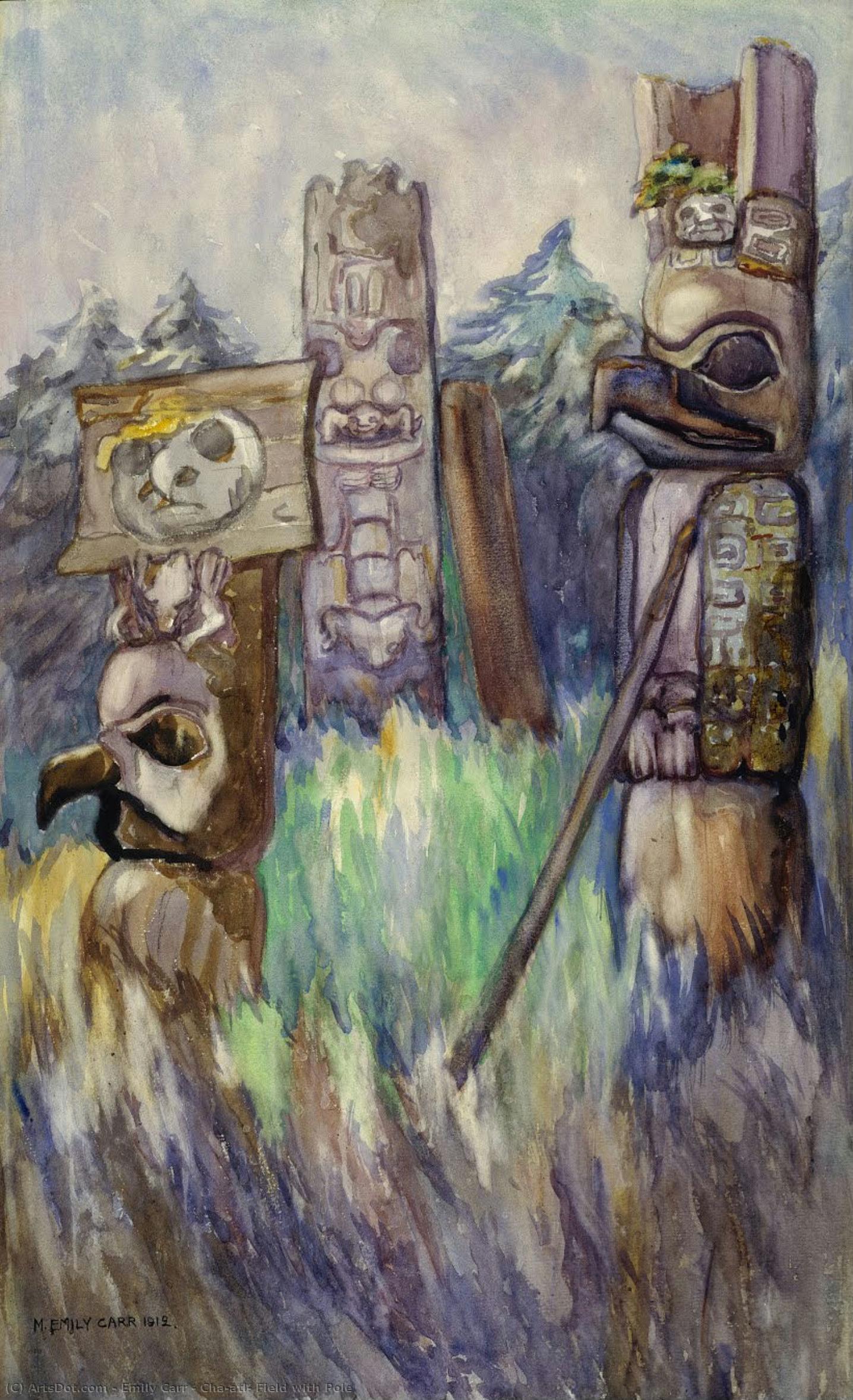
Emily Carr’s watercolor, “Cha-atl, Field with Pole,” painted around 1912, is more than a simple depiction of a coastal landscape; it’s a profound meditation on the interconnectedness between humanity and nature, deeply rooted in the spiritual beliefs of British Columbia's First Nations peoples. This intimate work, measuring just 32 x 51 cm, offers a serene yet powerful glimpse into Carr’s unique artistic vision – a blend of Post-Impressionistic brushwork and an unwavering respect for the indigenous cultures she so passionately documented. The painting captures a quiet field scene dominated by two imposing totem poles, their carved faces gazing out with an almost palpable sense of presence. These aren't merely decorative elements; they are guardians, symbols of lineage, history, and connection to the land.
Carr’s decision to focus on these totem poles is significant. During this period, many Western observers viewed them as primitive relics, a fading tradition. However, Carr recognized their profound cultural importance, understanding them as complex narratives carved into wood – stories of ancestors, clan affiliations, and the spiritual world. The placement within a field suggests a deliberate attempt to integrate these powerful symbols with the natural environment, highlighting the belief that all things are connected.
The Language of Color and Texture
Carr’s technique is immediately striking. She employs loose, expressive brushstrokes—a hallmark of her style—to capture the textures of the field, the weathered wood of the poles, and the fleeting movement of the birds in flight. The palette is dominated by earthy tones: deep greens, browns, and ochres evoke the rich colors of the Pacific Northwest landscape. Notice how she uses layers of translucent washes to create a sense of depth and atmosphere, mimicking the dappled light filtering through the forest canopy. The subtle variations in color suggest not just visual reality but also emotional resonance – a feeling of quiet contemplation and reverence.
The inclusion of several birds—some perched on the poles, others soaring overhead—adds another layer of meaning. Birds are frequently associated with spirituality and messengers between worlds in First Nations traditions. Their presence reinforces the painting’s theme of connection and communication, suggesting a dialogue between the human and spiritual realms.
A Skull's Silent Witness
Perhaps the most arresting element of the composition is the placement of a skull near one of the totem poles. This detail, often overlooked, adds an unexpected layer of complexity to the scene. While it might initially evoke feelings of morbidity, within the context of First Nations beliefs, skulls represent cycles of life and death, reminding us of the ephemeral nature of existence and the importance of honoring ancestors. It’s a poignant reminder that even in scenes of apparent serenity, Carr doesn't shy away from confronting the realities of mortality.
Echoes of a Changing Landscape
Painted around 1912, “Cha-atl, Field with Pole” reflects a pivotal moment in Canadian history. Emily Carr was documenting a rapidly changing landscape – the encroachment of Western civilization on indigenous territories and traditional ways of life. Her art served as both a visual record and a passionate plea for understanding and respect. The painting’s quiet dignity and spiritual depth offer a powerful counterpoint to the often-destructive forces of progress, reminding us of the enduring value of cultural heritage and the importance of preserving the natural world.
ArtsDot offers meticulously crafted hand-painted reproductions of “Cha-atl, Field with Pole,” allowing you to bring this evocative masterpiece into your home or office. Each reproduction is created using traditional watercolor techniques, faithfully capturing Carr’s distinctive style and emotional intensity. Explore our collection today and experience the spirit of British Columbia through Emily Carr's unforgettable vision.