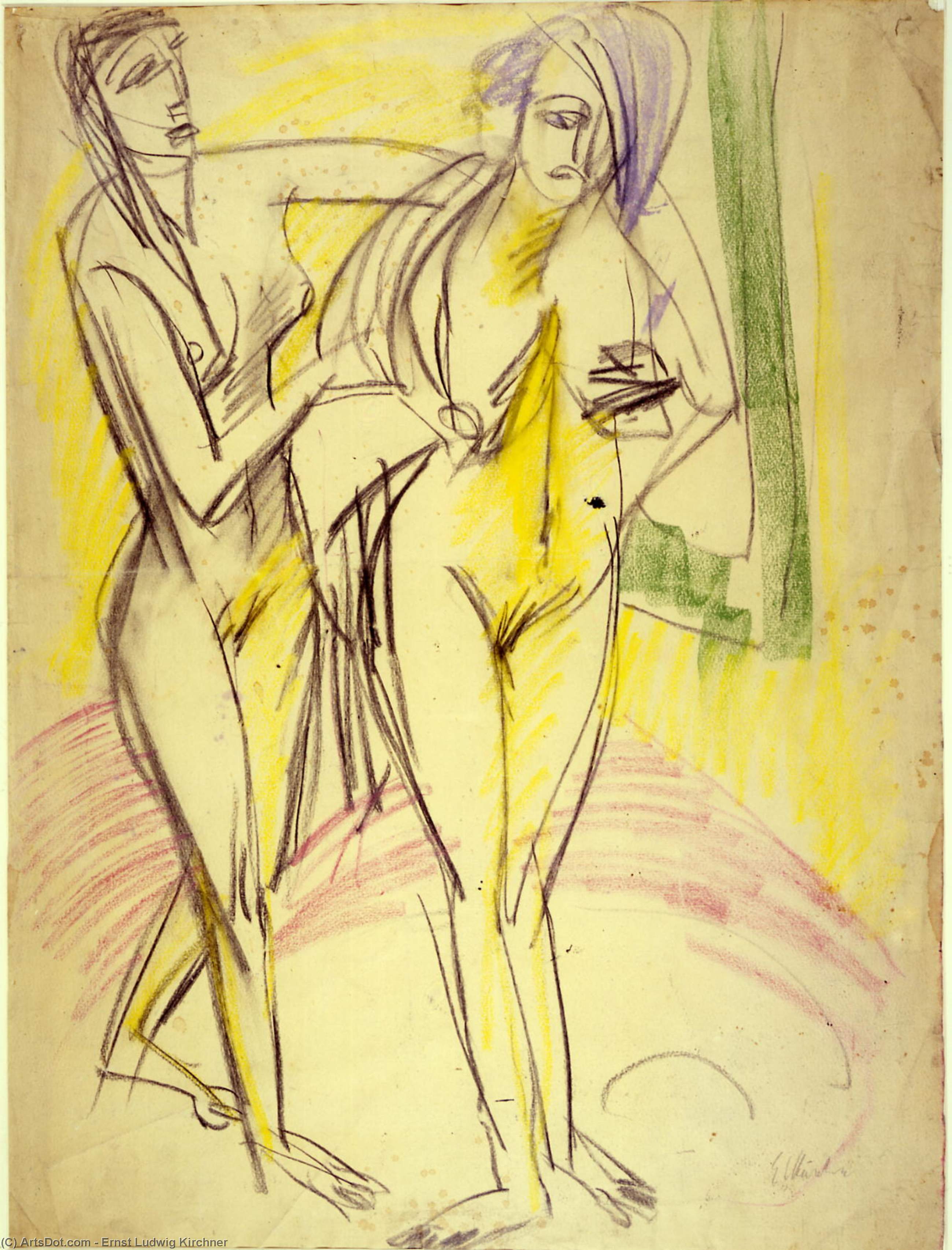
Experience the emotive intensity of Ernst Ludwig Kirchner’s ‘After the Bath,’ a cornerstone of Expressionism. Bold brushstrokes capture two women sharing intimacy before a mirror, reflecting the anxieties of 1914 and inviting you to explore this iconic masterpiece.
Ernst Ludwig Kirchner (1880-1938): A leading German Expressionist & Die Brücke founder. Explore his bold, emotive paintings of urban life, nudes, and landscapes – a powerful voice of early 20th-century art.
Exploring the Intimate Landscape of Emotion: Ernst Ludwig Kirchner’s ‘After the Bath’
The painting “After the Bath” by Ernst Ludwig Kirchner stands as a cornerstone of German Expressionism, capturing not merely a visual scene but an intensely felt psychological state. Created in 1914 amidst the turbulent backdrop of pre-war Europe, this oil on canvas transcends mere representation; it delves into the complexities of human connection and vulnerability—themes that resonate powerfully even today. Kirchner’s distinctive approach to painting prioritized conveying emotion above all else, rejecting the idealized beauty favored by academic art movements of his time. Instead, he embraced bold colors and distorted forms as tools for expressing inner turmoil and confronting anxieties about the changing world around him.
A Symphony of Color and Distortion
Kirchner's masterful technique is immediately apparent upon observation. Thick brushstrokes dominate the canvas, layering pigment onto canvas with palpable energy. The palette explodes with hues—deep reds, vibrant yellows, and cool blues—creating a visual dissonance that mirrors the emotional tension inherent in the depicted figures. Forms are deliberately flattened and simplified, prioritizing expressive gesture over meticulous realism. This distortion isn’t random; it serves to heighten the impact of color and amplify the feeling of unease. The mirror reflects not just physical appearance but also psychological projection, suggesting an awareness of self and its relationship to others.
The Expressionist Context: Anxiety and Modernity
“After the Bath” emerged during a period marked by significant social and intellectual upheaval. The Expressionist movement arose in response to the rapid industrialization and urbanization of Germany—forces that eroded traditional values and fostered feelings of alienation. Artists like Kirchner sought to grapple with these anxieties through art, rejecting bourgeois complacency and embracing subjective experience as paramount. Influenced by thinkers such as Nietzsche and Freud, Expressionists explored themes of psychological trauma, isolation, and the subconscious mind. The painting reflects this broader cultural preoccupation with confronting uncomfortable truths about human existence.
Symbolism Within Intimacy: Gestures of Support
Beyond its stylistic innovations, “After the Bath” is laden with symbolic significance. The two women positioned together before the mirror represent a profound connection—a gesture of mutual support and understanding amidst uncertainty. Their arms around each other convey warmth and reassurance, yet simultaneously hint at vulnerability. The mirror itself symbolizes introspection and self-awareness, prompting viewers to consider their own perceptions of identity and relationships. Kirchner’s careful composition reinforces this symbolic dimension, creating an atmosphere that is both comforting and unsettling—a hallmark of Expressionist art's ability to provoke contemplation.
A Legacy Enduring Through Reproduction
Today, “After the Bath” continues to captivate audiences worldwide. Its enduring appeal lies in its unflinching portrayal of human emotion and its masterful execution. High-quality reproductions offered by ArtsDot.com allow collectors and interior designers alike to experience Kirchner’s vision firsthand—bringing a piece of Expressionist history into contemporary spaces. Explore the Galerie Neuse page on ArtsDot.com for further insights into German art and its transformative influence on artistic expression.