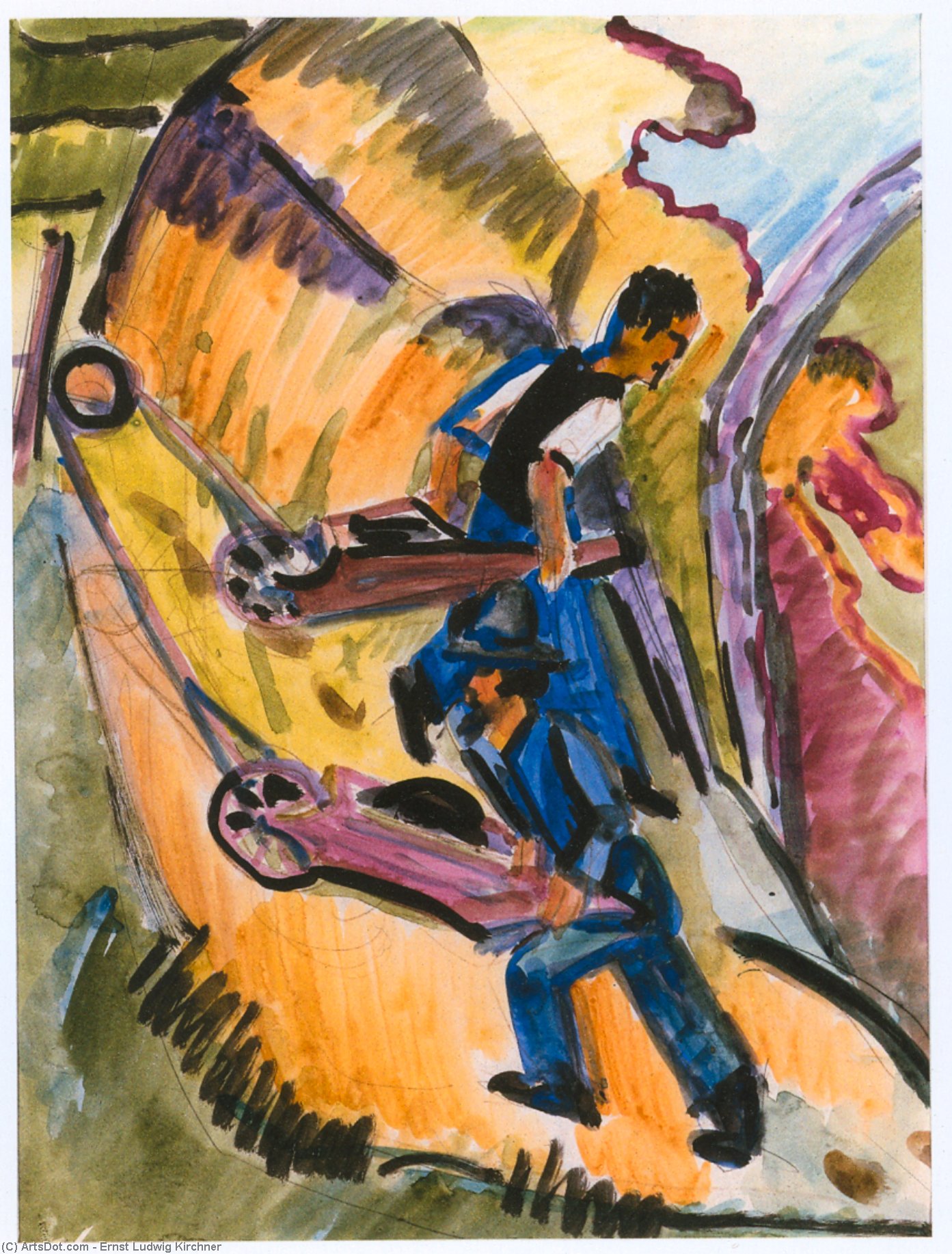
Captured in Kirchner’s signature Expressionist style, this painting depicts two men laboriously transporting a wheelbarrow – embodying resilience and collaborative effort during the turbulent 1920s German art scene. Explore this evocative piece and bring home a timeless masterpiece.
A Portrait of Labor and Resilience: Exploring Ernst Ludwig Kirchner’s “Men with Wheelbarrows”
Kirchner's "Men with Wheelbarrows," completed in 1927, stands as a cornerstone of German Expressionism—a movement that sought to convey profound emotional truths through distorted forms and jarring colors. More than just a depiction of physical exertion, the painting delves into themes of camaraderie, vulnerability, and the anxieties inherent in navigating a rapidly changing societal landscape. It’s a visual testament to the spirit of its time, capturing both the tangible realities of rural life and the intangible burdens carried by individuals striving for stability amidst uncertainty.
- Subject Matter: The artwork centers on two men laboriously transporting a wheelbarrow—a commonplace task rendered monumental through Kirchner’s artistic vision. This seemingly simple activity serves as a powerful metaphor for overcoming obstacles and persevering despite hardship.
- Style & Technique: Kirchner's signature Expressionist style is immediately recognizable. Bold, angular brushstrokes dominate the canvas, creating a sense of dynamism and unease. The color palette—primarily muted blues and ochres—is deliberately unsettling, reflecting the psychological intensity of the scene rather than striving for photographic realism.
The painting’s historical context illuminates its deeper significance. Created during the Weimar Republic—a period marked by economic instability and political polarization—Kirchner's work reflects the pervasive anxieties surrounding social upheaval. The figures themselves are rendered with unflinching honesty, their faces etched with weariness and apprehension. This deliberate lack of idealized beauty underscores the Expressionist preoccupation with portraying human experience in its rawest form. Kirchner’s masterful use of perspective contributes to a claustrophobic atmosphere, emphasizing the isolation felt by these men despite their collaborative effort.
Symbolism & Emotional Impact: The wheelbarrow itself symbolizes burdens—both literal and metaphorical—that individuals carry throughout life. Its placement on the shoulders of the men underscores the weight of responsibility and the difficulty of maintaining equilibrium amidst turbulent circumstances. Kirchner’s emotive brushwork conveys a palpable sense of melancholy, yet simultaneously communicates resilience and determination. Viewing “Men with Wheelbarrows” evokes contemplation about the human condition—a reminder that beauty can be found even in scenes of toil and hardship.
Interior Design Considerations: For those seeking inspiration within their homes, Kirchner’s palette offers a striking contrast to brighter hues. Reproductions of "Men with Wheelbarrows" would lend an air of understated drama to spaces—particularly when paired with textured fabrics or earthy tones. Its powerful imagery speaks to the enduring human desire for connection and fortitude, qualities that resonate powerfully in contemporary interior design.