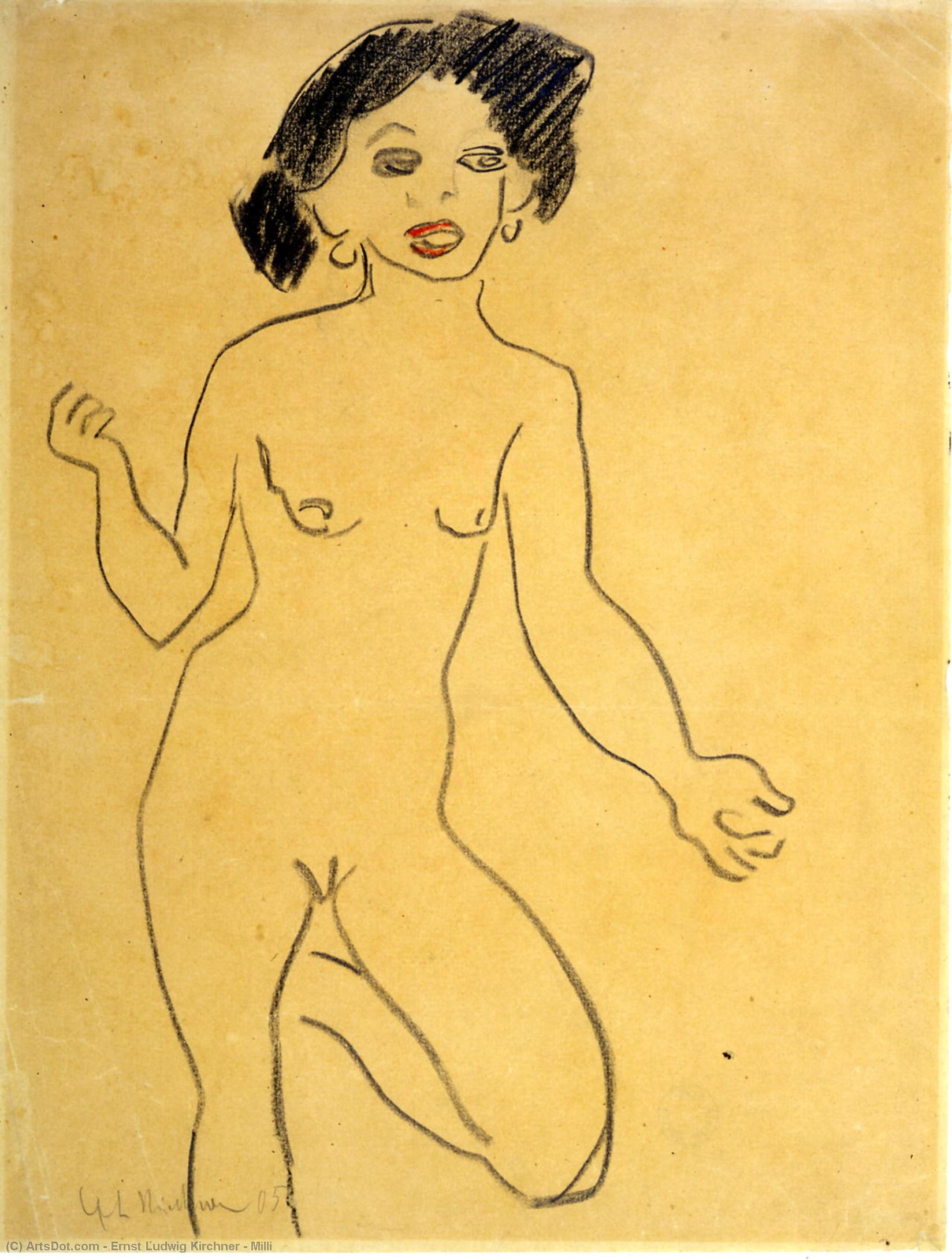
Explore Ernst Ludwig Kirchner’s evocative Expressionist masterpiece, Milli—a bold depiction of femininity captured in vibrant chalk hues and distorted forms. Witness the artist's pioneering style from 1909 and discover stunning reproductions at ArtsDot.com.
A Portrait of Provocation: Exploring Ernst Ludwig Kirchner’s Milli
Kirchner's "Milli," completed in 1909, stands as a cornerstone of Expressionist art—a bold declaration against the prevailing aesthetic norms of its time and an enduring testament to the artist’s profound engagement with emotion. Executed in chalk on paper, this intimate yet unsettling image captures a moment frozen in time: a woman posed for Kirchner, her gaze averted, hinting at unspoken desires and anxieties. The painting isn't merely a depiction; it’s an embodiment of Kirchner’s artistic philosophy—a refusal to sanitize reality and instead prioritizing the visceral experience of feeling.
- Style & Influences: Kirchner’s affiliation with Die Brücke, alongside Karl Schmidt-Rottluff and Erich Heckel, cemented his commitment to conveying inner turmoil through distorted forms and jarring color palettes. Like Forest Cemetery and Self-portrait, Milli exemplifies this stylistic approach—a deliberate rejection of academic precision in favor of capturing the essence of human experience.
- Technique: Chalk, a medium favored by Kirchner for its immediacy and textural qualities, lends itself beautifully to conveying mood and atmosphere. The artist’s masterful manipulation of pigment creates a palpable sense of unease, mirroring the psychological complexities explored within the composition.
The Historical Context: Painted during the burgeoning Expressionist movement, Milli reflects the anxieties surrounding societal shifts and the growing disillusionment with bourgeois values prevalent in early 20th-century Germany. Kirchner’s work responded directly to the intellectual currents of his era—particularly Nietzsche's critique of morality—and sought to express the darker side of human consciousness.
Symbolism & Emotional Impact: The woman’s averted gaze is arguably the painting’s most striking element, symbolizing vulnerability and repression. Her large breasts – a deliberate provocation – speak to themes of femininity and sexuality within the broader context of Expressionist anxieties about societal expectations. Kirchner's use of color—particularly yellows and reds—amplifies these emotional resonances, creating an unsettling visual experience that compels contemplation.
Further Exploration: For those wishing to delve deeper into Kirchner’s artistic legacy, ArtsDot.com offers exceptional reproductions of his celebrated works, including Milli. Consider commissioning a bespoke print for your home or office—a beautiful reminder of the power of art to convey emotion and challenge convention. Explore similar Expressionist masterpieces at ArtsDot.com.