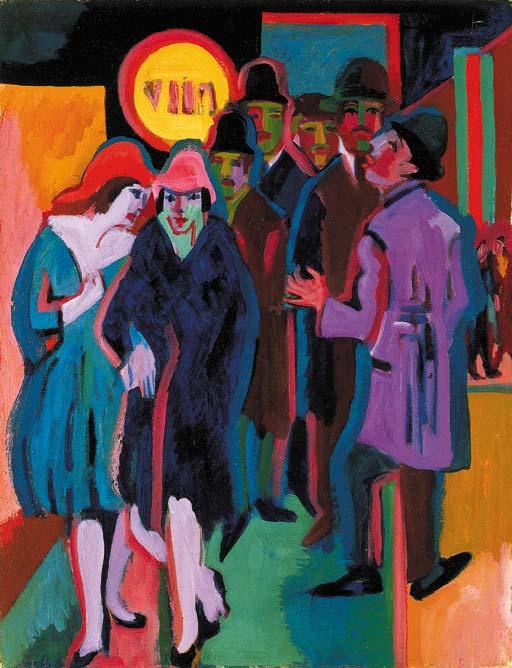
Nocturnal Street Scene by Ernst Ludwig Kirchner
Ernst Ludwig Kirchner’s “Nocturnal Street Scene,” painted circa 1912, stands as a cornerstone of German Expressionism and embodies the movement's preoccupation with psychological intensity and social anxieties. More than just a depiction of urban nightlife—specifically a cabaret—the canvas pulsates with an unsettling energy that captures the spirit of its time: a period grappling with rapid industrialization, societal upheaval, and burgeoning disillusionment.
- Subject Matter & Context: The scene unfolds in a darkened street corner, dominated by a flamboyant ‘Vita’ sign—a beacon of artificial illumination amidst the gloom. Kirchner meticulously portrays figures emerging from or entering this establishment, reflecting the anxieties surrounding social decadence and the allure of fleeting pleasures prevalent in Weimar Berlin.
- Style & Technique: Expressionism demanded an artist abandon objective representation for subjective emotion; Kirchner achieves this brilliantly through a technique characterized by bold brushstrokes—impasto is particularly prominent around brighter areas—and a deliberate rejection of blending. Color is applied in jarring blocks, creating dramatic contrasts that heighten visual tension and conveying the artist’s inner turmoil.
- Composition & Visual Elements: The asymmetrical composition directs the viewer's gaze across the canvas, emphasizing the dynamism of the scene. Geometric shapes—primarily rectangular blocks defining architectural elements—contribute to a flattened perspective, mirroring the psychological compression experienced by individuals confronting societal pressures.
- Color Palette & Symbolism: Kirchner’s palette explodes with vibrant hues – yellows, oranges, reds battling against blues and greens – reflecting not merely visual reality but emotional states. The ‘Vita’ sign itself serves as a potent symbol, hinting at both the seductive promise of urban life and its underlying darkness; it illuminates figures while simultaneously isolating them in shadow.
- Emotional Impact: “Nocturnal Street Scene” transcends mere observation; it compels contemplation. Kirchner's distorted figures—simplified outlines conveying psychological distress—communicate a palpable sense of alienation and unease, mirroring the anxieties of an era consumed by uncertainty. The artwork remains a haunting reminder of Expressionism’s commitment to portraying the human condition with unflinching honesty.
A reproduction of this masterpiece offers more than just aesthetic pleasure; it brings home the profound psychological depth and artistic innovation that defined Kirchner's legacy. Its bold colors and expressive brushstrokes continue to resonate with collectors and interior designers alike, capturing a moment frozen in time—a testament to the enduring power of art to convey emotion and provoke thought.