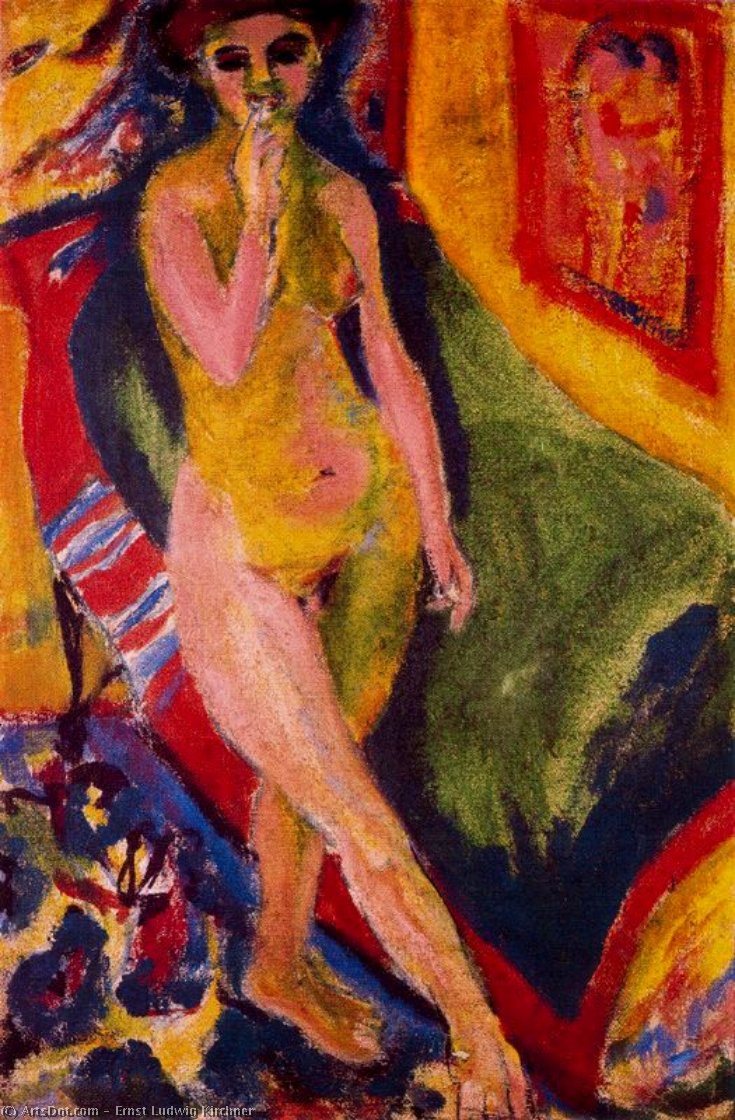
Nude Girl with Green Sofa: An Expressionist Echo of Anxiety
Ernst Ludwig Kirchner’s “Nude Girl with Green Sofa” isn't merely a depiction of a woman seated on furniture; it’s a visceral distillation of the anxieties simmering beneath the surface of early 20th-century German culture. Painted in 1913, during the height of Expressionism’s fervor—a movement born from disillusionment with bourgeois values and fueled by the looming shadow of impending war—this artwork encapsulates the stylistic hallmarks of its time: bold color palettes juxtaposed against distorted forms, prioritizing emotional resonance over photographic realism.
- Subject Matter & Context: The nude figure occupies a deliberately sparse interior space – a green sofa dominating the composition alongside a muted tapestry wall hanging. Kirchner’s choice to portray a female nude wasn't uncommon within Expressionist circles; it served as a vehicle for exploring themes of vulnerability, sexuality, and alienation—issues central to the intellectual debates surrounding gender roles and societal anxieties during this period.
- Style & Technique: Kirchner’s masterful use of oil paint on canvas exemplifies Expressionism’s commitment to subjective experience. Thick impasto brushstrokes create a palpable textural surface, conveying movement and energy while simultaneously emphasizing the artist's emotional engagement with his subject matter. The flattened perspective contributes to a claustrophobic atmosphere, mirroring the psychological pressures felt by individuals confronting rapid societal change.
- Color Palette & Symbolism: Dominating the canvas are vibrant yellows, oranges, reds, and pinks—colors deliberately chosen to heighten emotional intensity. These hues clash dramatically with cooler greens and blues, reflecting a subconscious unease and instability. The stark contrast between skin tones and the surrounding environment underscores the figure’s isolation and vulnerability.
- Composition & Distortion: The central female nude is positioned slightly off-center, leaning forward with one hand raised to her face—a gesture laden with unspoken emotion. Lines are loose and expressive, furthering the distortion of form and creating a sense of dynamism. The sofa itself is rendered in blocky shapes, reinforcing the artwork’s unsettling aesthetic.
- Emotional Impact: Ultimately, “Nude Girl with Green Sofa” succeeds in conveying profound psychological depth. Kirchner doesn't offer comfort or reassurance; instead, he confronts viewers with an image that evokes anxiety and disorientation—a testament to Expressionism’s ability to capture the complexities of human emotion and its enduring relevance as a reflection of our own time.
Recommended Reproduction: ArtsDot.com offers exceptional high-quality reproductions of Ernst Ludwig Kirchner's “Nude Girl with Green Sofa,” allowing you to bring this iconic artwork into your home or workspace.