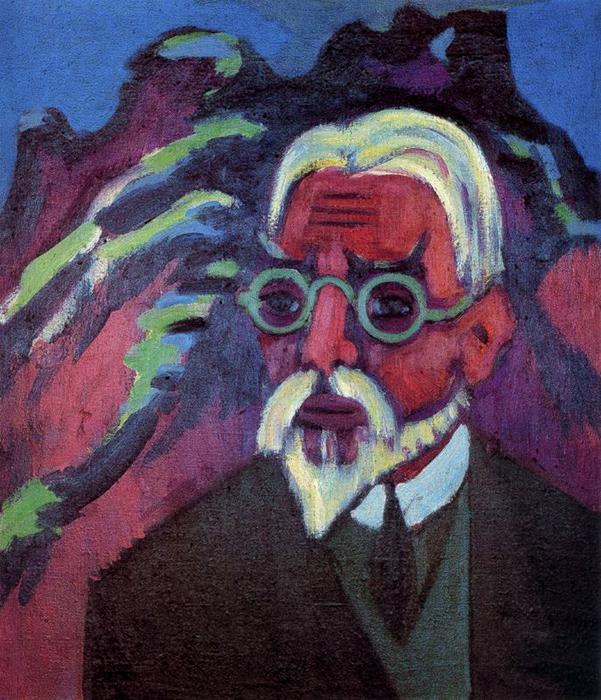
A Window into Anxiety: Exploring Ernst Ludwig Kirchner’s “Portrait of Bosshart”
Ernst Ludwig Kirchner's "Portrait of Bosshart," a compelling and unsettling work from 1920, offers a profound glimpse into the anxieties simmering beneath the surface of early 20th-century German society. More than just a likeness, it’s a raw expression of psychological intensity, rendered with the bold, fractured language of Expressionism. This portrait isn't about capturing a specific individual; instead, it embodies a generalized sense of unease and confrontation – a feeling that resonates powerfully even today.
Kirchner, a key figure in the Die Brücke movement, was deeply attuned to the social and political currents swirling around him. His art frequently grappled with themes of urban alienation, industrialization, and the psychological toll of modernity. “Portrait of Bosshart” is no exception; it’s a visual distillation of these concerns, amplified through his distinctive style. The subject, an older gentleman distinguished by spectacles and formal attire, isn't presented with idealized beauty or serenity. Instead, he’s rendered with deliberate distortions – a slightly receding forehead, narrowed eyes, and a subtly clenched jaw – all contributing to a palpable sense of tension.
The Language of Distortion: Technique and Style
Kirchner’s technique is immediately arresting. Thick, impasto brushstrokes dominate the canvas, creating a tactile surface that vibrates with energy. The paint isn't blended smoothly; it’s applied in visible, gestural marks, reflecting the artist’s emotional state. This deliberate roughness contrasts sharply with the simplified, almost geometric shapes used to define the figure – planes of color rather than meticulously modeled forms. The flattened perspective further emphasizes this sense of immediacy and disorientation, pulling the viewer directly into the subject's gaze.
- Color Palette: The painting’s vibrant yet unsettling palette—a clash of intense reds, blues, greens, and purples—is far from realistic. These colors aren’t used to depict light or shadow; they are employed expressively to convey mood and emotion. The juxtaposition of warm and cool tones creates a dynamic tension, mirroring the psychological turmoil at play.
- Lines: Thick, broken lines define the contours of the face and clothing, adding to the sense of dynamism and instability. Outlines are deliberately blurred, further emphasizing the expressive nature of the work.
- Texture: The visible brushstrokes and impasto technique create a rich, tactile texture that invites close examination. It’s as if you could reach out and feel the artist's urgency.
Symbolism and Emotional Resonance
The direct gaze of Bosshart is particularly significant. It’s not a welcoming or inviting look; it feels confrontational, almost accusatory. This intense scrutiny suggests introspection, perhaps even a struggle with inner demons. The setting – a simplified background devoid of detail – further isolates the subject, amplifying his sense of loneliness and vulnerability. The portrait can be interpreted as a meditation on aging, mortality, and the anxieties associated with navigating a rapidly changing world.
Considering Kirchner’s broader context within Expressionism, “Portrait of Bosshart” aligns with the movement's exploration of psychological themes and its rejection of academic conventions. It’s a powerful reminder that art can be more than just representation; it can be a vehicle for expressing profound emotional truths.
A Reproduction for Your Space
ArtsDot offers meticulously crafted, hand-painted reproductions of “Portrait of Bosshart,” allowing you to bring this iconic work into your home or office. Our skilled artists faithfully recreate Kirchner’s distinctive style and emotive palette, ensuring that the essence of the original is preserved with stunning accuracy. Whether you're an art enthusiast, a collector, or simply seeking a piece that sparks conversation and evokes emotion, our reproduction provides a beautiful and authentic way to experience this remarkable work of art.