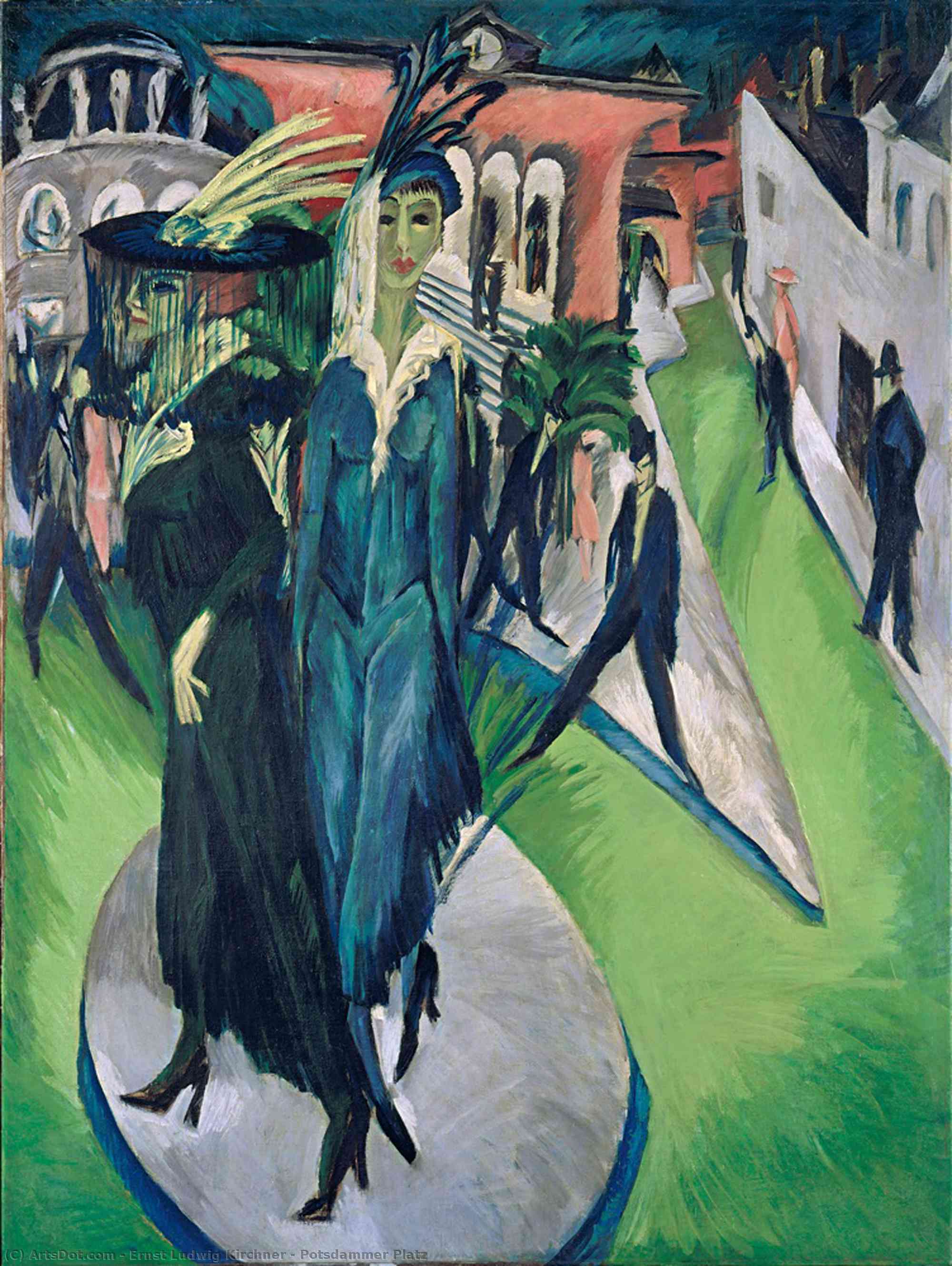
Experience Ernst Ludwig Kirchner's vibrant 1914 oil painting, "Potsdammer Platz," a dynamic expressionist scene of urban life featuring a confident woman amidst a bustling city street. Discover this captivating artwork and bring its energy into your space.
Potsdammer Platz – A Snapshot of Urban Anxiety
Ernst Ludwig Kirchner’s “Potsdammer Platz,” painted in 1914, is more than just a depiction of a Berlin street; it's a visceral embodiment of the anxieties simmering beneath the surface of early 20th-century modernity. Executed as a large oil on canvas measuring 200 x 150 cm, this artwork captures a frenetic scene – a teeming crowd navigating the bustling Potsdammer Platz, a location that would later become synonymous with the city's divided history. The painting’s immediate impact is one of intense energy and disquiet, reflecting Kirchner’s pivotal role within the German Expressionist movement.
- Style & Technique: Kirchner was a key figure in Die Brücke (The Bridge), an artist group dedicated to rejecting academic realism and exploring subjective emotional experience. “Potsdammer Platz” exemplifies this approach through its deliberately distorted perspective, jarring color palette – dominated by blues, greens, and ochres – and flattened forms. The brushstrokes are thick and agitated, conveying a sense of urgency and unease rather than serene observation.
- Historical Context: 1914 was a year pregnant with impending doom. The assassination of Archduke Franz Ferdinand had ignited the powder keg of European tensions, and Kirchner’s work reflects this growing apprehension. While seemingly focused on urban life, the painting subtly foreshadows the chaos and destruction that would soon engulf Europe.
The Figure in Blue – A Symbol of Isolation
Central to the composition is a woman dressed in a striking blue dress, confidently striding through the crowd. This figure isn’t merely a subject; she's a potent symbol within Kirchner’s oeuvre. Often interpreted as representing alienation and isolation amidst the overwhelming pressures of modern urban life, her posture suggests both strength and vulnerability. The hat she wears adds to this duality – a marker of social status yet simultaneously shielding her from connection.
- Psychological Impact: Kirchner’s masterful use of light and shadow further amplifies the emotional weight of the scene. Harsh, directional lighting emphasizes the figures' faces, highlighting their expressions of anxiety and detachment. The woman in blue becomes a focal point for our own feelings of unease and perhaps even a reflection of our own struggles with identity and belonging.
- Compositional Strategy: Kirchner employs a dynamic composition, using diagonal lines to create a sense of movement and instability. This technique contributes to the overall feeling of disorientation and reinforces the theme of urban alienation.
Decoding the Palette – Color as Emotion
Kirchner’s color choices are far from arbitrary; they are deliberately employed to evoke specific emotional responses. The dominant blues and greens, often associated with melancholy and introspection, contribute to the painting's somber mood. The flashes of ochre and brown represent the grime and decay inherent in industrial urban environments – a visual manifestation of the anxieties surrounding rapid modernization.
- Expressionist Principles: Kirchner’s use of color aligns perfectly with the Expressionist movement’s core tenets, which prioritized subjective experience over objective representation. The colors aren't meant to accurately depict reality but rather to convey the artist’s emotional response to it.
- Materiality: The thick application of paint creates a tactile surface that invites close examination, further intensifying the viewer’s engagement with the artwork.
A Legacy of Emotional Intensity
"Potsdammer Platz" stands as a powerful testament to Kirchner's artistic vision and his ability to capture the psychological complexities of modern life. This painting is not simply a record of a Berlin street; it’s an enduring exploration of human isolation, anxiety, and the unsettling impact of progress. A hand-painted reproduction offers a remarkable opportunity to experience this emotionally charged artwork firsthand, bringing Kirchner's vision into your space and adding a touch of raw expressionist intensity to your collection.