Reheinbrücke: A Chronicle of Urban Anxiety
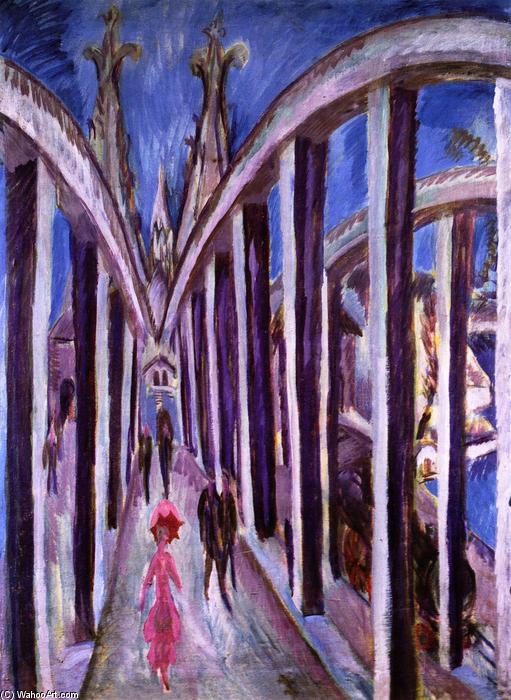
Ernst Ludwig Kirchner’s “Reheinbrücke,” painted in 1914, isn't merely a depiction of a bridge; it’s a visceral embodiment of the anxieties simmering beneath the surface of early 20th-century urban life. This oil on panel, measuring 121 x 91 cm, pulsates with the raw energy of Expressionism, a movement Kirchner helped define through his unflinching portrayal of human emotion and experience. The painting immediately arrests the viewer with its bold brushstrokes and intensely saturated colors – a deliberate rejection of academic realism in favor of an emotional truth.
- Subject Matter: The scene centers around the Eibenbrücke (Willow Bridge) in Berlin, a familiar landmark transformed by Kirchner’s artistic vision. It's not a serene pastoral view; instead, it’s a bustling thoroughfare teeming with figures, each seemingly lost in their own thoughts or preoccupied with their daily routines.
- Technique: Kirchner’s technique is characterized by short, choppy brushstrokes that create a sense of movement and instability. The colors are applied with an almost violent intensity, contributing to the painting's overall feeling of unease and agitation. Notice how he distorts perspective and exaggerates forms to heighten emotional impact.
- Historical Context: Created during a period of rapid industrialization and social upheaval in Germany, “Reheinbrücke” reflects the growing alienation and psychological strain felt by many individuals navigating this changing world. Kirchner was deeply concerned with documenting the effects of modernity on the human psyche.
Decoding the Expressionist Palette
Kirchner’s masterful use of color is central to understanding the emotional power of “Reheinbrücke.” The dominant hues – jarring reds, yellows, and greens – aren't used descriptively; they are employed symbolically to convey mood and feeling. The intense colors heighten the sense of drama and contribute to the painting’s unsettling atmosphere. The muted tones in the background serve as a stark contrast, further emphasizing the figures in the foreground and drawing attention to their isolation. This deliberate manipulation of color aligns perfectly with the tenets of Expressionism, where art is less about representing reality accurately and more about expressing inner emotions.
The composition itself reinforces this sense of unease. The bridge acts as a visual barrier, separating individuals and suggesting a lack of connection. The figures are tightly packed together, yet they seem distant and disconnected from one another, reflecting the fragmented nature of modern life.
Symbolism and Emotional Resonance
"Reheinbrücke" transcends a simple representation of a bridge; it’s a profound meditation on the human condition. The painting speaks to themes of isolation, anxiety, and the struggle for identity in an increasingly complex world. Kirchner's figures are not portraits but archetypes – representations of universal human experiences. Their vacant stares and hurried movements suggest a sense of detachment and a lack of purpose.
The bridge itself can be interpreted as a symbol of transition or uncertainty, reflecting the anxieties surrounding the rapidly changing social and political landscape of early 20th-century Germany. Kirchner’s ability to capture this emotional intensity makes “Reheinbrücke” a powerful and enduring work of art.
A Window into Kirchner's Vision
This exceptional piece, housed at the Staatliche Museen zu Berlin, offers a rare glimpse into the mind of one of Germany’s most influential Expressionist artists. Its scale – 121 x 91 cm – allows for an immersive experience, drawing the viewer directly into Kirchner's world of intense emotion and psychological exploration. A hand-painted reproduction of “Reheinbrücke” offers a unique opportunity to own a piece of art history, bringing this powerful image into your home or office.