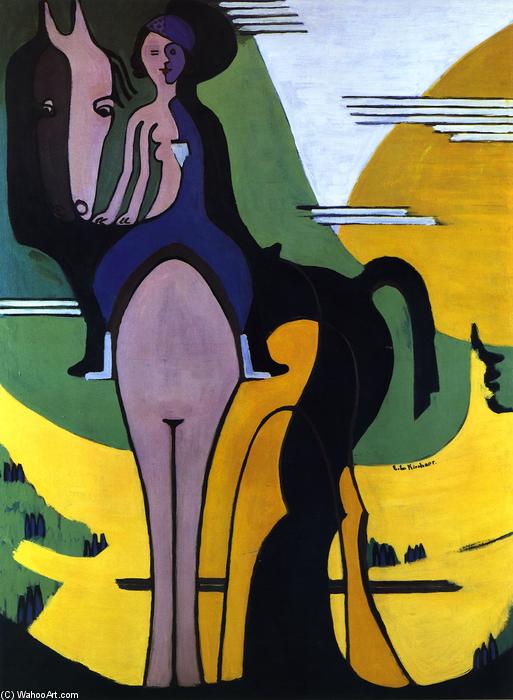
Experience Ernst Ludwig Kirchner's iconic 'Reiterin,' a vibrant expressionist masterpiece from 1931 depicting a nude woman on horseback amidst dynamic figures and bold colors, capturing the raw emotion of German Expressionism – discover this stunning artwork.
Reiterin by Ernst Ludwig Kirchner: A Study in Raw Emotion
Ernst Ludwig Kirchner’s “Reiterin,” painted in 1931 and measuring an imposing 200 x 150 cm, is more than just a depiction of a woman on horseback; it's a visceral plunge into the heart of German Expressionism. Housed within the Kirchner Museum Davos, this artwork embodies the artist’s signature style – a potent blend of bold color, distorted forms, and an unflinching exploration of psychological intensity. The scene unfolds with a dramatic dynamism, capturing a fleeting moment of movement and suggesting a profound sense of isolation and perhaps even unease. Kirchner masterfully utilizes the canvas to convey not just what he sees, but how he *feels* about it – a characteristic hallmark of his artistic vision.
Composition and Technique: A Symphony of Distortion
- Subject Matter: The central figure, a woman riding bare-breasted across the landscape, immediately commands attention. Her posture is both powerful and vulnerable, contributing to the painting’s unsettling effect.
- Expressionist Style: Kirchner's technique is characterized by thick, impasto brushstrokes that build up layers of color, creating a textured surface that seems to vibrate with energy. The deliberate distortion of forms – particularly in the horse and rider – amplifies the emotional impact.
- Color Palette: The painting’s palette is dominated by jarring, unnatural colors—ochres, browns, and blues—further intensifying the sense of unease and contributing to the overall expressionistic mood. These aren't colors meant to represent reality; they are employed to evoke feeling.
- Dynamic Composition: The arrangement of figures and horses creates a sense of movement, drawing the viewer’s eye across the canvas and reinforcing the painting’s dynamism.
Historical Context and Symbolism
"Reiterin" was created during a period of significant social and political upheaval in Germany. The rise of Expressionism reflected anxieties about modernity, industrialization, and the perceived loss of traditional values. Kirchner’s work can be interpreted as a response to these concerns, portraying a world fractured by alienation and uncertainty. The woman on horseback, a recurring motif in Kirchner's oeuvre, often represents a solitary figure struggling against an overwhelming environment – a symbol of individual resistance or perhaps even despair. The setting itself, seemingly desolate and devoid of human connection, reinforces this interpretation.
Emotional Impact and Artistic Legacy
“Reiterin” is not a comfortable painting; it’s deliberately unsettling. Kirchner doesn't offer easy answers or resolutions. Instead, he forces the viewer to confront uncomfortable emotions – loneliness, anxiety, and perhaps even a sense of impending doom. This raw emotional honesty is what makes the work so compelling and enduring. It stands as a testament to Kirchner’s ability to translate personal turmoil into a universally resonant artistic statement. Its influence can be seen in subsequent generations of artists who embraced Expressionism's commitment to subjective experience and its rejection of academic conventions.
None