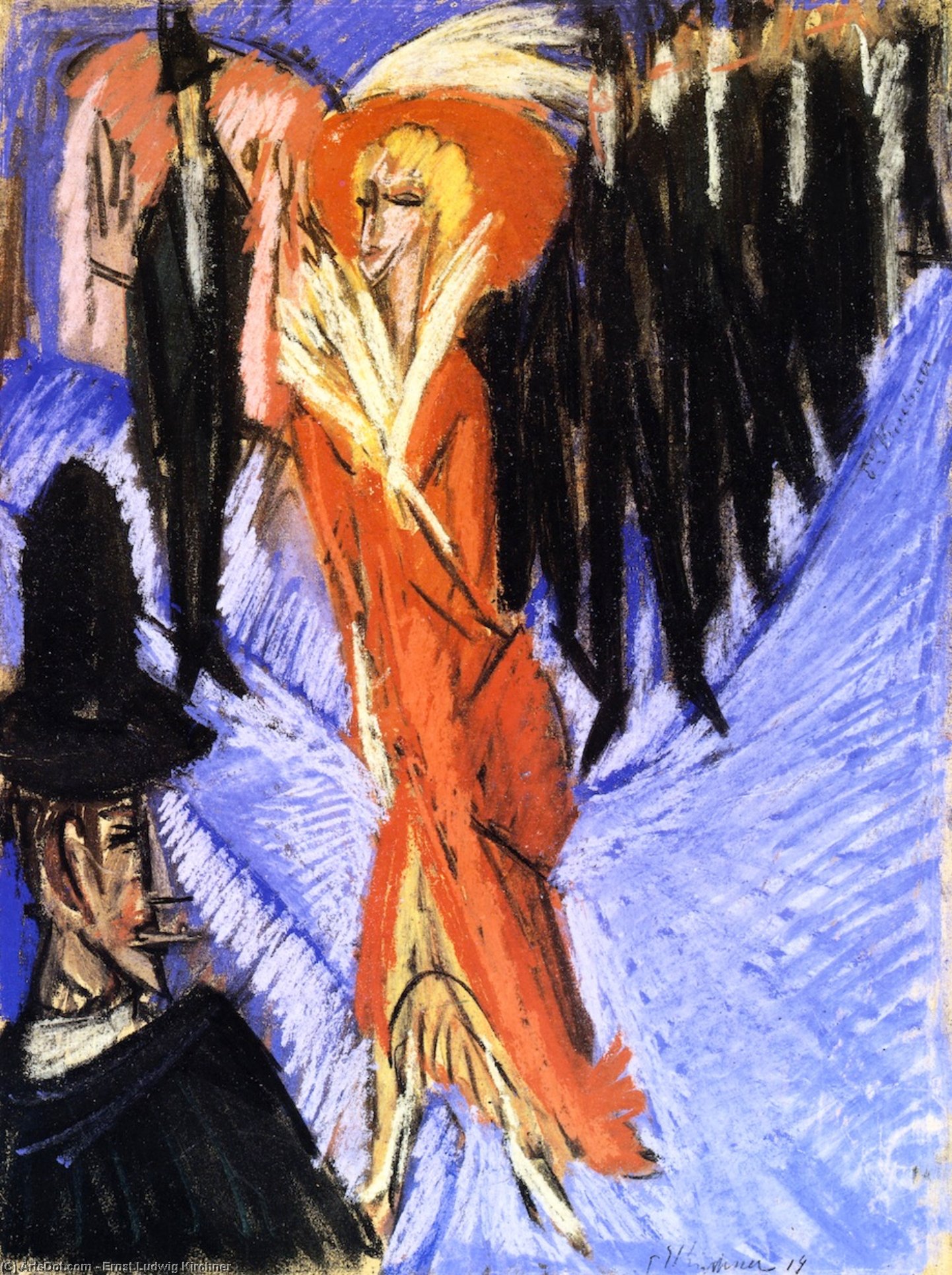
The
Rote Kokotte painting, crafted by the renowned German expressionist
Ernst Ludwig Kirchner in 1914, is a quintessential example of Expressionist art. This captivating piece, characterized by its vibrant color scheme and distorted forms, showcases Kirchner's unique style and artistic vision. The painting features a woman in red, standing on the ground with her arms outstretched, as if flying through the air or dancing, set against a contrasting blue background.
Artistic Style and Technique
Kirchner's
Rote Kokotte is a drawing that embodies the principles of Expressionism, emphasizing the subjective emotional experience of the artist. The bold colors and dynamic composition create a sense of energy and movement, drawing the viewer into the vibrant world of the painting. For more information on Kirchner's style and other works, visit
Ernst Ludwig Kirchner's page on ArtsDot.com.
Key Features of the Painting: - The woman in red is the central figure, dominating the composition with her dynamic pose.
- The blue background provides a striking contrast to the vibrant red of the woman's dress.
- Other figures are present but less detailed, adding depth without distracting from the main subject.
Kirchner's work can also be found in notable museums such as the
Kunstmuseum Dusseldorf (Germany), where his painting
Stehender Akt vor dem Zelt is housed. For more on this piece, see
Stehender Akt vor dem Zelt on ArtsDot.com. BR> The
Rote Kokotte is not only a testament to Kirchner's skill as an artist but also a reflection of the Expressionist movement's focus on capturing emotions and inner experiences. As seen in other works like
Circus Rider, available for view at the
St. Louis Art Museum (United States), Kirchner's unique style continues to captivate audiences. Explore more of his artworks and the world of Expressionism on
ArtsDot.com.