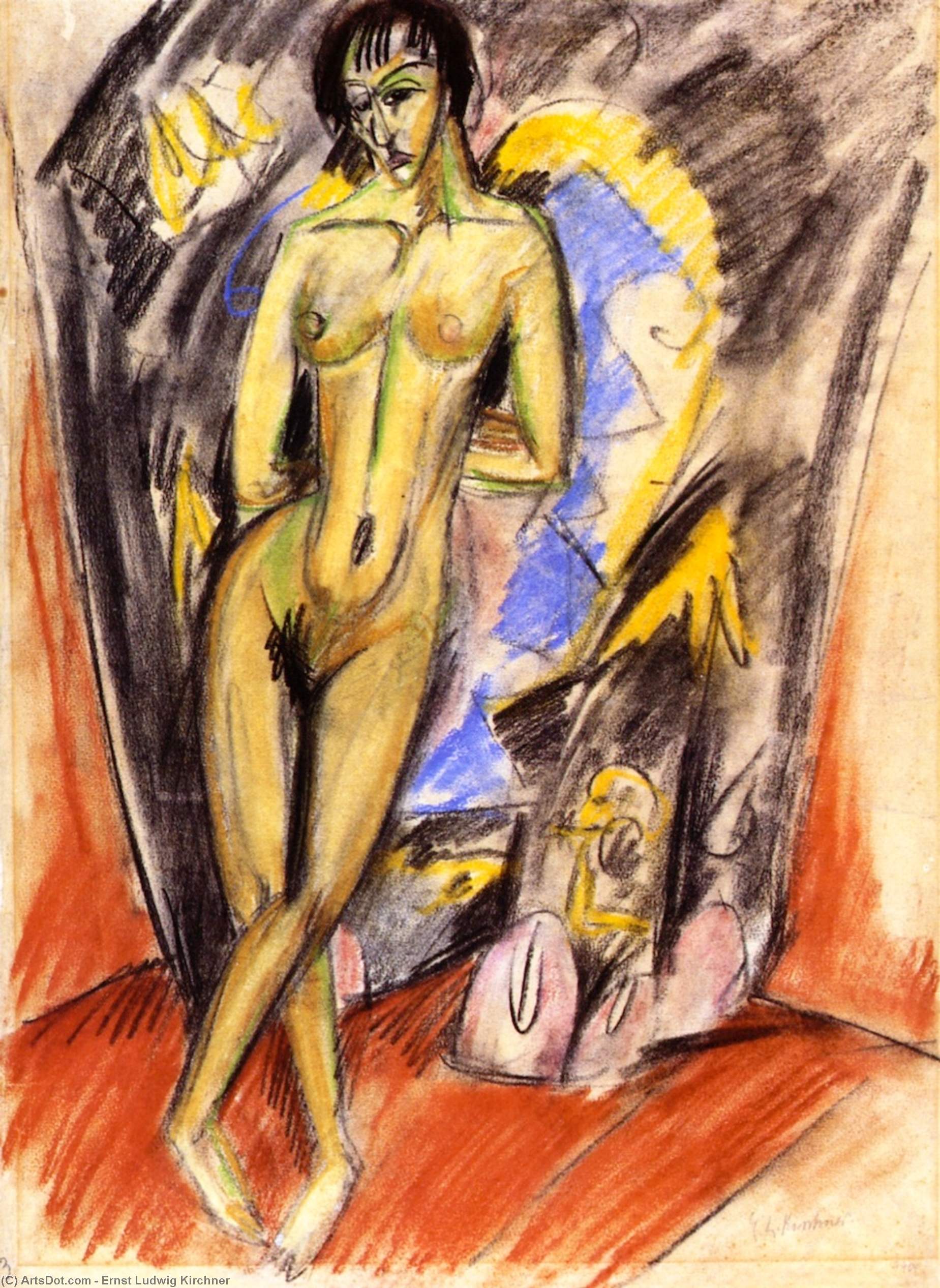
Stehender Akt vor dem Zelt: A Captivating Expressionist Study
“Stehender Akt vor dem Zelt” (Standing Nude Before the Tent), created in 1914 by Ernst Ludwig Kirchner, is a quintessential example of Expressionist art. This captivating piece, characterized by its vibrant color scheme and distorted forms, showcases Kirchner's unique style and artistic vision. The painting features a woman in the nude, standing with her hands on her hips, surrounded by other figures that add depth and complexity to the artwork.
Expressionism and Die Brücke
Ernst Ludwig Kirchner was a prominent figure in the Expressionist movement, particularly as a member of the German art group Die Brücke. This movement, founded in Dresden in 1905, sought to break away from traditional artistic conventions and explore new forms of expression. Kirchner's work embodies the principles of Expressionism, with its emphasis on vibrant colors, distorted forms, and emotional intensity.
Technical Aspects & Artistic Technique
The artwork is a pastel drawing depicting a nude female figure in a dramatic, theatrical pose. It’s characterized by loose lines and expressive shading, conveying a sense of movement and emotional intensity. The composition is dynamic, with the figure dominating the foreground against a dark, textured background. There's an attempt at perspective, though it’s flattened and stylized rather than realistic. The technique involves layering pastel colors to build up tones and textures. The materials used are primarily pastels on paper. The lines are predominantly thick and gestural, creating a sense of urgency and spontaneity. Shapes are simplified and abstracted, prioritizing expression over precise representation.
Symbolism & Emotional Impact
The subject matter is a nude female figure, presented with an almost confrontational directness. Symbolic elements include the theatrical setting and the intense gaze of the figure, suggesting themes of vulnerability, strength, or perhaps even alienation. The lighting appears to be artificial, casting strong shadows and highlighting certain areas of the figure’s form. The color palette is dominated by earthy tones with pops of vibrant color. The overall effect is emotionally charged and visually arresting.
Historical Context & Legacy
“Stehender Akt vor dem Zelt” reflects a period of significant social and political upheaval in Germany, mirroring the anxieties and uncertainties of the time. Kirchner’s exploration of urban life and human relationships through distorted forms and intense colors resonated with audiences seeking new ways to express their experiences. Some notable works by Ernst Ludwig Kirchner include:
The Kunstmuseum Dusseldorf in Germany is home to an extensive collection of Ernst Ludwig Kirchner's works, including “Stehender Akt vor dem Zelt.” This museum, along with others like the Museum Collection Lippmann in Berlin, provides a glimpse into the artistic innovations of the early 20th century.