Still Life with Bichier – A Window Into Expressionist Anxiety
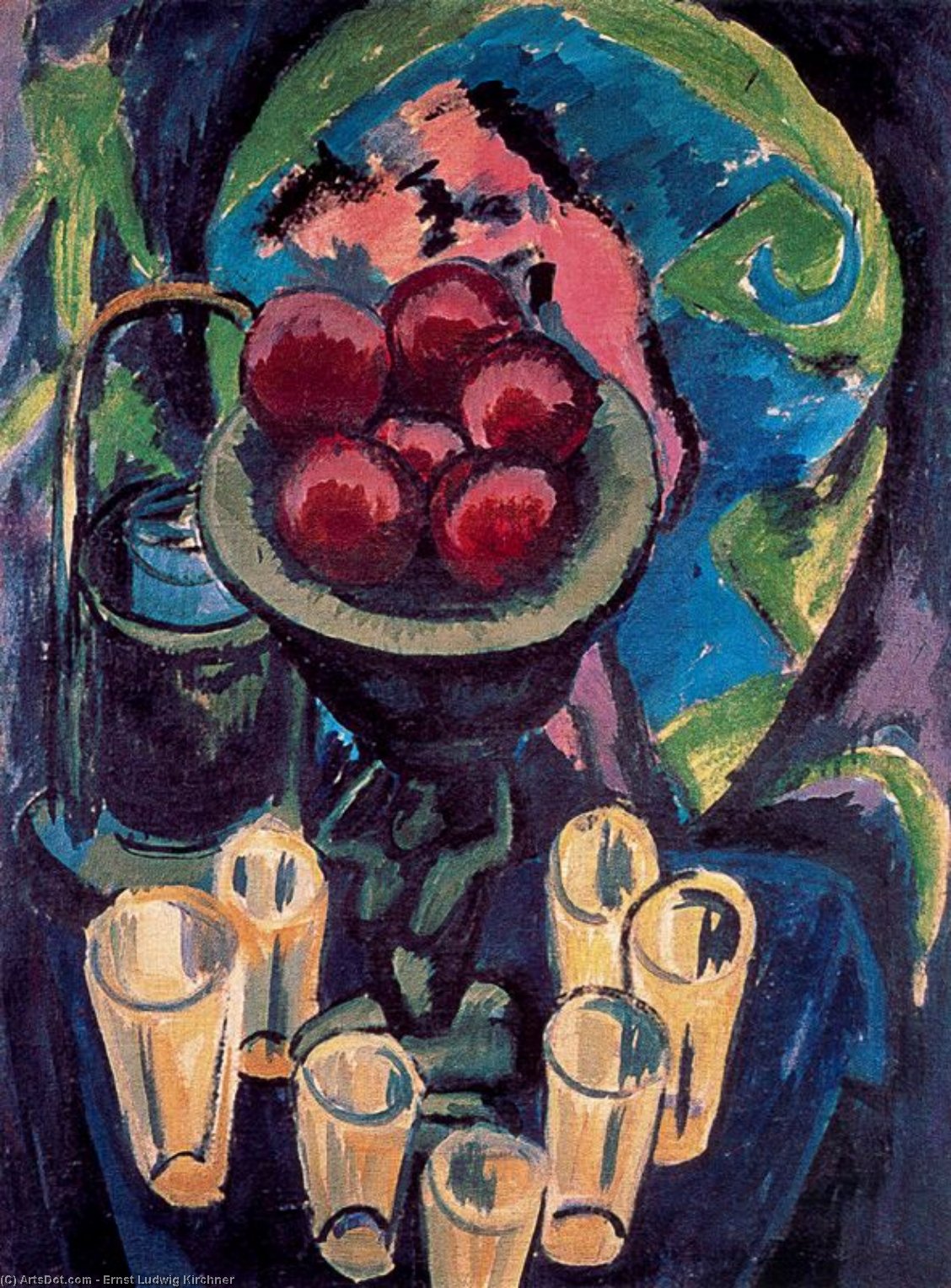
The artwork presents a striking visual experience—a meticulously crafted oil painting that embodies the core tenets of German Expressionism. More than just depicting objects, it strives to convey an intense emotional state, capturing a palpable sense of unease and psychological turmoil. At its heart lies a bowl overflowing with cherries and several small glasses or cups arranged in a deliberate composition that speaks volumes about the artist’s worldview. The background is deliberately abstracted, contributing significantly to the painting's claustrophobic atmosphere and amplifying its expressive power.
- Composition & Perspective: Abandoning traditional perspective conventions, Kirchner employs a flattened visual space where objects exist on the same plane—a technique characteristic of Expressionist artists who prioritized emotional impact over realistic representation. The central bowl dominates the frame, anchoring the image while the clustered vessels create a weighty counterbalance.
- Color Palette & Brushwork: Bold hues dominate the palette – deep reds for the cherries, vibrant greens and blues for the background—applied in distinct blocks rather than blended smoothly. Kirchner’s signature impasto brushwork is evident throughout, creating a textured surface that pulsates with energy and immediacy.
- Symbolism & Mood: The abundance of cherries could be interpreted as representing fertility or indulgence, juxtaposed against the unsettling arrangement of vessels which evokes feelings of confinement and unease. These elements collectively contribute to the painting’s overarching mood—a reflection of anxieties prevalent during Kirchner's time.
- Historical Context: Painted in 1913, shortly before the outbreak of World War I, *Still Life with Bichier* reflects the broader cultural landscape of Expressionism – a movement born from disillusionment with bourgeois values and fueled by anxieties about societal change. It stands as a testament to Kirchner’s desire to express raw emotion and challenge artistic conventions.
- Style & Technique: Kirchner's masterful technique—characterized by simplified forms, distortion of perspective, and expressive brushstrokes—perfectly encapsulates the stylistic essence of Expressionism. He sought to capture not merely what he saw but how he *felt*, prioritizing subjective experience above objective observation.
The artwork’s enduring appeal lies in its ability to resonate with viewers on an emotional level—a powerful reminder that art can serve as a conduit for confronting profound psychological truths. Its meticulous detail and bold artistic choices solidify Kirchner's place as one of the most influential figures in German Modern Art.