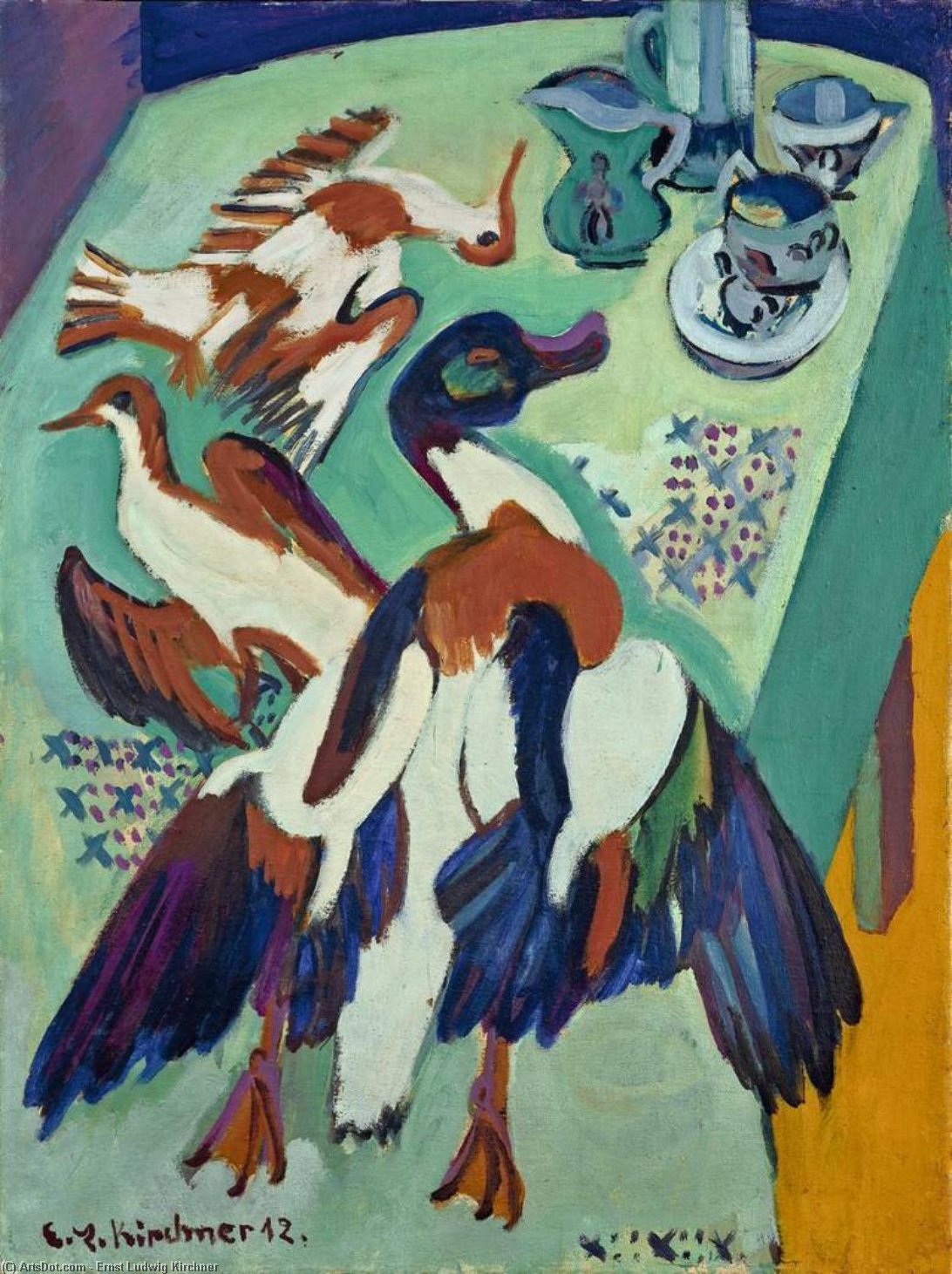
Still Life with Duck and Snipe: A Window into Kirchner's Soul
Ernst Ludwig Kirchner’s “Still Life with Duck and Snipe,” painted in 1920, is more than just a depiction of birds and tableware; it’s a visceral plunge into the heart of Expressionism. Created during a period of intense artistic experimentation and societal upheaval, this oil on canvas work embodies Kirchner's signature style – a deliberate distortion of reality to convey raw emotion and psychological intensity. The painting’s immediate impact lies in its audacious color palette: jarring reds, yellows, and blues clash with muted browns and greens, creating a visual tension that mirrors the anxieties simmering beneath the surface of Weimar Germany.
- Subject Matter: A seemingly mundane arrangement – a table laden with three birds (likely ducks or geese), a cup, two bowls, and a spoon – becomes imbued with symbolic weight through Kirchner’s expressive handling.
- Technique: Kirchner employs thick, impasto brushstrokes, applying the paint directly from the tube in many areas. This technique adds to the painting's textural richness and contributes significantly to its agitated surface. The deliberate lack of blending further emphasizes the artist’s emotional response to his subject.
- Composition: The asymmetrical composition, with the birds scattered seemingly haphazardly around the table, creates a sense of unease and imbalance. This disruption of traditional perspective reflects the Expressionist desire to reject objective representation in favor of subjective experience.
The Language of Emotion: Kirchner and the Expressionist Movement
Kirchner was a pivotal figure in the German Expressionist movement, which sought to capture not just what things *looked* like, but how they *felt*. Influenced by artists such as Vincent van Gogh and Paul Gauguin, Kirchner rejected academic realism, believing that art should be a vehicle for expressing inner turmoil and psychological states. His work reflects the anxieties of a nation grappling with rapid industrialization, political instability, and social change. The painting’s unsettling atmosphere speaks to this broader context – a reflection of the fragmented and uncertain world experienced by many in the early 20th century.
The choice of birds themselves is particularly intriguing. Animals often held symbolic significance within Expressionist art, frequently representing vulnerability, instinct, or even a primal connection to nature. The ducks, with their awkward poses and unsettling coloration, could be interpreted as emblems of displacement and alienation – themes central to Kirchner’s oeuvre.
A Historical Echo: 1920 Germany and the Rise of Expressionism
"Still Life with Duck and Snipe" was created in 1920, a year marked by profound political and social change in Germany. The aftermath of World War I had left the nation reeling from defeat and economic hardship. This atmosphere of uncertainty and disillusionment fueled the rise of Expressionism as an artistic movement – a desperate attempt to grapple with the anxieties of the age through intensely personal and emotionally charged works.
Kirchner’s work, like that of many Expressionist artists, was initially met with criticism and rejection. However, it would eventually come to be recognized as a groundbreaking contribution to modern art, influencing generations of artists who followed. The painting serves as a powerful reminder of the turbulent times in which it was created and the enduring power of art to express profound human emotions.
Own a Piece of Expressionist History
Handmade oil painting reproductions of “Still Life with Duck and Snipe” are now available on ArtsDot.com, offering art lovers the opportunity to acquire a stunning piece of Expressionist history. This 100 x 75 cm artwork, originally created in 1920, captures the essence of Kirchner’s unique vision – a testament to his mastery of color, form, and emotional expression. Bring this evocative work into your home or office and experience the raw power of Expressionism firsthand.