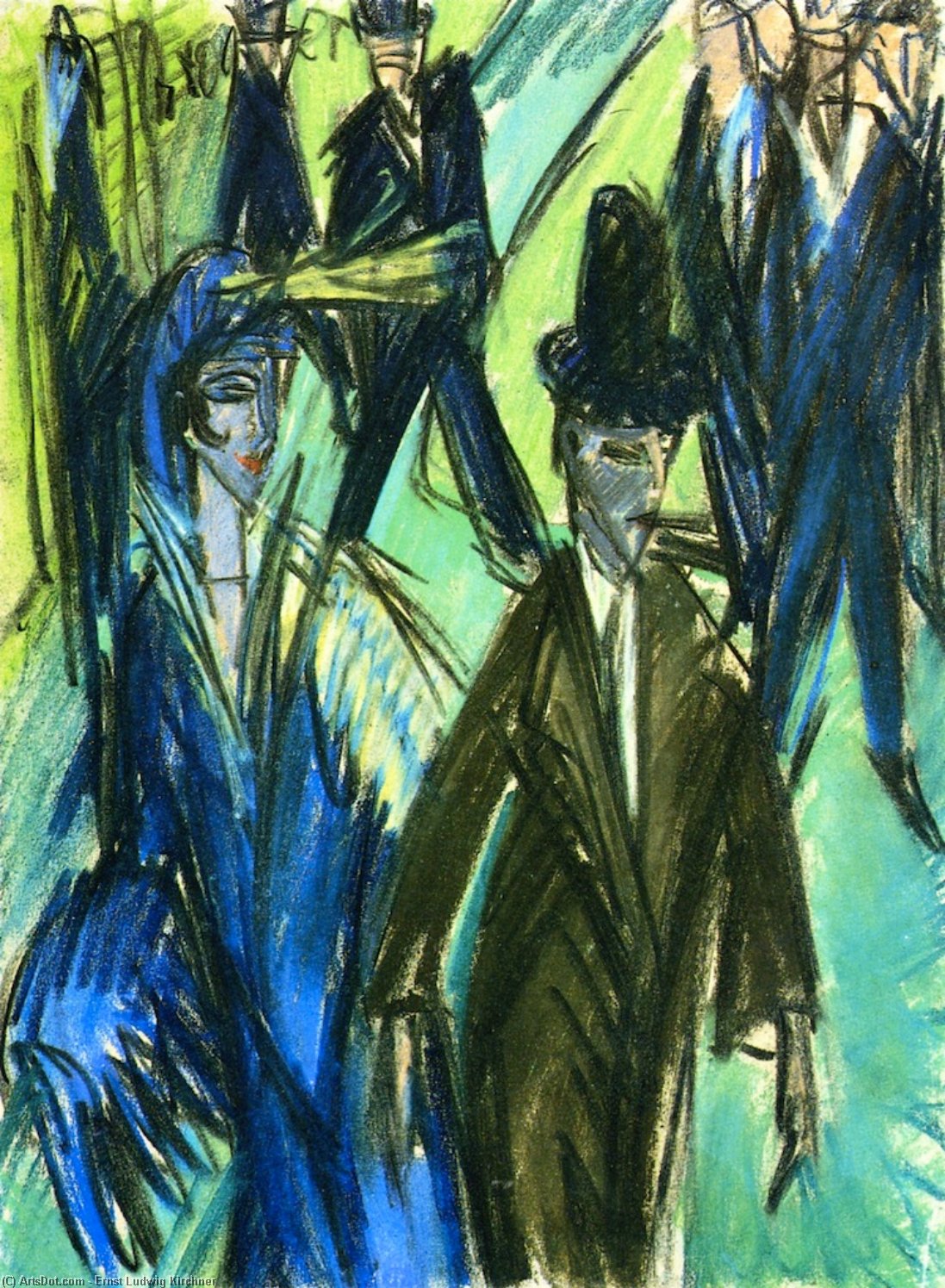
Street Scene by Ernst Ludwig Kirchner
Ernst Ludwig Kirchner’s “Street Scene,” painted in 1913, stands as a cornerstone of German Expressionism—a movement that sought to convey raw emotion and psychological turmoil through distorted forms and vibrant color palettes. More than just a depiction of urban life, it's an immersive experience into the anxieties simmering beneath the surface of early 20th-century Berlin.
- Composition & Atmosphere: The painting eschews traditional perspective, opting instead for a compressed space that amplifies the feeling of disorientation. Figures cluster densely, creating a visual cacophony punctuated by angular lines and bold strokes—a deliberate rejection of academic realism in favor of immediacy and emotional resonance.
- Color Palette & Technique: Kirchner’s masterful use of color is striking. Dominating blues, greens, and blacks are interwoven with splashes of yellow and orange, applied liberally to create texture and heighten the expressive intensity. The pastel medium lends itself beautifully to capturing these luminous hues, resulting in a surface that pulsates with energy.
- Symbolism & Emotional Impact: Beyond its visual dynamism, “Street Scene” delves into profound psychological themes. The prostitutes depicted—a recurring motif in Kirchner’s oeuvre—represent not merely individuals but also embodiments of modernity's alienation and the pervasive sense of unease that characterized the era. Their vacant stares and stylized poses communicate a deep melancholy, reflecting the artist’s own struggles with identity and isolation.
- Historical Context: Created during a period of rapid industrialization and social upheaval in Berlin, “Street Scene” captures the zeitgeist of its time—a city grappling with anxieties about progress and confronting the darker side of human nature. Kirchner's work aligns perfectly with the broader Expressionist impulse to confront uncomfortable truths and express inner turmoil through artistic innovation.
- Further Research: Explore Kirchner’s influence on subsequent artists and delve deeper into the stylistic nuances of Die Brücke, examining how this collective challenged conventions and championed a new aesthetic language. Consider viewing “Street Scene” alongside other paintings from the cycle to appreciate its contribution to the movement's overall vision—a vision rooted in confronting psychological realities and rejecting idealized representations of the world.