A Window into Modern Anxiety: Decoding Kirchner’s Street Scene in Berlin
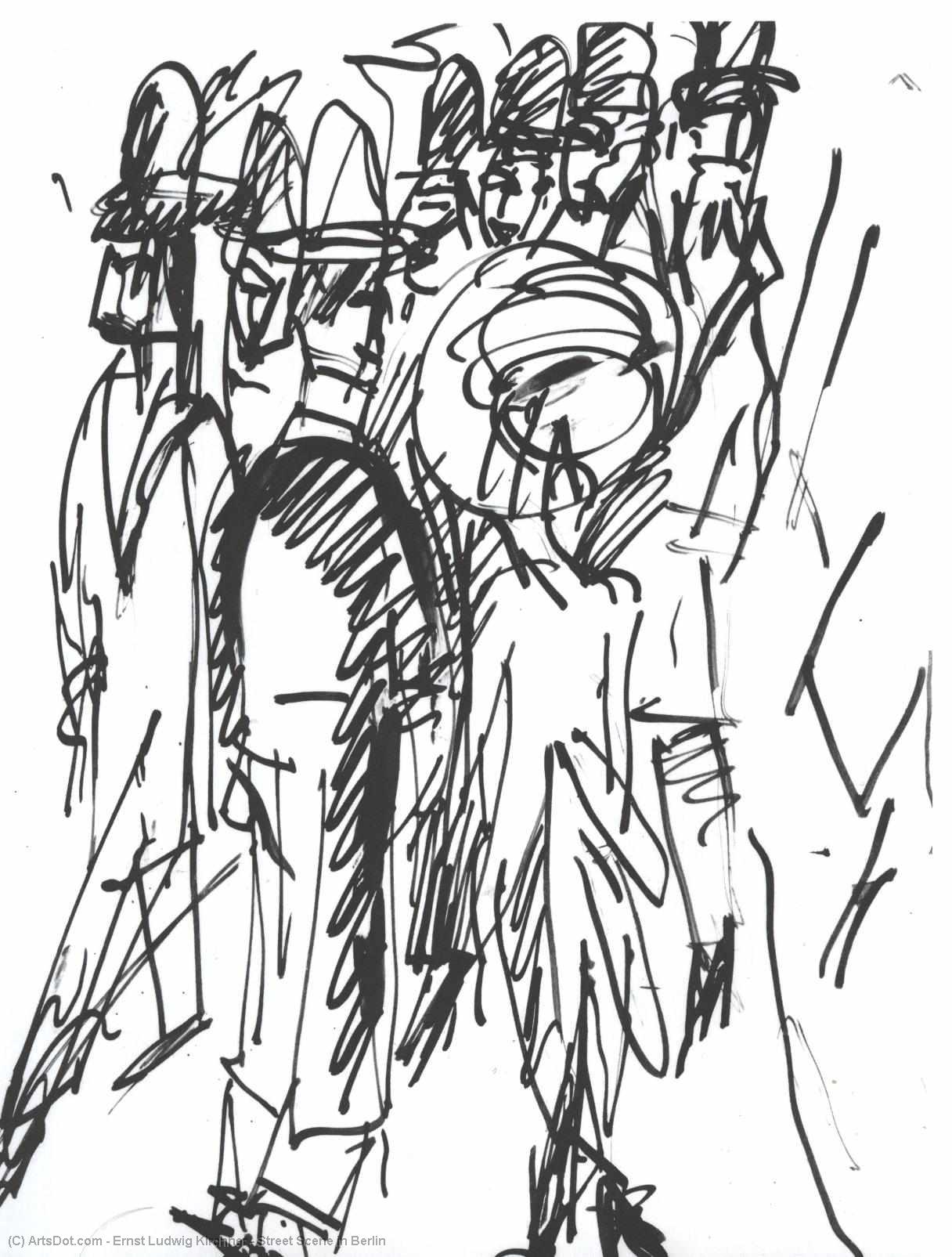
Ernst Ludwig Kirchner’s 1914 Street Scene in Berlin isn't simply a depiction of city life; it is a raw, visceral embodiment of the anxieties and alienation simmering beneath the surface of pre-WWI Germany. Executed with striking immediacy, this black-and-white sketch serves as a powerful testament to the burgeoning Expressionist movement and continues to resonate deeply with contemporary viewers navigating the complexities of modern existence.
Subject Matter & Composition: Lost in the Crowd
The composition plunges us directly into the heart of a bustling Berlin street, dominated by a dense throng of figures. Kirchner masterfully utilizes overlapping lines and fragmented forms to create an overwhelming sense of claustrophobia – as if the individual is being swallowed whole by the collective mass. A central figure, likely female, immediately draws the eye, yet her off-center positioning emphasizes her vulnerability within this chaotic environment. Radiating lines accentuate her presence but simultaneously contribute to a feeling of exposure and isolation. This deliberate arrangement isn’t accidental; it powerfully evokes the isolating experience of anonymity in an increasingly overwhelming urban landscape.
Artistic Style & Technique: The Power of Line
Kirchner's style is characterized by expressive, gestural linework that prioritizes emotional impact over precise representation. The loose, energetic strokes convey a palpable sense of movement and immediacy, mirroring the rapid pace of modern life. This technique aligns perfectly with the core tenets of Expressionism – distorting reality to express inner feelings and subjective experiences. The stark contrast between the bold black lines and the white background amplifies the dramatic effect, highlighting the raw energy inherent in each stroke. Notably, this work is a sketch, yet it possesses an incredible power; Kirchner’s ability to convey so much with seemingly simple means demonstrates his mastery of line and form. He doesn't aim for photographic accuracy but seeks to capture the feeling of being within that space.
Historical Context & Symbolism: A Precursor to Chaos
Created during a period of rapid industrialization, profound social change, and escalating political tension, Street Scene in Berlin reflects the anxieties experienced by many navigating the complexities of modern urban life. Kirchner was deeply interested in portraying contemporary society, often focusing on figures considered marginalized – prostitutes, laborers, and those living on the fringes. His “Street Scenes” cycle (1913-1915), to which this work belongs, frequently depicted these subjects as symbols of the city’s underbelly and its moral ambiguities. The painting also foreshadows a period of immense upheaval; just a year later, Europe would be plunged into World War I, shattering the existing social order. The sense of unease present in this work can be interpreted as a premonition of that impending chaos.
Emotional Impact & Interpretation: A Mirror to Modern Life
Street Scene in Berlin evokes a range of powerful emotions: anxiety, claustrophobia, alienation, and even a subtle sense of threat. The chaotic composition and fragmented figures create an unsettling atmosphere, inviting viewers to contemplate their own experiences with overwhelming stimuli or feelings of isolation within crowds. Kirchner’s genius lies in his ability to capture these complex emotional states with such economy of means. It is a work that speaks to the universal human experience of feeling lost and overwhelmed in the face of modernity.
Display & Interior Design Considerations
Street Scene in Berlin is a striking piece that adds depth and sophistication to any art collection. Its monochromatic palette offers remarkable versatility, complementing a wide range of interior design schemes – from minimalist modern spaces to more eclectic settings. The artwork’s dynamic composition and emotional intensity will undoubtedly serve as a compelling focal point, sparking conversation and contemplation.
- Framing: A simple black frame with a generous white mat will allow the artwork's energy to shine.
- Placement: Consider placing this piece in an entryway or living room where it can command attention, but avoid overly cluttered spaces that might detract from its impact.
- Complementary Colors: The monochromatic nature of the work pairs well with bold accent colors like deep reds, blues, or greens. Consider incorporating these hues in nearby furniture or accessories to create a visually striking contrast.
Provenance & Related Works
This artwork is a key piece within Kirchner’s “Street Scenes” cycle (1913-1915). Other notable works from this series include Five Women on the Street and numerous pastel and chalk drawings exploring similar themes. The Brücke Museum in Berlin holds a significant collection of Kirchner’s work, providing invaluable context for understanding his artistic development and contributions to Expressionism.
Size: 121 x 91 cm
Date: 1914