A Snapshot of Urban Anxiety: Kirchner's "Street Scene in front of a Barbershop"
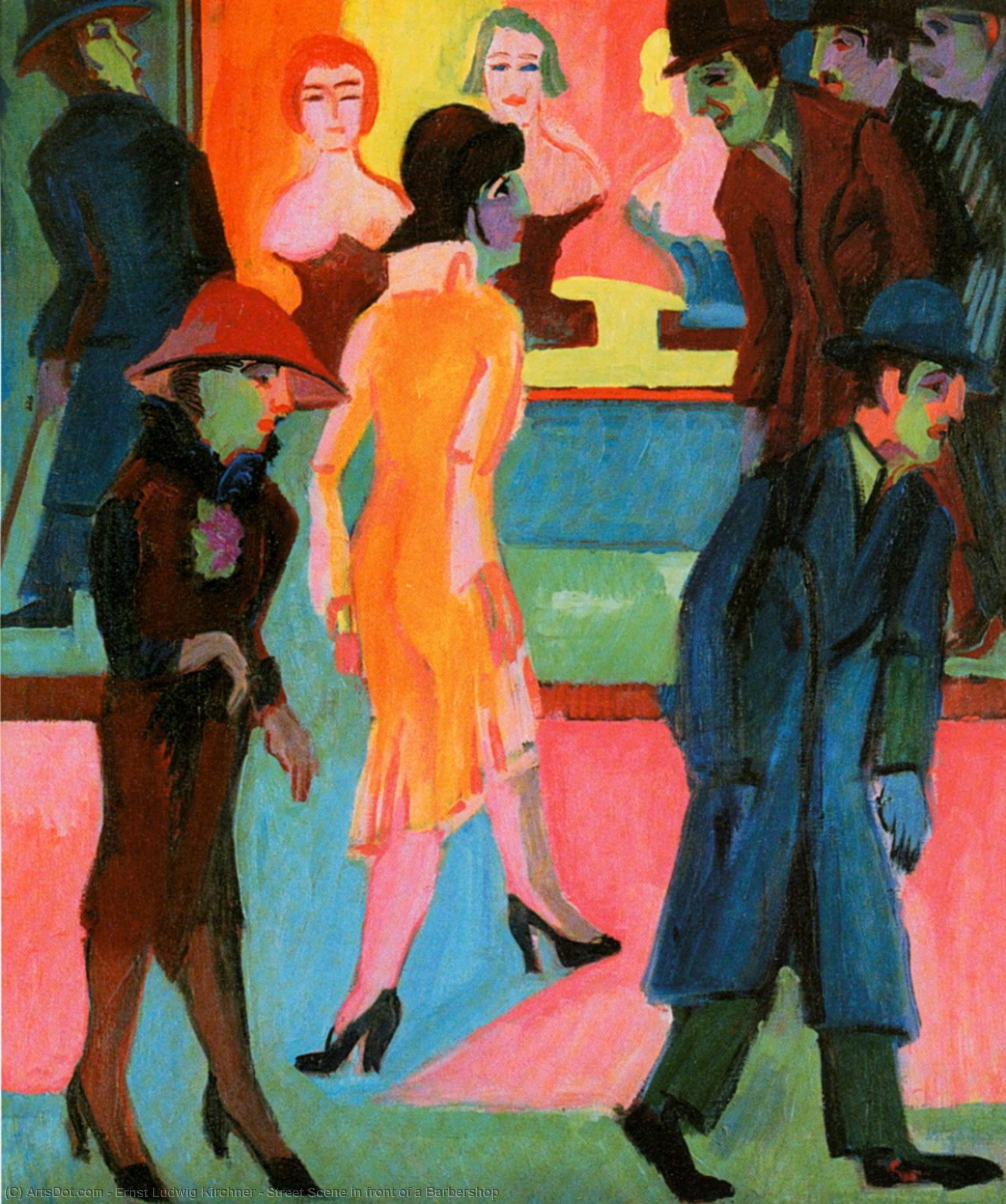
Ernst Ludwig Kirchner’s 1926 painting, “Street Scene in front of a Barbershop,” is more than just a depiction of a bustling city street; it’s a visceral embodiment of the anxieties and alienation simmering beneath the surface of Weimar Germany. Measuring 119 x 100 cm, this work offers a compelling glimpse into the artist's signature style – a raw, emotionally charged expressionism that sought to capture not objective reality but rather the subjective experience of modern life.
- The Kirchner Palette: The painting is immediately recognizable through Kirchner’s distinctive use of color. Bold, jarring hues—ochres, reds, and blues—are applied with thick impasto strokes, creating a sense of unease and dynamism. These colors aren't used to represent reality; they are employed to convey mood and psychological intensity.
- Compositional Tension: The composition itself contributes significantly to the artwork’s unsettling effect. Figures are crammed together, their faces often distorted with expressions of weariness or suspicion. The receding perspective creates a sense of disorientation, mirroring the feeling of being overwhelmed in a crowded urban environment.
Expressionist Roots and Weimar Germany
Kirchner was a pivotal figure in the German Expressionist movement, emerging during a period of profound social and political upheaval. Weimar Germany, despite its cultural vibrancy, was grappling with economic instability, political extremism, and a growing sense of disillusionment. Kirchner’s art reflects this atmosphere, capturing the fragmented experience of individuals navigating a rapidly changing world. His early influences included Albrecht Dürer, but he quickly moved beyond traditional academic styles to embrace a more subjective and emotionally driven approach. The painting's subject – a street scene dominated by a barbershop – is deliberately mundane, elevating the ordinary to a level of profound psychological significance.
- Social Commentary: The presence of men in formal attire—evident through their ties—suggests a tension between tradition and modernity. The hurried pace of the pedestrians and the overall sense of crowding can be interpreted as a commentary on the pressures of urban life and the anonymity experienced within large cities.
- The Barbershop Motif: The inclusion of a barbershop, a seemingly commonplace element, adds another layer of complexity. It represents not just a place for grooming but also a social hub—a space where men might engage in conversation, share anxieties, or simply seek respite from the demands of their daily lives.
Technique and Emotional Impact
Kirchner’s technique is characterized by its deliberate roughness and expressive brushwork. He employed a layering method, building up color and texture through multiple applications of paint. This creates a palpable sense of movement and energy within the scene. The figures are not rendered with meticulous detail; instead, they are simplified forms that convey emotion more effectively than realistic representation. The painting’s emotional impact is undeniably powerful – it evokes feelings of anxiety, isolation, and perhaps even a touch of melancholy. It's a testament to Kirchner's ability to translate personal turmoil into a universally resonant visual experience.
- Impasto Texture: The thick application of paint (impasto) adds another dimension to the artwork, inviting viewers to physically engage with the surface and further amplifying the emotional intensity.
- Psychological Portraiture: Rather than a straightforward landscape painting, “Street Scene in front of a Barbershop” functions as a psychological portrait of urban life—a reflection of the anxieties and uncertainties that defined the era.
A Timeless Reflection
"Street Scene in front of a Barbershop" remains a powerful example of Kirchner’s artistic vision and a poignant commentary on the human condition. Its raw emotional intensity, combined with its masterful technique, ensures its continued relevance as a significant work within the history of Expressionism. A hand-painted reproduction offers an exceptional opportunity to bring this evocative artwork into your space, allowing you to contemplate its enduring themes and appreciate Kirchner’s genius for generations to come.