A Window into Expressionist Vitality
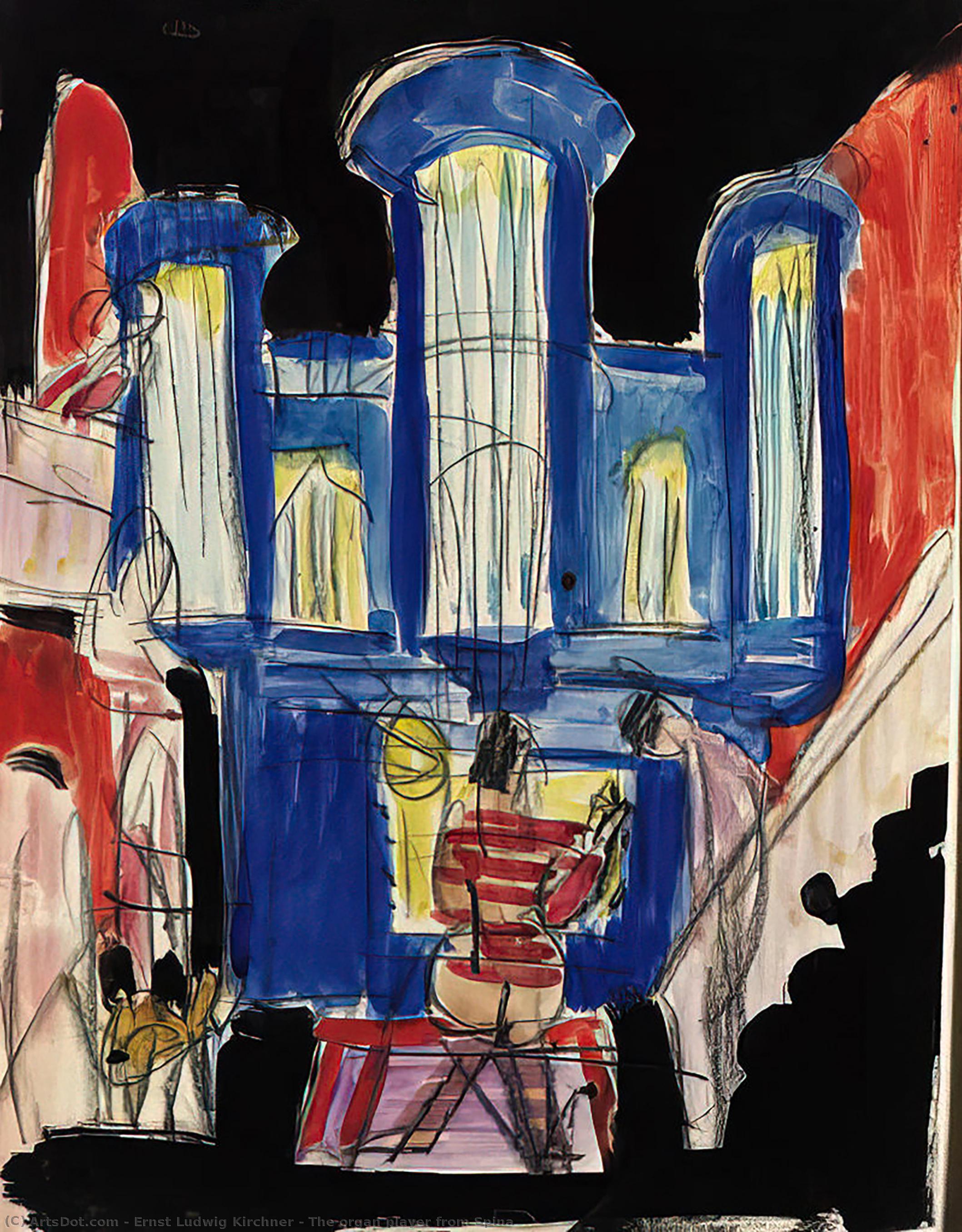
In the vibrant, pulsating world of German Expressionism, few works capture the fleeting essence of a moment quite like Ernst Ludwig Kirchner’s The Organ Player from Spina. This masterpiece invites the viewer to step away from the frantic pace of modern life and into a sun-drenched, communal space where time seems to stretch and bend. At first glance, the eye is drawn to a woman seated peacefully on a bench, her focus absorbed by a book, yet she serves as the quiet anchor within a much larger, more kinetic composition. Surrounded by the architectural elegance of classical columns and the lively presence of figures and animals, the painting breathes with a sense of spontaneous life. It is not merely a depiction of a scene; it is an emotional landscape that celebrates the beauty found in the intersection of solitude and social existence.
The technique employed by Kirchner is nothing short of transformative. Eschewing the rigid constraints of academic realism, he utilizes a bold, expressionist brushstroke that imbues every inch of the canvas with movement. The colors are applied with a certain raw intensity—vibrant hues dance across the surface, creating a rhythmic energy that mirrors the heartbeat of the scene. This painterly approach allows the light to feel as though it is vibrating through the air, casting a warm, nostalgic glow over the figures. For the discerning collector or interior designer, this piece offers a profound sense of depth; its textured appearance and dynamic color palette provide a sophisticated focal point that can breathe life into any curated space, adding both historical weight and contemporary flair.
The Soul of Die Brücke
To understand the emotional resonance of The Organ Player from Spina, one must look toward the historical currents that shaped Kirchner’s hand. As a founding member of the influential group Die Brücke (The Bridge), Kirchner sought to create a bridge between the past and the future, stripping away traditional artifice to reveal the raw, psychological truth of his subjects. This painting reflects that mission perfectly. While the setting may suggest a tranquil Mediterranean or classical atmosphere, there is an underlying tension—a characteristic Expressionist trait—where the boundaries between the figures and their environment begin to blur. The inclusion of dogs wandering through the scene and the scattered placement of people add layers of narrative complexity, suggesting a world that is both intimately personal and cosmically connected.
Symbolically, the work explores the duality of the human experience: the internal world of reflection, represented by the reading woman, and the external world of social interaction. The columns provide a sense of structural permanence, yet the fluid, almost agitated brushwork suggests that all things are in a state of flux. This tension makes the artwork an incredibly versatile choice for high-end decor. Whether placed in a minimalist modern gallery or a richly textured traditional study, the painting acts as a conversation starter, prompting viewers to contemplate their own relationship with the world around them. Owning a reproduction of such a significant work is more than an aesthetic choice; it is an invitation to live alongside the enduring spirit of German Expressionism.