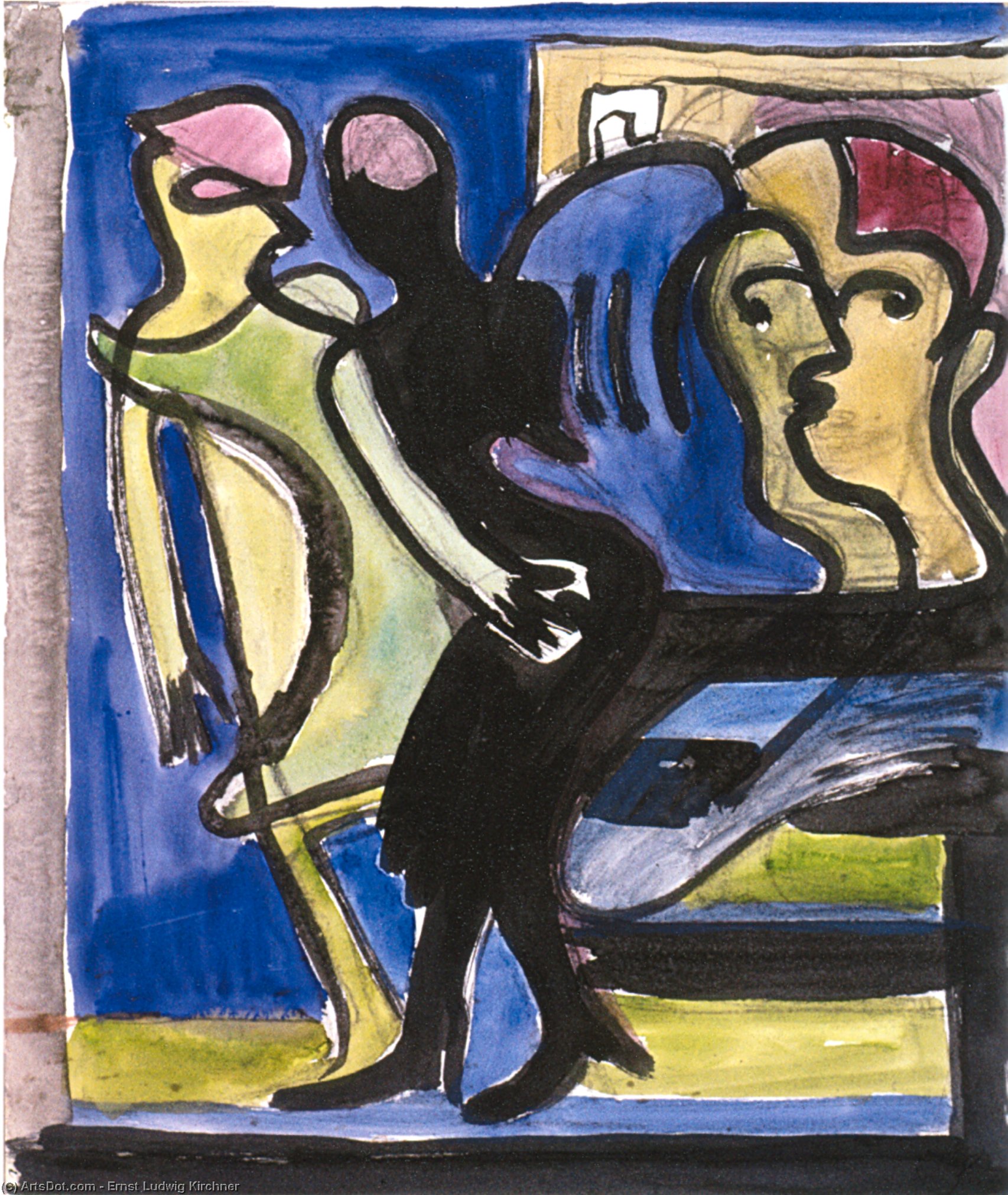
Experience the raw emotion of Ernst Ludwig Kirchner's 'View into a Cafe,' a pivotal Expressionist painting from 1935 featuring three figures in a vibrant blue setting, capturing a moment of social interaction with bold colors and dynamic composition – discover this iconic artwork.
A Window into Anxiety: Ernst Ludwig Kirchner’s “View into a Cafe”
Ernst Ludwig Kirchner's "View into a Cafe," painted in 1935, is more than just a depiction of three figures within a bustling cafe; it’s a potent distillation of the anxieties and alienation that defined German Expressionism. Measuring 50 x 41 cm, this intimate scene reveals Kirchner’s masterful ability to translate subjective emotion onto canvas through bold color and fractured form. The painting immediately confronts the viewer with a sense of unease, a feeling amplified by the stark blue background – a deliberate choice that isolates the figures and intensifies their psychological state.
- The Figures: Three individuals occupy the space, each rendered with a distinct lack of serenity. The woman on the left, adorned in a vibrant pink hat, appears lost in thought, her posture suggesting detachment. The man in black to her right embodies a more aggressive stillness, his gaze averted and body rigid. The final figure, also clad in black and sporting a red hat, adds another layer of complexity – perhaps representing an observer or simply another casualty of the cafe’s atmosphere.
- Kirchner's Technique: Kirchner was a pioneer of "Die Brücke" (The Bridge), a group of German Expressionist artists who sought to break free from traditional artistic conventions. His technique is characterized by short, agitated brushstrokes and a deliberate flattening of perspective. This creates a sense of claustrophobia and intensifies the emotional impact of the scene. The use of color – particularly the jarring juxtaposition of blue, green, yellow, and orange – further contributes to this unsettling effect.
Historical Context: Weimar Germany and the Rise of Expressionism
"View into a Cafe" was created during a turbulent period in German history – the Weimar Republic. This era was marked by rapid industrialization, social unrest, and political instability. Kirchner, like many artists of his time, was deeply affected by these conditions. The rise of urban centers, coupled with a sense of rootlessness and disillusionment, fueled the Expressionist movement’s exploration of psychological states and anxieties. Kirchner's work reflects this broader cultural context, capturing the feeling of isolation and uncertainty that permeated German society in the 1930s.
- Expressionism as a Response: Expressionist artists sought to express their inner emotions rather than objectively represent the external world. They used distortion, exaggeration, and intense color to convey feelings of angst, alienation, and despair. Kirchner’s “View into a Cafe” exemplifies this approach, presenting a subjective interpretation of reality rather than a faithful depiction.
- The Influence of Dürer: Despite his rejection of academic convention, Kirchner was deeply influenced by the work of Albrecht Dürer, particularly his use of line and perspective. However, Kirchner transformed Dürer’s precision into something raw and unsettling, reflecting the anxieties of his time.
Symbolism and Emotional Impact
The cafe itself becomes a symbolic space – a microcosm of modern life, fraught with tension and unspoken emotions. The two chairs, positioned strategically within the composition, suggest a potential for connection but ultimately highlight the figures’ isolation. The hats, particularly the contrasting colors of pink and red, could be interpreted as symbols of defiance or rebellion against societal norms. Kirchner's masterful use of color and form creates a powerful emotional impact, inviting viewers to confront their own anxieties and uncertainties.
- A Portrait of Disquiet: “View into a Cafe” is not simply a representation of a scene; it’s a psychological portrait of a society grappling with profound change. It's a haunting reminder of the fragility of human connection in an increasingly complex world.
- Collecting Kirchner: This reproduction offers a unique opportunity to own a piece of art history, allowing you to experience the raw emotional power of one of Germany’s most influential Expressionist artists.
Technical Specifications
This hand-painted reproduction is created using archival quality materials and traditional techniques, ensuring its longevity and authenticity. The meticulous attention to detail faithfully captures Kirchner's original style and color palette. Available in 50 x 41 cm, this artwork is perfect for adding a touch of artistic drama to any interior space.