A Pastoral Dream in Gauguin's Hand
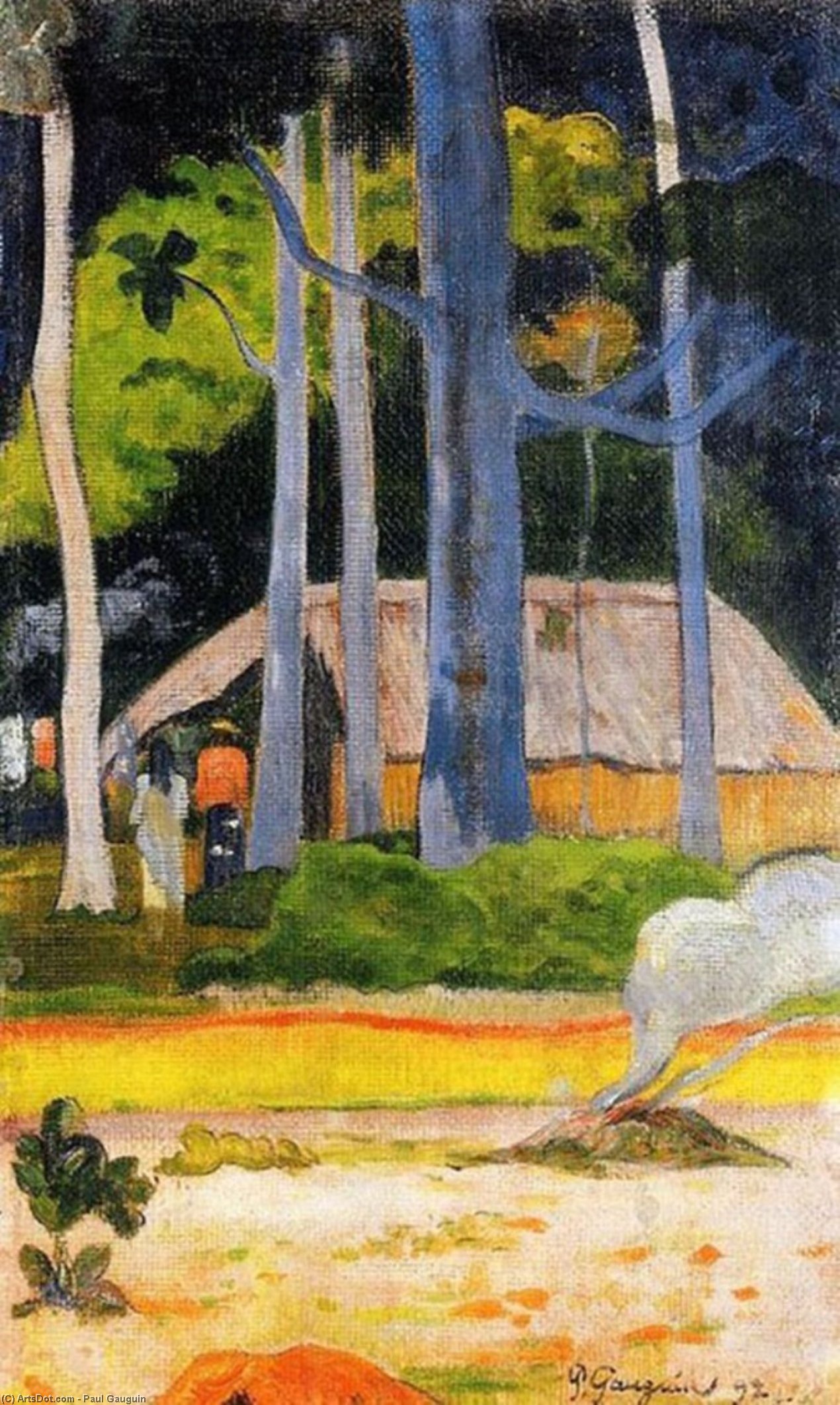
To gaze upon this scene, Cabin under the trees, is to step through a veil and into a sun-drenched memory of rural simplicity. It captures that quintessential moment where human life settles into a harmonious rhythm with the enduring embrace of nature. The composition immediately draws the eye to the rustic charm emanating from the small hut, its thatched roof speaking volumes of an unhurried existence far removed from the clamor of modern urbanity. Surrounding this humble dwelling, the trees stand as silent, verdant guardians, framing a tableau that feels both deeply rooted in place and eternally timeless.
The Spirit of Gauguin's Vision
Painted in 1892 by Eugène Henri Paul Gauguin, this work sits at a fascinating crossroads in art history. While the echoes of Impressionism might suggest fleeting moments of light, Gauguin’s touch guides us toward something deeper—a search for the symbolic and the primal. His lifelong quest, fueled by his travels and his fascination with non-Western cultures, is palpable here. The figures gathered before the cabin, along with the gentle presence of an animal, are not merely decorative elements; they populate a narrative about community and sustenance. Gauguin invites us to contemplate a life lived in direct conversation with the earth.
Technique and Evocative Color
The technique employed suggests a masterful handling of paint that prioritizes emotional resonance over strict academic realism. The colors, though perhaps muted by time or reproduction, must have possessed the bold, saturated quality characteristic of Gauguin’s later work. Observe how the artist uses the interplay between the deep greens of the foliage and the warm, earthy tones of the hut and skin. This careful balance creates a visual harmony that is deeply soothing to the modern eye. It is an art that doesn't just depict a scene; it bathes the viewer in its atmosphere.
Symbolism of Rural Life
This painting resonates with potent symbolism. The cabin itself represents shelter, tradition, and perhaps a yearning for authenticity—a retreat from industrial complexity. The surrounding trees symbolize life’s enduring cycle, while the gathering of people suggests the fundamental human need for connection. For the collector or designer, this piece offers more than mere decoration; it is an artifact of romantic idealism. It whispers of simpler times, urging us to find pockets of pastoral peace within our own demanding lives.
Bringing the Village Home
Reproducing such a work allows one to curate an entire mood for a space. Imagine this piece gracing a sunlit drawing-room or above a mantelpiece designed with natural materials. It acts as a focal point, injecting a narrative depth and a touch of bohemian romance into any interior design scheme. Owning a reproduction of Cabin under the trees is acquiring a piece of artistic philosophy—a beautiful reminder that true richness often lies in the quiet communion between humanity and nature.